
Versatile Dresses with Pockets: 2026 Review Guide
Table of Contents
- Why Pocket Utility Defines a Versatile Dress in 2026
- Best Travel Dresses with Pockets: Performance-Tested Picks
- Comfortable Work Dresses with Pockets for Day-to-Night Wear
- How to Style a Dress with Pockets for Any Occasion
- Security-Focused Pocket Design: What Most Reviews Miss
- Sizing, Fit, and Body-Type Performance Guide
- Fabric Longevity and Sustainability: What to Look For
- Conclusion
- Frequently Asked Questions
Last Updated: September 24, 2026
Why Pocket Utility Defines a Versatile Dress in 2026
Versatile dresses with pockets are a single garment that works across multiple settings, and functional pockets are what separate them from a dress that only looks the part. The numbers back this up: women's pockets are 48% shorter and 65% narrower than men's pockets, according to The Pudding's pocket dimension analysis. That gap explains why so many "pocket dresses" fail in practice.
The Real Difference Between Functional and Decorative Pockets
Most pockets sewn into dresses are decorative, they hold a lip balm and nothing else. A functional pocket fits a phone, keys, or a card case without sagging or gaping at the seam.
Best Travel Dresses with Pockets: Performance-Tested Picks
The best travel dresses with pockets combine wrinkle-resistant fabric, real pocket depth, and packability. In a 2026 evaluation of travel-ready apparel, testers reviewed more than 50 dress models and prioritized exactly those features, per Travel + Leisure's travel dress testing.
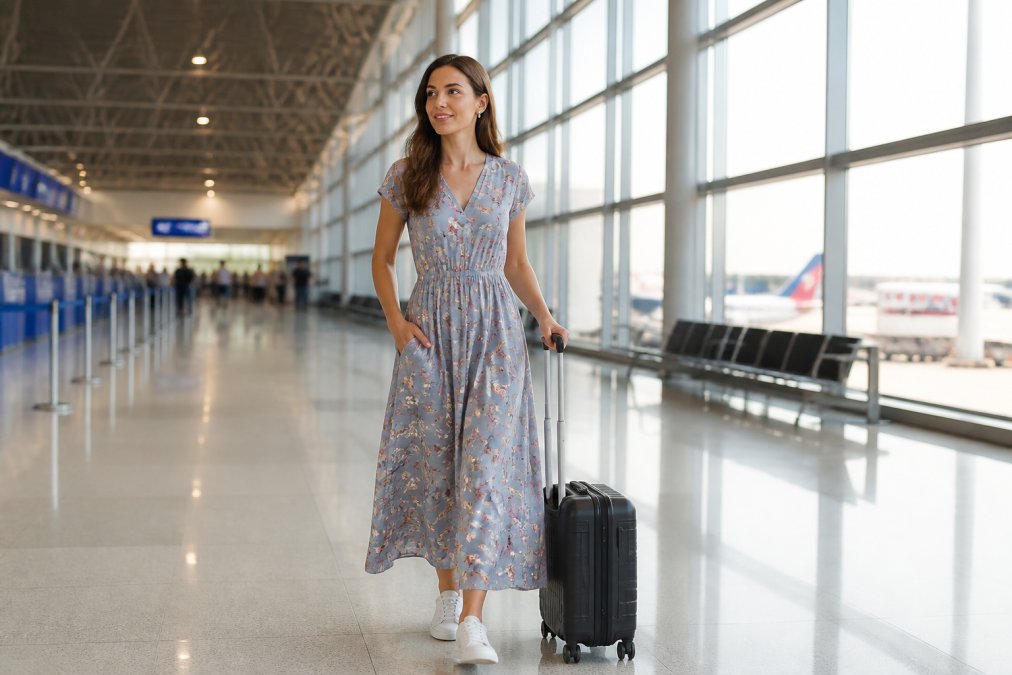
Wrinkle Resistance, Packability, and Quick-Dry Fabrics
Look for moisture-wicking, quick-dry fabric blends that survive a carry-on squeeze. A dress that needs ironing on arrival is not travel-ready.
| Feature | What to Look For | Why It Matters |
|---|---|---|
| Wrinkle resistance | Fabric blend with stretch | Survives packing without ironing |
| Quick-dry | Moisture-wicking knit | Hand-wash and wear next day |
| Packability | Lightweight, low bulk | Fits a capsule wardrobe |
| Pocket depth | Fits a phone flat | Real utility, no sagging |
Comfortable Work Dresses with Pockets for Day-to-Night Wear
Comfortable work dresses with pockets earn their place when one garment carries you from a morning meeting to dinner. The deciding factor is whether the fabric recovers from a full day of sitting and whether the pockets stay flat when you stand up.
The Day-to-Night Stress Test
Most reviews photograph a dress once and call it one of the versatile dresses. A better test: wear the same dress through a realistic workday and score four points.
- Seat recovery. Sit for 45 minutes, stand, and check the back of the skirt. Knit blends with spandex spring back within a minute or two; stiff wovens hold creases at the hip and behind the knee.
- Pocket flatness when seated. Slide your phone in, sit down, and check whether the pocket mouth gapes or the phone presses a visible rectangle through the fabric. A side-seam pocket angled slightly downward sits flatter than a straight horizontal slash.
- Hemline drift. Walk a block, climb stairs, and sit in a low chair. If the hem rides up more than an inch or two, the dress will not survive an evening without constant adjustment.
- Wrinkle recovery after a full day. Fold the skirt in your lap for an hour, then let it hang. Wrinkle-resistant blends relax noticeably within 15-30 minutes; untreated cotton and linen do not.
Silhouettes That Balance Professional Polish and Comfort
- Wrap dresses: adjustable fit via the tie, flattering drape, easy layering. The trade-off: a wrap's pocket is often shallow because the front panel is narrow, check depth before buying.
- Fit-and-flare midis: structured enough for the office, with a full skirt that hides a phone without distorting the line. Best when the fabric has body.
- Shift dresses: ease of movement with a clean line, but pockets sit on the side seam and can pull if the fabric is thin.
- Sweater dresses with pockets: trending for business casual and daily wear in 2026, per Amazon best-seller rankings. Knit sweater dresses stretch with the pocket load, which is comfortable but can sag over a long day.
Fabric and Construction Details That Decide the Transition
- Stretch percentage. Roughly 3-8% spandex or elastane recovers from sitting far better than a 100% woven. Above that, the dress feels like activewear and reads less polished in a meeting.
- Pocket bag material. A pocket sewn from the same fabric as the dress holds its shape; a thin lining fabric collapses and prints through the skirt.
- Pocket anchoring. Look for a bar tack or reinforced stitch at the top and bottom of the pocket opening, the single detail that keeps a pocket from tearing out after months of phone use.
- Lining. A lined skirt slides over tights and chairs instead of clinging, which matters more in the evening than the morning.
What to Skip
Skip dresses where the pocket is sewn shut with a basting stitch meant to be removed, those are decorative pockets dressed up as functional ones. Skip unlined lightweight wovens for evening wear, since they show every crease from a day of sitting. And skip any dress where the pocket opening sits above the widest part of your hip, since that placement pulls the silhouette outward instead of letting the pocket disappear into the seam.
How to Style a Dress with Pockets for Any Occasion
Styling a dress with pockets is mostly about restraint, but the angle most reviews miss is that pocket placement should drive the styling. Where the pocket sits determines which layers, belts, and bags will hide it, and hiding a functional pocket defeats the reason you bought the dress.
Read the Pocket Placement First
Before you build an outfit, identify where the pocket opening sits:
- Side-seam pockets at the hip: the most common placement. They disappear under a structured blazer ending above the hip, but a long cardigan or hip-length belt bag covers them entirely.
- Angled slash pockets set slightly forward: these read as a design feature and can be left visible. Pair with a shorter jacket or a cropped knit so the angle stays in view.
- In-seam pockets on a full skirt: the safest placement for styling, because the skirt's volume hides the pocket load and the opening sits low enough that most belts clear it.
- Patch or cargo-style pockets: these are the statement. Keep everything else minimal, no belt, no busy print, no oversized bag.
Layering Without Burying the Pockets
The most common styling mistake is layering a long cardigan or duster over a dress with hip-level pockets, the layer covers the pocket, and you spend the day reaching under fabric for your phone. A few rules:
- Cropped layers (a cropped denim jacket, a boxy cropped blazer) end above the pocket opening and leave it accessible.
- Belted layers should sit at the natural waist, not the hip, so the belt does not cross the pocket mouth.
- Crossbody bags should hang at the hip only if the pocket is on the opposite side, or the bag sits directly on the pocket opening.
- Totes and shoulder bags are the safer choice when the dress has hip pockets, because they leave the pocket line clear.
Occasion-by-Occasion, With the Pocket in Mind
- Work: a structured blazer that ends at or above the hip, low heels, and a shoulder bag rather than a crossbody. The blazer frames the pocket instead of covering it.
- Brunch: a cropped denim jacket, sneakers, and a small shoulder bag. The casual layer keeps the pocket visible and the dress reads relaxed.
- Evening: swap to heeled boots and a clutch, and drop the belt. A clutch in hand means the pocket is free for a phone or card case, which is exactly when you want it.
- Travel: belt at the natural waist, add a crossbody on the side opposite the pocket, and keep jewelry minimal. The belt defines the waist without crossing the pocket, and the crossbody leaves a hand free for a boarding pass.
The Belt Question
A belt at the natural waist is usually fine. A belt at the hip is not, it crosses the pocket opening, hides the pocket, and creates a horizontal line exactly where the pocket already adds bulk. If you want a hip belt, choose a dress with in-seam pockets on a full skirt so the belt and the pocket do not compete for the same real estate.
Security-Focused Pocket Design: What Most Reviews Miss
Security-focused pocket design is the angle most reviews skip entirely. A deep side pocket is useful; a hidden or zippered interior pocket is what protects a phone or card case in a crowd.
Sizing, Fit, and Body-Type Performance Guide
Fit is where online dress shopping usually goes wrong, and pocket placement is a big part of it. A pocket that sits too high or too low changes how the whole dress hangs.
| Body Type | Best Pocket Placement | Silhouette to Try |
|---|---|---|
| Petite | Slightly higher, shorter drop | Shift or wrap |
| Tall | Longer drop, below hip | Midi fit-and-flare |
| Curvy | Side seam, stretch blend | Wrap with defined waist |
| Athletic | Angled slash pocket | Shift with belt |
Fabric Longevity and Sustainability: What to Look For
Fabric longevity comes down to the blend and the finish, not the label. A dress that survives 50 washes without pilling or fading is worth more than one that looks better on day one.
Conclusion
Finding a dress that fits, holds its shape, and actually carries your phone is harder than it should be. Maison Amara Boutique curates modern, trendy dresses and accessories designed for everyday elegance, with free shipping on orders of $50 and more. Shop now and refresh your wardrobe with pieces built for real life.
Frequently Asked Questions
What is the best dress with pockets for travel?
The best travel dresses with pockets combine wrinkle-resistant fabric, lightweight construction, and secure pocket depth. Travel + Leisure's 2026 review of 51 dresses found that breathable, wrinkle-resistant fabrics and functional pockets were top priorities for multi-destination trips. Look for dresses with zippered or hidden pockets that keep essentials secure, plus quick-dry materials that handle hand-washing. Adjustable hemlines also help you transition from sightseeing to dinner without a wardrobe change.
How do I choose a versatile dress that works for both work and play?
Start with a silhouette that reads professional, like a wrap, fit-and-flare, or sheath, then check for comfort-focused details: stretch fabric, ease of movement, and pockets deep enough to hold a phone. Neutral tones transition more easily between settings. A dress with a removable belt or adjustable straps gives you styling flexibility. The goal is one piece that handles a morning meeting, an afternoon errand, and an evening dinner without looking out of place at any of them.
Are dresses with pockets more flattering than standard styles?
Pockets themselves do not make a dress more or less flattering, but poorly placed pockets can add bulk at the hips. The Pudding's 2018 analysis found women's pockets are 48% shorter and 65% narrower than men's, which means many are decorative rather than functional. Look for pockets set into side seams or angled forward slightly. These placements keep the silhouette clean while still giving you usable storage. Fit matters more than the pocket itself for overall flattery.
What fabrics are best for versatile, wrinkle-resistant dresses?
Fabric blends that include polyester, spandex, or modal tend to resist wrinkles and hold their shape through travel and long workdays. Moisture-wicking and quick-dry properties matter if you are wearing the dress in warm climates or transitioning between indoor and outdoor settings. Stretch fabric improves ease of movement and comfort. Wash-and-wear options reduce dry-cleaning needs, which supports both practicality and long-term durability. Check the care label before buying to confirm the dress can handle regular washing.