
How to Find Accurate Online Dress Sizing
Table of Contents
- Why Accurate Online Dress Sizing Matters
- How to Measure Yourself for a Dress
- Understanding Size Charts for Online Shopping
- Why Sizing Varies by Brand
- Fabric Composition and How It Affects Fit
- Tips for Avoiding Dress Returns
- Virtual Fitting Tools and Size Calculators
- Conclusion
Last Updated: August 21, 2026
Why Accurate Online Dress Sizing Matters
Getting the right fit when shopping online feels like a gamble. Approximately 40% of online purchases are returned, with incorrect sizing being the most common reason sizing issues in online returns. For apparel specifically, 70% of online returns are due to incorrect sizing PRIME AI analysis of return patterns, and sizing inconsistencies cost brands and retailers an estimated $850 billion annually apparel return costs.
At Maison Amara Boutique, we understand that finding accurate online dress sizing is essential to your shopping experience. When you can't try on clothes before buying, the burden falls on you to measure correctly and understand what the numbers actually mean. This guide covers everything you need to know about how to find accurate online dress sizing, from taking precise body measurements to navigating brand-specific size charts.
The reality is this: 91% of consumers say their clothing size changes depending on the brand sizing variation across brands. One retailer's medium is another's large. That inconsistency is why 46% of online shoppers abandon fashion purchases due to sizing uncertainty. The good news? You can beat these odds with accurate body measurements combined with smart use of size charts and fit tools.
How to Measure Yourself for a Dress
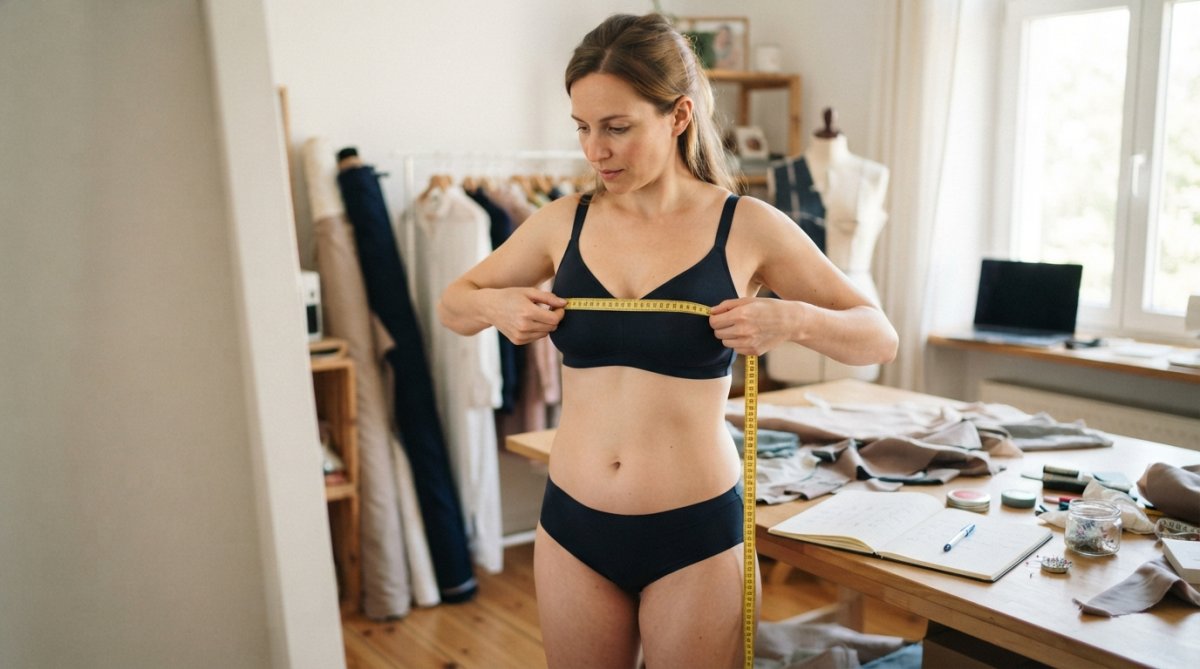
Taking accurate body measurements is the foundation of finding the right dress size online. Use the same tape measure, wear fitted undergarments, and measure in front of a mirror to ensure the tape is parallel to the floor.
Measuring Your Bust
Stand in front of a mirror wearing a fitted bra. Wrap a soft measuring tape around the fullest part of your bust, keeping the tape parallel to the floor. Don't pull tight; it should sit snugly against your body with one finger able to slide underneath. Write down the measurement to the nearest half inch. Many size charts use bust measurement as the primary reference point, so accuracy here matters.
Measuring Your Waist
Find your natural waistline by bending slightly to one side. Your natural waist is where your body naturally creases, not where your pants sit. Wrap the tape measure around this area, keeping it parallel to the floor. This measurement is critical for dresses with defined waists or fitted silhouettes. If a dress's waist measurement is significantly smaller than your natural waist, it may be cut for a different body shape than yours.
Measuring Your Hips
Stand with your feet hip-width apart and measure around the fullest part of your hips, typically about 7-9 inches below your natural waist. Keep the tape parallel to the floor. Hip measurement becomes especially important for fitted dresses, pencil silhouettes, and A-line styles. Knowing your hip circumference lets you compare it directly to the garment dimensions provided in the size chart.
Understanding Size Charts for Online Shopping
A size chart is your most direct line to accurate online dress sizing. Size charts provide actual garment measurements, not body size categories. A "medium" means nothing without context. What matters is whether the dress's bust, waist, and hip measurements align with your body measurements.
When you're looking at a size chart, you're seeing the finished garment's dimensions. A dress marked as a size 8 might have a bust measurement of 36 inches. If your bust measures 37 inches, that dress will likely feel snug. The problem is that ease varies wildly by brand and style. Some designers cut generously; others cut close to the body.
Compare your body measurements directly to the garment measurements in the size chart. If your bust is 36 inches and the size 8 has a bust measurement of 36 inches, you're looking at a fitted dress with minimal ease. If you prefer a more relaxed fit, consider sizing up. If your waist is between two sizes on the chart, look at the dress's silhouette. A-line dresses have more room through the waist, so sizing down might work. Fitted dresses require more precision.
Why Sizing Varies by Brand
The apparel industry has no standardized sizing system. There's no governing body that says a size 10 must have a 35-inch waist. This absence of standardization creates chaos for online shoppers. One brand's size 10 could fit someone who wears a 12 at another brand. This inconsistency drives 52% of online fashion returns, resulting in $62 billion in annual losses fit-related return costs.
Several factors drive this variation. Different brands target different body shapes and use different manufacturing countries with different sizing conventions. Brands also use "vanity sizing", cutting garments larger than the labeled size to make customers feel smaller. A size 8 today might be what a size 10 was twenty years ago.
The practical impact: you can't rely on your usual size across different brands. This is why taking your own measurements and comparing them to each brand's size chart is non-negotiable for accurate online dress sizing. Your body measurements are the constant. The size labels are just numbers that vary by brand.
Fabric Composition and How It Affects Fit
Most online shoppers focus on size but ignore fabric. Fabric composition dramatically affects how a dress fits and moves on your body. A cotton dress fits differently than a polyester blend. A stretchy knit dress fits differently than a rigid woven fabric.
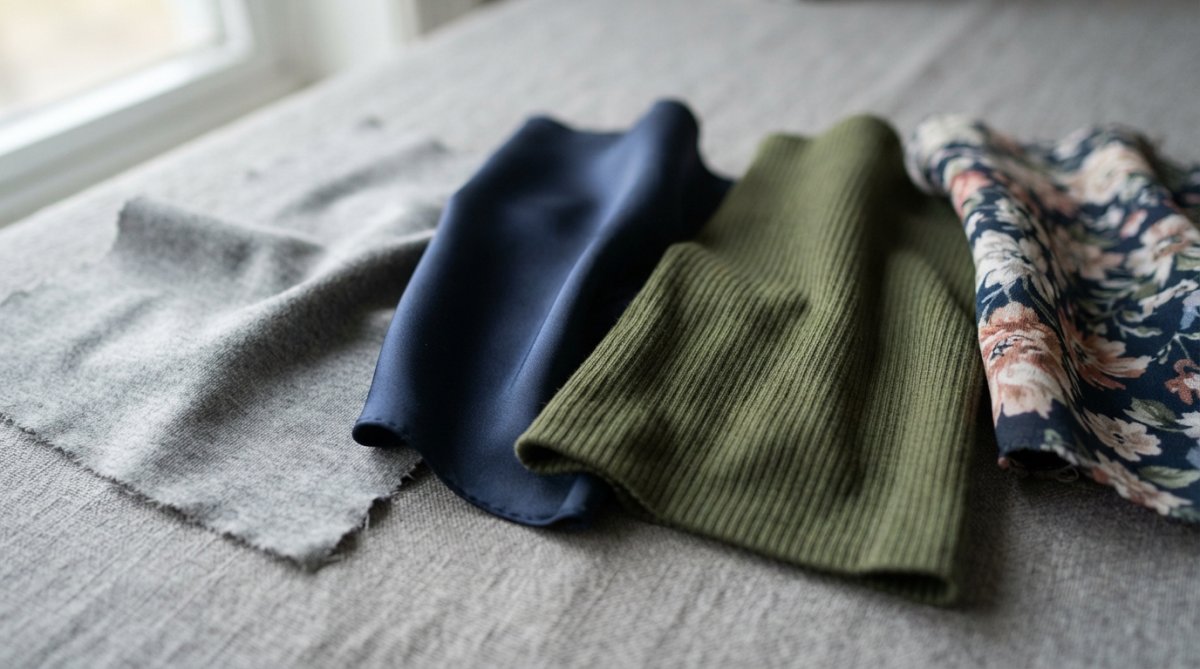
Cotton and linen are rigid fabrics with minimal stretch. A dress made from 100% cotton in your measured size will fit relatively close to those measurements. Conversely, fabrics with elastane or spandex (typically 2-10% of the blend) provide stretch. A polyester-cotton blend with 5% spandex will stretch about an inch in each direction, making the dress feel more forgiving.
Knit fabrics behave differently than woven fabrics. Knits naturally stretch and conform to your body. A knit dress with a 34-inch bust measurement might comfortably fit someone with a 36-inch bust because the fabric gives. Woven fabrics don't stretch significantly. They fit according to their measurements with minimal flexibility.
When you're reviewing a dress online, always check the fabric content. If it's 95% polyester with 5% spandex, expect it to stretch and potentially fit larger than the size chart suggests. If it's 100% cotton, expect it to fit truer to the measurements listed.
Tips for Avoiding Dress Returns
The best way to handle dress returns is to avoid them in the first place. This requires accurate measurements, smart shopping habits, and realistic expectations about fit.
First, always check the return policy before you buy. Knowing the policy upfront affects your willingness to take sizing risks. Second, read customer reviews specifically for fit comments. Skip generic reviews and look for comments like "runs small" or "true to size." These real-world fit experiences are more reliable than size charts.
Third, pay attention to the dress's silhouette and how it relates to your body shape. A fitted sheath dress requires more precision in sizing than an A-line dress. An empire-waist dress sits above your natural waist, so waist measurement matters less. A wrap dress adjusts to your body shape.
Fourth, look for dresses with adjustable elements. A dress with a tie-waist, drawstring, or adjustable straps gives you flexibility if the fit isn't perfect. A fully fitted dress with no adjustments leaves no room for error.
Virtual Fitting Tools and Size Calculators
The apparel industry is investing heavily in technology to solve the sizing problem. Virtual fitting tools and AI-powered size calculators are becoming more common, and they actually work. These tools analyze your body measurements and compare them against thousands of data points from actual returns and customer feedback to recommend the best size.
Some tools use 3D body scanning technology. You upload a photo or use your phone's camera to capture your body from multiple angles. The tool creates a digital model of your body and shows you how different sizes will fit. Other tools use machine learning to analyze your measurements against historical return data.
True Fit's size recommendation solution, used by thousands of retailers, improved size accuracy for 81% of users and reduced return rates by up to 40% AI-powered fit tool effectiveness. TA3 Swim partnered with 3DLOOK's AI body measuring solution and achieved a 47% lower return rate for size-related reasons within 6 months, with a record-low 9% return rate when customers used the fit tool. ARMEDANGELS tested an AI size advisor and saw a 29.9% conversion rate increase and a 2.4% return rate decrease.
These tools work best when you input accurate measurements. If you measure yourself carefully and use a reputable size calculator, your chances of getting the right size improve dramatically. When you're shopping at Maison Amara Boutique or any online retailer, look for size recommendation tools or fit guides.
Finding accurate online dress sizing doesn't have to be stressful. You now have the tools and knowledge to measure yourself correctly, read size charts like an expert, and understand why sizing varies across brands. When you shop at Maison Amara Boutique, use our size guides and fit recommendations alongside your own measurements. Our curated dresses are designed with modern elegance in mind, and with free shipping on orders over $50, you can shop with confidence knowing you're making informed sizing decisions. Start by measuring yourself today, then browse our collection with the clarity that comes from knowing exactly what size works for your body.
=== FAQ ANSWERS (audit these too, same rules) ===
[1] Q: How do I take my own body measurements for accurate online dress sizing? A: Wear fitted undergarments and stand straight in front of a mirror. Use a soft measuring tape, not a rigid ruler. Measure your bust at the fullest part, your waist at the natural indentation, and your hips at the widest point. Keep the tape parallel to the floor and snug but not tight. Write down each measurement to the nearest half-inch. Take measurements twice to ensure accuracy.
[2] Q: Why do dress sizes vary so much between different brands? A: Sizing inconsistency is rampant across the fashion industry. Brands use different measurement standards, fit philosophies, and production facilities, each with their own size specifications. Research shows 91% of consumers report their clothing size changes depending on the brand. Vanity sizing also plays a role, where brands label garments smaller than their actual measurements to appeal to shoppers. This is why consulting the specific size chart for each brand is critical, never assume your usual size will fit without checking measurements first.
[3] Q: What should I do if my measurements fall between two sizes? A: First, check the size chart's fit description. Consider the fabric: stretchy materials like spandex blends accommodate a wider fit range, while rigid fabrics like cotton may feel restrictive. Read customer reviews for that specific dress to see how others with similar measurements rated the fit.
[4] Q: How can fabric type affect how a dress should fit me? A: Fabric composition directly impacts how a dress drapes and moves on your body. Natural fabrics like 100% cotton hold their shape but don't stretch, so measurements must be precise. Blended fabrics with spandex offer 2-5% stretch, forgiving minor measurement errors. Lightweight knits conform to your body, while structured fabrics like linen may require sizing up for comfort. Always check the fabric content in the product description and adjust your size expectations accordingly. A dress labeled 95% polyester, 5% spandex will fit differently than one made of 100% linen.
Frequently Asked Questions
How do I take my own body measurements for accurate online dress sizing?
Wear fitted undergarments and stand straight in front of a mirror. Use a soft measuring tape, not a rigid ruler. Measure your bust at the fullest part, your waist at the natural indentation, and your hips at the widest point. Keep the tape parallel to the floor and snug but not tight. Write down each measurement to the nearest half-inch. Take measurements twice to ensure accuracy.
Why do dress sizes vary so much between different brands?
Sizing inconsistency is rampant across the fashion industry. Brands use different measurement standards, fit philosophies, and production facilities, each with their own size specifications. Research shows 91% of consumers report their clothing size changes depending on the brand. Vanity sizing also plays a role, where brands label garments smaller than their actual measurements to appeal to shoppers. This is why consulting the specific size chart for each brand is critical, never assume your usual size will fit without checking measurements first.
What should I do if my measurements fall between two sizes?
First, check the size chart's fit description. Consider the fabric: stretchy materials like spandex blends accommodate a wider fit range, while rigid fabrics like cotton may feel restrictive. Read customer reviews for that specific dress to see how others with similar measurements rated the fit.
How can fabric type affect how a dress should fit me?
Fabric composition directly impacts how a dress drapes and moves on your body. Natural fabrics like 100% cotton hold their shape but don't stretch, so measurements must be precise. Blended fabrics with spandex offer 2-5% stretch, forgiving minor measurement errors. Lightweight knits conform to your body, while structured fabrics like linen may require sizing up for comfort. Always check the fabric content in the product description and adjust your size expectations accordingly. A dress labeled 95% polyester, 5% spandex will fit differently than one made of 100% linen.
This article was written using GrandRanker