
Where to Find Reliable Clothing Reviews: 2026 Guide
Table of Contents
- Why Reliable Clothing Reviews Matter More Than Ever
- How to Spot Fake Clothing Reviews and Incentivized Feedback
- Best Online Clothing Stores for Trendy Dresses with Authentic Reviews
- How to Check If a Clothing Website Is Safe Before You Buy
- Evaluating Review Credibility: What Authentic Feedback Looks Like
- Beyond Star Ratings: Understanding Sizing, Fit, and Quality Feedback
- Building Your Own Review Strategy Across Multiple Platforms
Last Updated: August 28, 2026
Why Reliable Clothing Reviews Matter More Than Ever
When shopping for clothes online, you lack crucial information: how the fabric feels, how it moves, how it actually fits. Reliable reviews become your most valuable tool.
Over 99% of consumers read online reviews before purchasing, and reviews directly impact 93% of buying choices in apparel according to Capital One Shopping's 2026 online review analysis. Yet this visibility has created a problem: the more valuable reviews become, the more incentive there is to fake them.
An average rating between 4.0 and 4.7 stars generates the highest consumer trust for fashion products, according to Plus Size Clothing's 2026 consumer trust analysis. Shoppers have learned to distrust perfection. A four-star average with detailed feedback about fit issues and durability is far more credible than a 5.0 average with vague praise.
This guide walks you through finding genuine feedback, spotting fakes, and using reviews strategically across multiple platforms.
How to Spot Fake Clothing Reviews and Incentivized Feedback
Fake reviews follow patterns. Once you know what to look for, you'll spot them immediately.
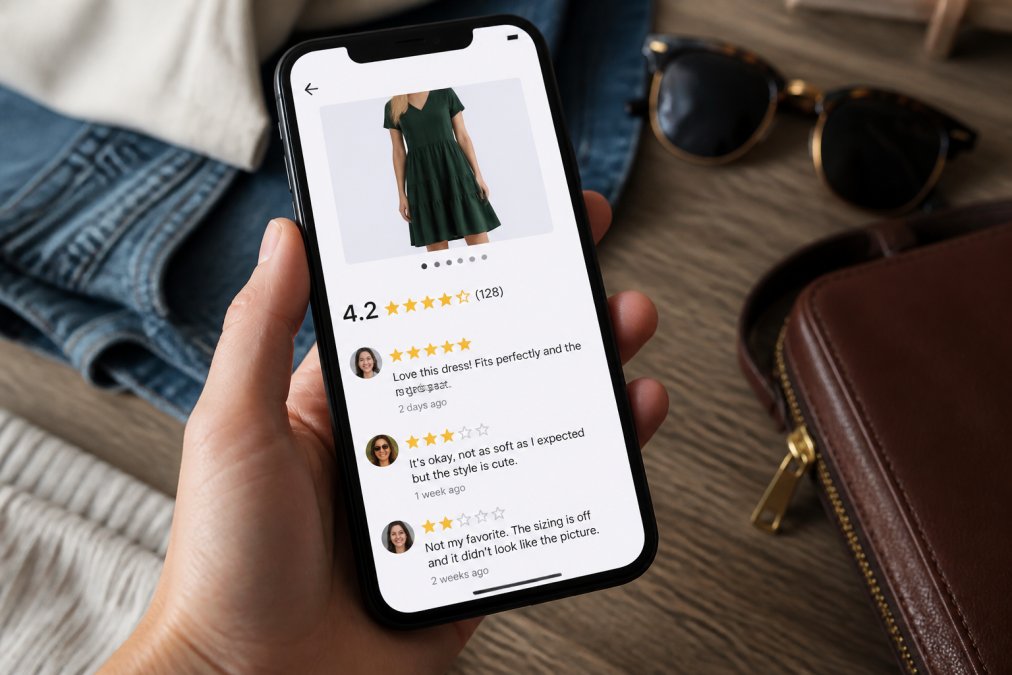
Real customers describe specific problems: "The sizing runs small," "The seams came loose after three washes," "The color is darker than the photos." Fake reviews use marketing language: "This dress is absolutely stunning!" "Perfect for any occasion!" "Best purchase ever made!"
Check review velocity. If a product suddenly gets 50 five-star reviews in a week, then nothing for months, that's a signal. Genuine feedback arrives steadily over time.
Examine reviewer history. A customer with 200 five-star reviews across dozens of unrelated products is likely a paid reviewer. Authentic reviewers typically have limited review histories from actual purchases. According to Fera's 2025 review authenticity research, 90% of American customers consider reviews crucial to purchase decisions, making verification critical.
Incentivized reviews are trickier because they're technically honest, the person bought the item. Look for language like "I received this product in exchange for an honest review." This disclosure is legally required under FTC guidelines but signals potential bias.
Real customer photos are taken in homes with varied lighting and genuine wear patterns. If every photo looks professionally shot, the reviews probably didn't.
Research from PissedConsumer's 2026 consumer trust study found that 33% of consumers trust brands more when they display negative feedback alongside positive reviews, provided the brand responds constructively. A brand engaging with criticism shows they care about customer experience, not just ratings.
Best Online Clothing Stores for Trendy Dresses with Authentic Reviews
Finding stores with genuine customer feedback requires checking multiple signals beyond the average rating.
Maison Amara Boutique offers a curated collection of modern, trendy dresses and accessories. Free shipping on orders over $50 makes it easier for customers to try multiple pieces.
When evaluating any online clothing store, look at how the brand responds to reviews. Do they answer questions? Do they acknowledge problems and offer solutions? An analysis of 350,000 customer reviews revealed that sizing is a consistent pain point across most retailers, according to Thematic's 2018 fashion review analysis. Brands that acknowledge and address sizing issues earn more trust.
Check whether the store displays user-generated content. Stores featuring real customer photos and videos are far more credible than those relying only on professional shots. Visitors interacting with user-generated photos are 103.9% more likely to convert.
Look at review volume and consistency. Products with as few as five reviews see conversion rates rise by up to 270% compared to items with no feedback. Consistent reviews across multiple products suggest genuine customer satisfaction rather than isolated hits.
The best stores make it easy to filter reviews by rating, recency, or helpfulness, signaling they aren't cherry-picking which reviews to highlight.
How to Check If a Clothing Website Is Safe Before You Buy
Before reading reviews, ensure you're on a legitimate website.
Legitimate retailers use secure HTTPS connections (look for a padlock icon). Never enter credit card details on unsecured sites.
Check the domain carefully. Scammers create similar-looking URLs: "fashon-nova.com" instead of "fashionnova.com." Hover over links to verify the actual URL matches what you expect.
Look for trust badges from Trustpilot, McAfee, or Norton. Click badges to verify they're real; legitimate ones link to verification pages.
Check the return policy before buying. Legitimate retailers clearly state their return window, shipping costs, and refund process. Hidden return policies are a red flag.
Real businesses list a physical address, phone number, and email. If only a contact form exists, be cautious.
Search the domain plus "scam" or "reviews" in Google. Check the Better Business Bureau and Federal Trade Commission for complaints. Look at the "about" page, real companies have specificity about their story and leadership.
Evaluating Review Credibility: What Authentic Feedback Looks Like
Authentic reviews contain specific details only someone who owned and wore the item would know.
Real reviews mention fit concretely: "I'm 5'6" and usually wear a size 8, and this dress fit perfectly," or "The waist ran two sizes small." They compare to other brands and describe actual use: "I wore this to a wedding and got multiple compliments."
Fake reviews use generalities: "Great dress!" "Love it!" They don't answer real questions about fit, fabric quality, or longevity.
The most credible reviews acknowledge tradeoffs: "The fit is perfect and quality is excellent, but the color is slightly darker than photos showed." This balanced feedback signals genuine experience.
An analysis of 1.3 million fashion reviews found that sizing remains a consistent pain point across brands. Reviews addressing specific concerns like fit accuracy, fabric durability, and color accuracy are most valuable.
Pay attention to review dates. Recent reviews are more relevant than old ones. Count reviews addressing your specific concern, if you worry about sizing, find reviews from people with your body type.
Beyond Star Ratings: Understanding Sizing, Fit, and Quality Feedback
Star ratings are a starting point. Real value comes from understanding actual customer experience.
Sizing feedback is crucial since it's the number one reason for returns. Reviews specifying "I'm usually a medium and ordered a medium, and it fit perfectly" are useful. The best reviews compare to other brands: "This runs one size small compared to [Brand]."
Fabric quality emerges through repeated mentions. If three reviews mention "seams came loose after washing," that's a pattern. A single complaint doesn't prove anything; repeated mentions do.
Color accuracy matters because monitors vary. Reviews mentioning "darker than photos" or "brighter in person" help set expectations.
Longevity feedback comes from reviews written months after purchase. Someone reviewing six months later has actually tested durability through multiple wears and washes.
Reviews describing actual occasions, weekend brunch versus office wear, help you assess fit for your lifestyle.
Building Your Own Review Strategy Across Multiple Platforms
The most reliable picture emerges when you cross-reference reviews across platforms.
Start with the retailer's website, where verified purchase reviews show the highest volume. Check independent aggregators like Trustpilot or the Better Business Bureau, which verify purchases and track reviewer history. A product with consistent five-star ratings on the retailer's site but mixed reviews on Trustpilot warrants deeper investigation.
Search social media for hashtags like #[BrandName]Review. Instagram and TikTok reviews tend to be candid because people post for followers, not brands.
Read reviews on competitor sites to gain comparative context. You might learn that Brand A's dresses run small while Brand B's run true to size.
Create a personal spreadsheet tracking sizing patterns, quality issues, and durability across brands. Over time, you'll spot when new reviews contradict established patterns.
Leave your own detailed reviews after purchase. Honest feedback improves the review ecosystem and holds brands accountable.
Finding reliable clothing reviews is about developing skepticism without cynicism. Learn which signals indicate genuine customer experience. When you shop at Maison Amara Boutique, you're investing in a brand that values authentic customer feedback and transparent communication about sizing, fit, and quality. Our curated selection of modern, trendy dresses and free shipping on orders over $50 make it easy to try multiple pieces and share honest reviews about what works. Shop now and join a community of customers who prioritize genuine feedback over perfect ratings.
=== FAQ ANSWERS (audit these too, same rules) ===
[1] Q: How can I tell if a clothing review is authentic or fake? A: Authentic reviews typically include specific details about fit, fabric quality, and sizing accuracy, often mentioning how the garment compares to the product photos. Look for reviews that mention both strengths and weaknesses, research shows 76% of consumers trust mixed reviews more than perfect five-star ratings. Fake reviews often use generic language, lack specific details, or appear in clusters posted on the same day. Check reviewer profiles for purchase verification badges and review history across multiple products.
[2] Q: What's the best way to evaluate reliable clothing reviews before buying? A: Start by reading reviews that match your body type, size, and style preferences rather than treating all feedback equally. Focus on comments addressing fit accuracy, fabric durability, and whether the garment matched product photos. Cross-reference reviews across multiple platforms to identify consistent themes about quality and sizing. According to recent data, 86% of apparel shoppers regularly read reviews, and those who interact with user-generated photos are 103.9% more likely to convert, so prioritize reviews with customer photos showing actual wear.
[3] Q: Why should I check third-party review sites instead of just reading reviews on the brand's website? A: Third-party platforms provide independent verification and reduce the likelihood of curated or filtered feedback. Many retailers display only positive reviews on their own sites, while independent review aggregators include the full spectrum of customer experiences. A study analyzing 1.3 million fashion reviews found that authentic feedback, including constructive criticism, builds stronger consumer trust. Third-party sites also allow you to compare multiple brands side-by-side and spot patterns in common complaints about sizing or durability that individual retailers might downplay.
[4] Q: What red flags should I watch for when evaluating a clothing website's credibility? A: Watch for missing or unclear return policies, absence of customer reviews or user-generated content, poor website security indicators (no HTTPS or trust badges), and vague product descriptions lacking material composition details. Legitimate clothing retailers provide transparent shipping timelines, detailed fit guides, and responsive customer service contact information. Be cautious of sites with suspiciously perfect ratings or reviews that sound overly promotional. Check for third-party verification through Better Business Bureau or industry-specific trust seals, and verify that contact information and physical address details are complete and verifiable.
Frequently Asked Questions
How can I tell if a clothing review is authentic or fake?
Authentic reviews typically include specific details about fit, fabric quality, and sizing accuracy, often mentioning how the garment compares to the product photos. Look for reviews that mention both strengths and weaknesses, research shows 76% of consumers trust mixed reviews more than perfect five-star ratings. Fake reviews often use generic language, lack specific details, or appear in clusters posted on the same day. Check reviewer profiles for purchase verification badges and review history across multiple products.
What's the best way to evaluate reliable clothing reviews before buying?
Start by reading reviews that match your body type, size, and style preferences rather than treating all feedback equally. Focus on comments addressing fit accuracy, fabric durability, and whether the garment matched product photos. Cross-reference reviews across multiple platforms to identify consistent themes about quality and sizing. According to recent data, 86% of apparel shoppers regularly read reviews, and those who interact with user-generated photos are 103.9% more likely to convert, so prioritize reviews with customer photos showing actual wear.
Why should I check third-party review sites instead of just reading reviews on the brand's website?
Third-party platforms provide independent verification and reduce the likelihood of curated or filtered feedback. Many retailers display only positive reviews on their own sites, while independent review aggregators include the full spectrum of customer experiences. A study analyzing 1.3 million fashion reviews found that authentic feedback, including constructive criticism, builds stronger consumer trust. Third-party sites also allow you to compare multiple brands side-by-side and spot patterns in common complaints about sizing or durability that individual retailers might downplay.
What red flags should I watch for when evaluating a clothing website's credibility?
Watch for missing or unclear return policies, absence of customer reviews or user-generated content, poor website security indicators (no HTTPS or trust badges), and vague product descriptions lacking material composition details. Legitimate clothing retailers provide transparent shipping timelines, detailed fit guides, and responsive customer service contact information. Be cautious of sites with suspiciously perfect ratings or reviews that sound overly promotional. Check for third-party verification through Better Business Bureau or industry-specific trust seals, and verify that contact information and physical address details are complete and verifiable.
This article was written using GrandRanker