
How to Identify Quality Clothing Fabrics
Table of Contents
- Why Identifying Quality Fabrics Matters
- Natural vs Synthetic Fabric Guide: Understanding Fiber Content
- Assess Fabric Density, Weave, and Hand-Feel
- Evaluate Stitching and Seam Quality
- How to Read Clothing Care Labels
- How to Find Perfect Dress Size Online
- Red Flags and What to Avoid
- Conclusion
Last Updated: August 29, 2026
Why Identifying Quality Fabrics Matters
Textiles account for 5.8 percent of total municipal solid waste generation, according to US EPA waste data, yet only 14.7 percent of textiles are actually recycled. This disconnect reveals a hard truth: most people buy clothing without understanding quality, then discard it prematurely. Learning how to identify quality clothing fabrics isn't just about getting better value, it's about breaking a cycle of waste that costs you money and harms the environment.
Less than 1% of clothes are recycled to make new clothes, which means your initial choice matters enormously. Buying one well-made dress that lasts five years beats buying five disposable ones that fall apart in months. This guide walks you through exactly how to spot quality before you buy.
Natural vs Synthetic Fabric Guide: Understanding Fiber Content
The fiber content determines how a fabric will feel, perform, and age. Natural fibers breathe and soften with wear. Synthetic fibers resist wrinkles and maintain shape. Most quality garments use blends that combine the best of both worlds, but you need to read labels carefully, because 37% of clothing items tested in a recent EU campaign had labels that did not correctly reflect the materials used (EU Commission textile labeling accuracy study).
Natural Fibers: Cotton, Linen, Wool, and Silk
Cotton is the most common natural fiber, prized for breathability and softness. High-quality cotton feels smooth and substantial in your hand. Look for "long-staple" cotton varieties like Pima or Egyptian cotton, the longer fibers create stronger, softer yarns. The Summer Dress Woman BYMANYC ® New York Brooklyn Breeze from Maison Amara Boutique showcases this principle with its luxury lightweight cotton construction, designed specifically for the fluid drape and breathability that quality cotton delivers.

Linen wrinkles easily but becomes softer and more comfortable with every wash. Quality linen has a slight texture but feels crisp, not stiff. Wool provides natural insulation and resists wrinkles, though lower-quality wool can feel scratchy. Silk is delicate but drapes beautifully and develops a subtle sheen with age.
When examining natural fibers, run your fingers across the fabric. High-quality natural fibers feel smooth and uniform. Rough patches or inconsistent texture signal lower quality.
Synthetic Fibers: Polyester, Nylon, and Acrylic
Polyester is durable, resists wrinkles, and holds dyes well. Quality polyester feels smooth and has a subtle sheen. Poor-quality polyester feels plasticky and clammy against skin. Nylon offers exceptional strength and elasticity, making it ideal for activewear and stretch fabrics. Acrylic mimics wool but is lighter and more affordable, though it pills more easily than natural fibers.
Synthetics don't breathe as well as natural fibers, but they excel at holding shape and resisting stains. Many quality garments combine synthetics with natural fibers to balance comfort and durability.
Identifying Fiber Blends and Ratios
The fiber ratio matters as much as the fiber types themselves. A 60% cotton, 40% polyester blend feels different from 40% cotton, 60% polyester. The first prioritizes comfort; the second prioritizes durability and wrinkle resistance.
Check the care label for the exact percentages. If a label says "cotton blend" without percentages, that's a red flag, manufacturers are often vague about blends that favor cheaper synthetics. Quality brands specify exact ratios because they're proud of their composition.
Assess Fabric Density, Weave, and Hand-Feel
Fabric density, how tightly fibers are packed, determines durability and comfort. Dense fabrics resist pilling and wear better. Loose weaves feel airy but pill easily and may develop holes over time.
Testing Fabric Density and Opacity
Hold the fabric up to light. If you can see through it easily, the weave is loose. Quality fabrics show minimal light transmission. A simple test: hold the fabric at arm's length and look for a clear silhouette of your hand through it. High-quality fabrics show only a faint outline.
Density is measured in GSM (grams per square meter). Most quality everyday fabrics fall between 150-200 GSM. Below 120 GSM feels thin and flimsy. Above 250 GSM feels heavy and substantial, appropriate for winter coats but not summer dresses.
Examining Weave Pattern and Drape
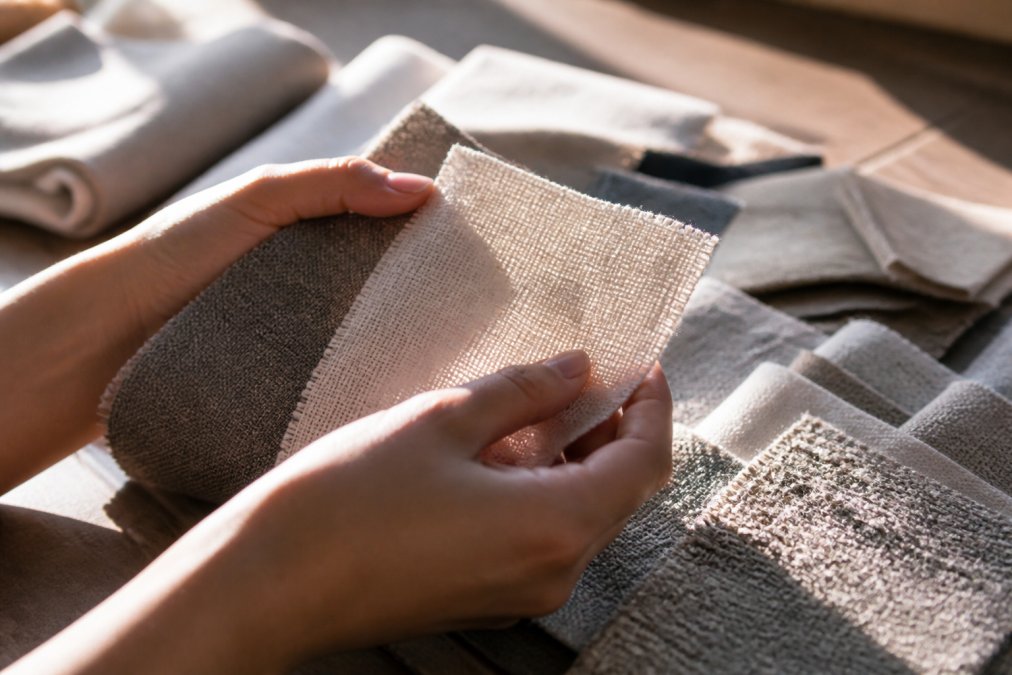
The weave pattern affects how fabric hangs and moves. Tightly woven fabrics drape smoothly. Loose weaves create a softer, more flowing drape but sacrifice durability. Run your eyes across the fabric surface, you should see a consistent, regular pattern. Inconsistent weaving signals manufacturing quality issues.
Drape refers to how the fabric falls and moves on your body. Quality fabrics drape gracefully without clinging or billowing. Poor fabrics either cling awkwardly or hang stiffly. Test drape by holding a swatch vertically and observing how it folds and moves.
The Squeeze Test for Hand-Feel
Hand-feel describes how fabric feels against your skin. This is subjective but crucial for wearability. Squeeze a handful of fabric gently. Quality fabrics feel soft and return to their original shape quickly. Fabrics that stay creased or feel stiff have poor hand-feel.
Run the fabric between your fingers. It should feel smooth without slickness. A plasticky feel indicates low-quality synthetics or cheap finishes. A slightly fuzzy feel in natural fibers is normal and often desirable.
Evaluate Stitching and Seam Quality
Construction quality separates garments that last from ones that fall apart. Poor stitching is a common garment defect in manufacturing. This is preventable through careful inspection.
Stitch Count and Seam Allowance
Examine the seams closely. Quality garments have tight, even stitches spaced consistently. Count the stitches per inch if you can, quality seams have 10-12 stitches per inch. Fewer stitches mean the seam will fail faster under stress.
Seam allowance, the fabric between the stitching and the edge, should be at least 0.5 inches for durability. Some quality brands use 0.75-inch seam allowances for extra strength. Look inside the garment to check this.
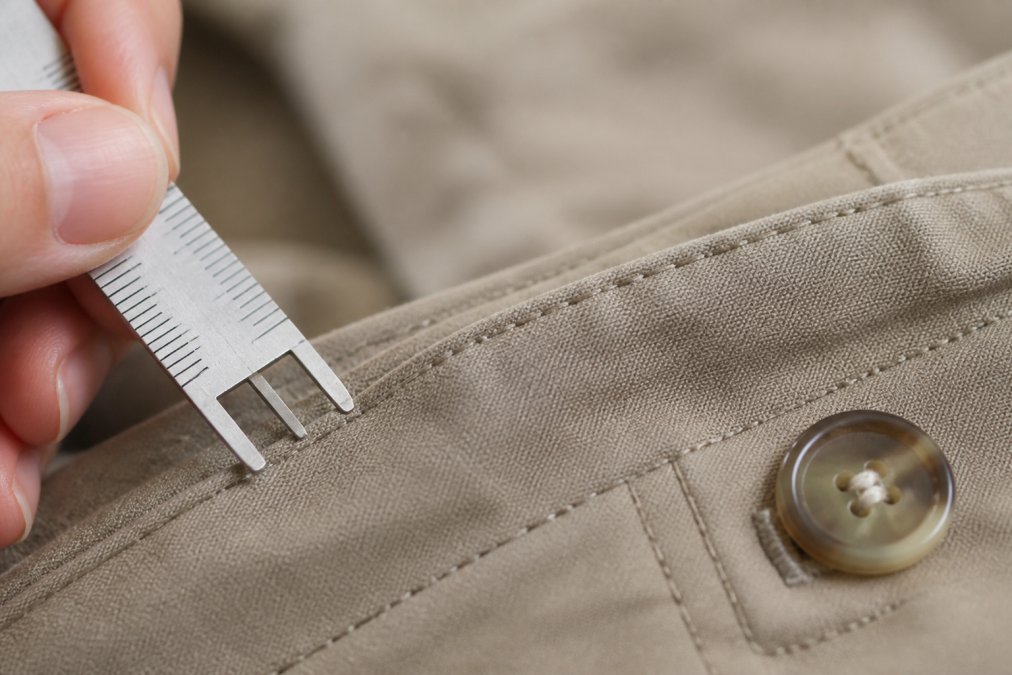
Check where seams meet, at armpits, side seams, and collar attachments. Quality construction shows reinforced stitching at stress points. You might see a second row of stitching or a zigzag stitch for extra strength.
Button and Hardware Durability
Buttons and zippers reveal manufacturing standards. Quality buttons feel substantial and are sewn with thread that won't unravel. Cheap buttons feel hollow and are often glued rather than sewn. Press buttons firmly, they shouldn't move or feel loose.
Examine button attachment closely. Quality garments use multiple passes of thread, often creating an X or star pattern. A single pass of thread is a sign of cost-cutting. Check that buttons are sewn through the fabric, not just through a surface layer.
For zippers, pull gently. Quality zippers slide smoothly without catching. The slider should feel substantial, not flimsy. Metal zippers outlast plastic ones, though quality plastic zippers work fine. Check that the zipper tape is sewn securely to the garment.
How to Read Clothing Care Labels
Care labels communicate fiber content, washing instructions, and often reveal manufacturing standards. Over 50% of consumers express concern about chemical exposure from clothing, according to the International Textile and Apparel Association chemical safety study, making label transparency increasingly important.
Fiber Content Labels and Accuracy
Fiber content must be listed in descending order by percentage. A label reading "95% cotton, 5% elastane" means the garment is primarily cotton with a small amount of stretch fiber. This information determines how you'll care for the garment and what performance to expect.
Quality brands list exact percentages. Labels that say only "cotton blend" without numbers are vague, often intentionally, to hide high synthetic content. Demand specificity.
Check for misleading claims. "Natural fiber blend" might mean 51% natural and 49% synthetic. "Organic" should appear with a certifying organization. "Eco-friendly" is often meaningless without specific standards.
Care Instructions and Post-Wash Performance
Care instructions reveal expected durability. "Dry clean only" often indicates delicate fabrics that won't withstand regular washing. "Machine wash cold, gentle cycle" suggests the garment is durable but needs care. "Machine wash warm, regular cycle" indicates a sturdy, low-maintenance piece.
Check shrinkage information if listed. Quality fabrics are pre-shrunk and won't shrink significantly. If a label warns about major shrinkage, the manufacturer knows the fabric isn't stable, a quality concern.
Temperature recommendations matter. Cold water washing extends garment life and reduces fading. If a label recommends warm or hot water, the dyes aren't high-quality.
How to Find Perfect Dress Size Online
Sizing inconsistency frustrates online shoppers, but it's often a quality indicator. Brands that maintain consistent sizing across styles invest in quality control. Brands with wildly inconsistent sizing cut corners in manufacturing.
Using Size Charts and Measurement Guides
Never rely on standard sizes alone. A size 8 varies dramatically between brands. Use detailed size charts that include bust, waist, hip, and length measurements. Measure yourself accurately, wear fitted clothing and use a soft measuring tape.
Compare your measurements to the chart, not to your typical size. If your bust measures 36 inches and the chart shows size 6 is 35-37 inches, you're a size 6 in that brand, regardless of what you usually wear.
Quality brands provide multiple measurement points. Charts showing only bust measurement are incomplete. Look for brands that measure shoulder width, armhole depth, and sleeve length, indicators of detailed quality control.
Reading Customer Reviews for Fit Feedback
Customer reviews reveal actual fit experiences. Read reviews from people with similar measurements to yours. Pay attention to comments about fit consistency, fabric behavior after washing, and durability over time.
Quality garments receive consistent fit feedback. If reviews say "runs small" or "shrinks significantly," that's a quality flag. The best reviews mention specific details: "I'm 5'8" with a 36-inch bust and the medium fits perfectly with room to move."
Look for reviews mentioning fabric quality and longevity. "Still looks new after 20 washes" indicates quality. "Pilled after two wears" indicates cheap fabric.
At Maison Amara Boutique, we encourage customers to read detailed reviews before purchasing. Our community of shoppers provides honest feedback about fit, fabric quality, and how garments hold up over time. This transparency helps you make informed decisions about which pieces will actually work for your lifestyle.
Red Flags and What to Avoid
Certain warning signs indicate low-quality garments. Trust your instincts when something feels off.
Avoid garments with loose, uneven stitching. Crooked seams, dropped stitches, or thread bunching signal manufacturing problems. These defects worsen with washing.
Inspect hems carefully. Quality hems are sewn with thread matching the garment color and have even stitching. Loose hems or visible glue indicate cost-cutting.
Check for pilling potential. Rub the fabric vigorously with your hand. If fibers ball up immediately, the fabric will pill within weeks. Quality fabrics resist pilling.
Avoid garments with strong chemical smells. This indicates inadequate finishing or potential chemical residues. Quality fabrics smell neutral or slightly pleasant.
Be skeptical of prices that seem too good to be true. Extremely low prices often reflect poor fabric quality, weak construction, or both. Compare price to fiber content, construction details, and customer reviews.
Watch for vague labeling. "Made with quality materials" means nothing. Specific fiber percentages, GSM information, and care instructions indicate a manufacturer confident in their product.
Conclusion
Learning to identify quality clothing fabrics transforms your shopping experience. You'll spend less money overall because garments last longer. You'll waste less because you're not constantly replacing worn-out pieces. And you'll feel better knowing your clothes are made with care and integrity.
Quality isn't about price, it's about understanding what you're buying. Dense, well-constructed fabrics with proper stitching and accurate labeling will serve you for years. The Paige Eyelet Embroidered Puff Sleeve Blouse at Maison Amara Boutique exemplifies this principle: 100% cotton construction, precise eyelet embroidery, and clean seam work that holds up to regular wear and washing.

Start with these inspection techniques on your next shopping trip. Hold fabrics up to light. Examine seams closely. Read labels carefully. Feel the hand-feel. Within weeks, you'll develop an intuition for quality that makes shopping faster and smarter.
Your wardrobe, and your wallet, will thank you.
== FAQ ANSWERS (audit these too, same rules) ===
[1] Q: What are the signs of high-quality fabric construction? A: High-quality fabrics show consistent, tight stitching with secure button attachment, and even seam allowances. The weave feels dense and uniform without pilling after a squeeze test. Natural fibers like cotton and linen drape smoothly, while well-made synthetics maintain their shape. Check that labels accurately reflect fiber content, 37% of clothing items tested in a recent EU campaign had inaccurate labels, so verify the feel matches the description.
[2] Q: How can you tell the difference between natural and synthetic fibers? A: Natural fibers like cotton, linen, and silk feel soft and breathable, absorb moisture, and develop a pleasant patina over time. Synthetic fibers like polyester and nylon feel smoother, sometimes slippery, and resist moisture. Burn tests work too: natural fibers smell like burnt paper, while synthetics smell like chemicals. Most quality garments blend both, check the care label for exact fiber ratios.
[3] Q: What's the squeeze test for fabric quality? A: The squeeze test measures fabric recovery. Firmly squeeze a section of fabric in your hand for 5 seconds, then release. High-quality fabrics spring back to their original shape immediately, indicating good tensile strength. Fabrics that remain wrinkled or creased have poor recovery and will look worn quickly. This simple test reveals whether the fabric has enough structural integrity to withstand daily wear and washing.
[4] Q: Why should I prioritize fabric quality when shopping for dresses online? A: Quality fabrics last longer, fit better, and feel more comfortable against your skin. With 14.7% of textiles recycled and less than 1% of clothes remade into new garments, buying durable pieces reduces waste. Poor stitching is a common cause of garment failures, while quality construction prevents costly returns. Investing in well-made dresses saves money long-term and ensures your wardrobe pieces transition seamlessly from office to evening activities without falling apart after a few washes.
Frequently Asked Questions
What are the signs of high-quality fabric construction?
High-quality fabrics show consistent, tight stitching with secure button attachment, and even seam allowances. The weave feels dense and uniform without pilling after a squeeze test. Natural fibers like cotton and linen drape smoothly, while well-made synthetics maintain their shape. Check that labels accurately reflect fiber content, 37% of clothing items tested in a recent EU campaign had inaccurate labels, so verify the feel matches the description.
How can you tell the difference between natural and synthetic fibers?
Natural fibers like cotton, linen, and silk feel soft and breathable, absorb moisture, and develop a pleasant patina over time. Synthetic fibers like polyester and nylon feel smoother, sometimes slippery, and resist moisture. Burn tests work too: natural fibers smell like burnt paper, while synthetics smell like chemicals. Most quality garments blend both, check the care label for exact fiber ratios.
What's the squeeze test for fabric quality?
The squeeze test measures fabric recovery. Firmly squeeze a section of fabric in your hand for 5 seconds, then release. High-quality fabrics spring back to their original shape immediately, indicating good tensile strength. Fabrics that remain wrinkled or creased have poor recovery and will look worn quickly. This simple test reveals whether the fabric has enough structural integrity to withstand daily wear and washing.
Why should I prioritize fabric quality when shopping for dresses online?
Quality fabrics last longer, fit better, and feel more comfortable against your skin. With 14.7% of textiles recycled and less than 1% of clothes remade into new garments, buying durable pieces reduces waste. Poor stitching is a common cause of garment failures, while quality construction prevents costly returns. Investing in well-made dresses saves money long-term and ensures your wardrobe pieces transition seamlessly from office to evening activities without falling apart after a few washes.
Ready to build a wardrobe of quality pieces that last? Explore Maison Amara Boutique's curated collection of modern, trendy dresses and accessories designed for everyday elegance. Every piece is selected for quality construction, thoughtful fabric choices, and versatile styling. Plus, enjoy free shipping on all orders over $50. Shop now and invest in pieces that work as hard as you do.
This article was written using GrandRanker