
Versatile Dresses for Work and Brunch: 2026 Style Guide
Table of Contents
- Why Versatile Dresses Belong in Every Wardrobe
- What to Look for in Casual Work Dresses
- Summer Work Dresses: Staying Cool and Professional
- Brunch Dresses That Also Work for the Office
- How to Style a Dress for Work and Brunch
- Dress Code Guidance by Workplace
- Fabric Care and All-Day Comfort
- Finding Your Perfect Fit and Size
- Frequently Asked Questions
Last Updated: October 6, 2026
Why Versatile Dresses Belong in Every Wardrobe
A wardrobe staple earns its keep when you can wear it twice in a day without changing. Versatile dresses for work and brunch bridge a 9 a.m. meeting and an 11 a.m. weekend table with friends.
The shift toward hybrid schedules has made this question more pressing. Research from IWG's Workwear Re-imagined study examined how hybrid working has reinvented business attire, and the findings point in one direction: fewer, more flexible pieces that do more work per wear.
A versatile dress meets a workplace dress code and still reads relaxed outside it, a function of silhouette, fabric, and styling.
What to Look for in Casual Work Dresses
Casual work dresses sit mid-spectrum: more polished than weekend wear, less rigid than a suit.
Start with these criteria:
- Fabric weight: mid-weight knits and structured wovens hold their shape through a full day
- Coverage: straps wide enough for a bra, hems that clear the knee when seated
- Neutral or adaptable color: black, navy, camel, and olive pair with everything
Fabric and Comfort Considerations
Breathable fabric matters more than most shoppers expect, a dress that traps heat looks tired by noon.
A small percentage of elastane in a structured fabric is the sweet spot; too much stretch in a lightweight knit clings.
Silhouettes That Work for the Office
A-line, wrap, and belted midi styles are the most reliable office silhouettes, each defining the waist without feeling restrictive.
The A-line dress skims rather than clings, which makes it forgiving across body types. Retailers like White House Black Market's work dress selection highlight shirtdresses, sweater dresses, and belted midi dresses as versatile options for hybrid offices, and that matches what we see working in practice.
Summer Work Dresses: Staying Cool and Professional
Warm-weather dressing is where most office wardrobes fall apart. The solution is fabric and cut, not more layers, the same dress that keeps you cool at 9 a.m. should still look right at a shaded brunch table two hours later.
Summer work dresses should be sleeveless or short-sleeved, in breathable fabric, with a professional hem. Linen blends and cotton poplin keep air moving, and a structured sleeveless sheath in a mid-weight fabric looks sharper than a flimsy sundress.
Breathable Fabrics for Warm Weather
Cotton, linen blends, and bamboo-derived viscose breathe best; avoid heavy polyester, which traps heat and shows sweat.
A simple test: hold the fabric to light. If you can see through it easily, it may be too thin for the office; if it feels stiff and heavy, it will be uncomfortable by mid-afternoon.
Fabric weight is measured in grams per square meter (GSM), and it is the single most useful number on a product page. As a working rule:
- Under 120 GSM: too sheer for most offices without a slip; better for a beach cover-up than a desk
- 120-180 GSM: the sweet spot for summer work dresses, light enough to breathe, opaque enough to sit under office lighting
- 180-240 GSM: mid-weight; works for air-conditioned offices and transitions into early fall with a blazer
Most retailers do not publish GSM, so combine the light test with the drape test: hold the fabric at arm's length and let it fall.
Layering for Air-Conditioned Offices
The real summer problem is the 68°F office and the 90°F sidewalk you cross to get to brunch. Build the outfit around one dress and two layers:
- A lightweight cardigan or cropped blazer in a neutral tone handles the office chill and comes off the moment you step outside
- A thin knit wrap or pashmina folds flat in a tote and doubles as a shoulder cover for a conservative office
- A slip in a matching or nude tone solves the sheer-fabric problem without adding heat
For footwear, a closed-toe flat or low block heel works for the office; swap to a sandal or clean sneaker for brunch, keeping the swap pair in your bag or car.
Warm-Weather Silhouettes That Hold Up
The summer silhouettes that survive a full day share three traits: a defined waist, a hem that clears the knee when seated, and enough structure to resist creasing.
- Sleeveless sheath in ponte or a structured cotton blend: the most reliable office option; add a cardigan for conservative settings
- Wrap dress in a lightweight crepe: adjustable at the waist, flattering across body types, and it reads relaxed enough for brunch
- A-line midi in cotton poplin: skims rather than clings, which matters in heat; the crisp finish keeps it looking intentional
Avoid thin jersey maxis and unstructured sundresses for the office. They photograph well and fall apart by 10 a.m.
Seasonal Adaptability: Making One Dress Work Past August
The most versatile summer dress is the one you can still wear in October. Three adjustments extend the season:
- Add tights. A 40-denier opaque tight in black or navy turns a summer midi into a fall work dress. Pair with a closed-toe boot or loafer.
- Add a blazer. A structured blazer over a sleeveless sheath reads as a suit alternative in business-casual offices.
- Swap the shoe. Sandals signal summer; a closed-toe pump or ankle boot signals fall. The dress does not change, the shoe does.
People who get the most wear from a summer dress buy one silhouette in a mid-weight fabric and a neutral color, then change layers and shoes across three seasons. The dress is the constant; everything else is a variable.
Brunch Dresses That Also Work for the Office
The best brunch dresses double as office wear because they share the same foundations: a flattering cut, comfortable fabric, and a color that works in both settings.
Midi dresses suit casual workwear, brunch, daytime events, and weekend outfits, which is exactly the range this article is targeting. Style guidance from Adrianna Papell's brunch outfit guide points to soft pastels, bold colors, monochrome looks, neutrals, and floral prints as strong brunch choices.
| Setting | Dress Choice | Styling Move |
|---|---|---|
| Office | Structured midi, neutral tone | Add blazer, closed-toe flats |
| Brunch | Same midi dress | Remove blazer, add sandals, tote |
| Weekend errands | Knit or A-line | Sneakers, crossbody bag |
| Evening drinks | Wrap or belted midi | Heels, statement earrings |
How to Style a Dress for Work and Brunch
Styling turns one dress into two outfits: the dress stays the same, while accessories and layers do the work.
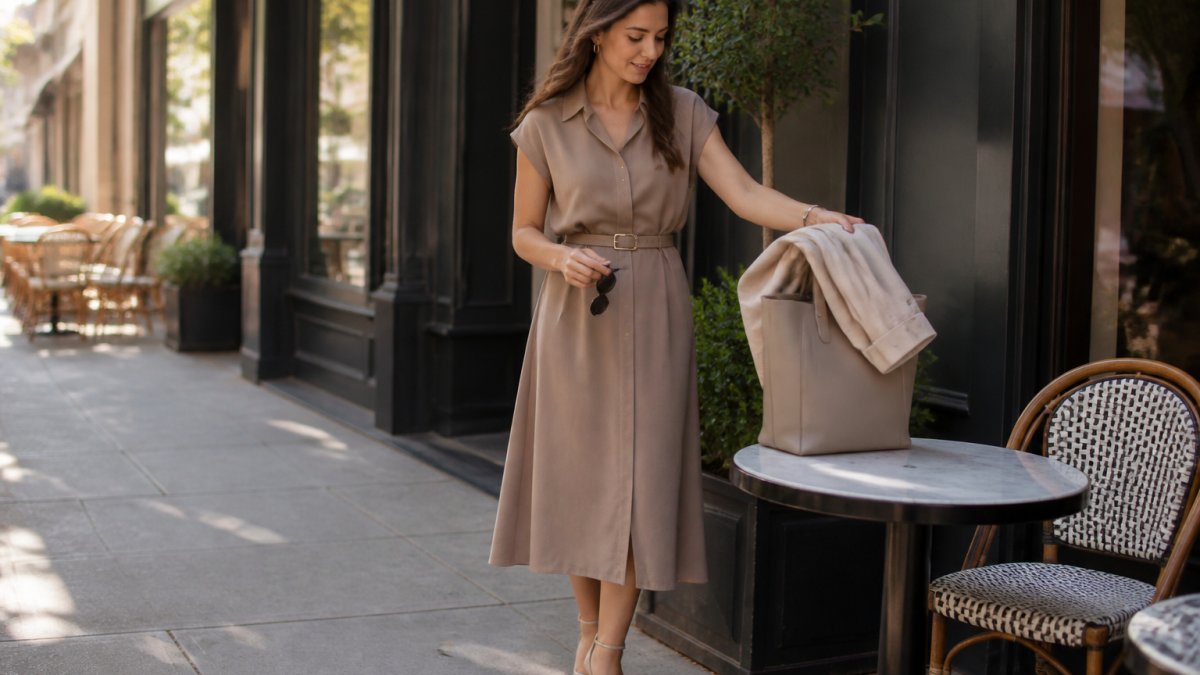
For work, add a structured blazer, closed-toe shoes, and a structured tote, keeping jewelry minimal for a clean, professional look.
For brunch, remove the blazer, swap to sandals or clean sneakers, and add a lighter bag. Sunglasses and a simple necklace finish the look.
Office-to-Brunch Transition Tips
The transition takes about three minutes if you plan ahead. Keep a small bag in your car or desk with the swap items: sandals, sunglasses, a lighter tote, and one piece of statement jewelry.
A common mistake is over-accessorizing for work to "save time" later. Keep the work look simple, then add the brunch pieces at the end.
Dress Code Guidance by Workplace
Dress codes vary enough that the same dress can be perfect in one office and too casual in another. The trick is not owning four dresses but knowing which levers to adjust, neckline, hemline, sleeve, and fabric formality, so one dress reads correctly in each environment.
The Four Levers
Understand what each lever signals:
- Neckline: Higher and closer to the collarbone reads more formal. A crew or boat neck is safest for conservative offices. A V-neck or square neck reads more relaxed and works in business-casual and creative settings. A halter or off-shoulder is almost never office-appropriate without a layer.
- Hemline: At or just below the knee is the most broadly acceptable. Midi (mid-calf) reads modern and professional in most offices. Mini is generally not office-appropriate without opaque tights and even then is risky in conservative settings. Maxi can work in creative offices but reads casual in formal ones.
- Sleeve: Long or three-quarter sleeves are the most formal. Short sleeves are fine in business casual. Sleeveless is acceptable in most offices but should be paired with a cardigan or blazer in conservative ones.
Matching the Dress to the Code
- Business formal: structured sheath or tailored midi, covered shoulders, closed-toe shoes. Neckline at or above the collarbone. Hemline at or below the knee. No visible prints larger than a subtle pinstripe. A blazer is expected, not optional.
- Business casual: A-line, wrap, or belted midi in a mid-weight fabric. Short sleeves or sleeveless with a layer. Hemline at or just below the knee. Small prints and muted colors are fine. Closed-toe flats or low heels.
- Smart casual: knit dresses, sweater dresses, relaxed midi styles. Sleeveless is fine without a layer. Hemline can be slightly above the knee. Clean sneakers or loafers are acceptable in many offices.
Adapting One Dress Across Codes
The same dress can move across three of these four codes with the right adjustments:
| Code | Neckline | Hemline | Sleeve | Layer |
|---|---|---|---|---|
| Business formal | Crew or boat | At or below knee | Long or 3/4 | Structured blazer |
| Business casual | V or square | At or just below knee | Short or sleeveless + cardigan | Lightweight blazer or cardigan |
| Smart casual | Any | Slightly above knee | Sleeveless OK | None needed |
| Creative | Any | Any | Any | None needed |
A structured midi in a neutral tone with a crew or boat neck is the single most adaptable dress. It reads formal with a blazer, business casual with a cardigan, and smart casual on its own. That is the dress to buy first.
When You Are Unsure
If you are unsure about your office's code, a structured midi in a neutral tone is the safest bet: professional in stricter offices, still right in relaxed ones.
People who dress well across multiple codes own fewer dresses, not more: two or three structured midis in neutral tones, with the layer, shoe, and accessory changed. That is the whole system.
Fabric Care and All-Day Comfort
A dress only stays versatile if it survives real wear. Care instructions matter as much as the cut.
Machine-washable fabrics save time and money; if a dress is dry-clean only, factor that into how often you will wear it.
For all-day comfort, check three things: seam placement, waistband pressure, and hem length when seated. A dress that digs in at the waist will not make it to brunch.
Finding Your Perfect Fit and Size
Fit is the difference between a dress you reach for weekly and one that hangs in the closet, and online sizing is a fair concern for most shoppers.
Use the brand's specific size chart, not a general one.
Inclusive size ranges matter: a dress that only comes in a narrow size band is not truly versatile. Look for brands that offer a wide range and show the dress on different body types.
Frequently Asked Questions
What dresses are appropriate for both work and brunch?
Midi dresses with structured silhouettes work well for both settings. A-line, wrap, and shirt dresses in neutral colors like navy, black, or soft pastels transition easily. Look for fabrics that resist wrinkles, such as ponte or crepe, so you look polished from desk to dining. Adding a blazer or cardigan dresses it up for the office, while removing layers and swapping heels for flats makes it brunch-ready.
How can you style a work dress for brunch?
Start with a versatile dress like a belted midi or wrap style. For brunch, swap structured pumps for sandals or white sneakers, remove any blazer, and add a crossbody bag. Statement jewelry or a colorful scarf can shift the look from professional to social. The key is choosing a dress with a classic silhouette that feels appropriate in both settings without looking like you just left the office.
What should you look for in a versatile work dress?
Prioritize wrinkle-resistant, breathable fabrics like ponte, crepe, or cotton blends. Choose a silhouette that flatters your shape and falls at or below the knee for office appropriateness. Details like pockets, a defined waist, and a modest neckline add practicality. Neutral colors offer more styling options, but prints can work if the cut is professional. Always check the size range and return policy before buying online.
What shoes go with a dress for work and brunch?
For work, closed-toe pumps, loafers, or block heels keep the look professional. For brunch, switch to sandals, mules, or clean white sneakers. A low block heel works for both if you want one pair. Neutral colors like nude, black, or tan coordinate with most dresses. If your dress is casual, a stylish flat or wedge can bridge the gap between office and weekend wear.
Building a wardrobe that moves from desk to brunch without a costume change takes the right pieces, not more of them. At Maison Amara Boutique, we curate trendy women's clothing and stylish dresses designed for exactly this kind of everyday elegance, with free shipping on orders of $50 and more. Start with one structured midi in a neutral tone and build from there. Shop now and find the dress that works as hard as you do.