
Sustainable Fabric Options for Modern Everyday Dresses
Table of Contents
- Why Sustainable Fabric Matters for Everyday Dresses
- Eco-Friendly Fabrics for Dresses: The Quick Comparison
- 1. Organic Cotton Dresses: The Everyday Workhorse
- 2. Linen Dresses: Warm-Weather Breathability
- 3. Tencel, Lyocell, and Regenerated Cellulose
- 4. Hemp and Other Plant-Based Materials
- 5. Recycled Fabric Dresses: Giving Fibers a Second Life
- 6. Wool, Alpaca, and Animal-Based Materials
- How to Verify a Sustainability Claim
- Frequently Asked Questions
Last Updated: October 20, 2026
Why Sustainable Fabric Matters for Everyday Dresses
A dress worn twice a year and one worn twice a week should not be judged by the same fabric.
The stakes are real. A forecast from Fortune Business Insights' sustainable fashion market outlook projects the global sustainable fashion market at $12.44 billion in 2026, rising toward $27.96 billion by 2034.
Below, we break down six fabric families by how they perform in an everyday dress: comfort, drape, durability, care, and end-of-life.
Eco-Friendly Fabrics for Dresses: The Quick Comparison
Eco-friendly fabrics for dresses fall into three groups: plant-based fibers like cotton, linen, and hemp; regenerated cellulose like Tencel and lyocell; and recycled or animal-based materials. No single fiber wins on every measure. The table below answers the question that matters for an everyday dress: how will this fabric behave across a week of commuting, desk work, and errands?
| Fabric | Best For | Breathability | Drape & Opacity | Care Level | Main Trade-Off |
|---|---|---|---|---|---|
| Organic cotton | Daily wear, 50+ wears | Good | Moderate drape; opaque in midweights | Easy, machine wash cold | Wrinkles; needs certification check |
| Linen | Hot weather, summer dresses | Excellent | Crisp drape; can be sheer in light weights | Medium, wrinkles easily | Creases; softens over time |
| Tencel / lyocell | Drape, office wear | Good | Fluid drape; line-dry to keep shape | Delicate, cold wash | Lower abrasion resistance |
| Hemp | Durability, structured cuts | Good | Structured; softens with wear | Medium, softens with wear | Stiff at first |
| Recycled fibers | Lower-impact basics | Varies by blend | Varies by blend | Easy | Quality varies by source |
| Wool / alpaca | Cool-weather dresses | Warm, not breathable | Holds shape; can be itchy next to skin | Special care | Higher cost, seasonal use |
Read the table by wear frequency, not by fiber ranking
A fabric's sustainability case depends on how many times the dress gets worn, driven by comfort, care, and climate fit. High-frequency dresses (weekly or more) reward fibers that survive frequent washing and hold their shape: organic cotton, hemp blends, recycled cotton blends. Seasonal dresses reward breathability and drape: linen and lyocell. Occasional dresses suit specialty and animal fibers, since the environmental cost is spread over fewer wears.
The lifecycle trade-offs behind the table
No fiber is universally sustainable; impact shifts across four stages. In production, plant fibers are land- and water-intensive, while animal fibers carry higher land use and methane per kilogram. In processing, conventional cotton and regenerated cellulose have been chemical-intensive, which is why closed-loop lyocell and organic cultivation standards matter. In use, laundering is the biggest variable: hot water and machine drying shorten garment life, so a cold-wash, line-dry habit changes the math more than switching fibers.
Cost per wear: the number the label does not show
Cost per wear is purchase price divided by the number of times you realistically wear the dress. A $120 dress worn 60 times costs $2 per wear; a $40 dress worn eight times costs $5. The formula exposes why a slightly higher-priced certified natural-fiber dress often beats a cheaper synthetic one: natural fiber tends to survive more washes and hold its shape longer.
Climate and seasonal performance at a glance
Breathability is only one axis. In warm, humid climates, linen and lightweight lyocell move moisture and dry quickly, while midweight organic cotton is the most forgiving all-rounder. In cool, damp climates, merino wool and alpaca regulate temperature and resist odor, stretching wears between washes. For transitional seasons, hemp-cotton and linen-cotton blends layer well. Lightweight linen and lyocell can be sheer, so check the weight and lining before committing to a workwear dress.
1. Organic Cotton Dresses: The Everyday Workhorse
Organic cotton dresses are the most practical starting point for a versatile wardrobe: cotton balances comfort, durability, and easy care better than any other natural fiber, takes dye well, and survives frequent washing.
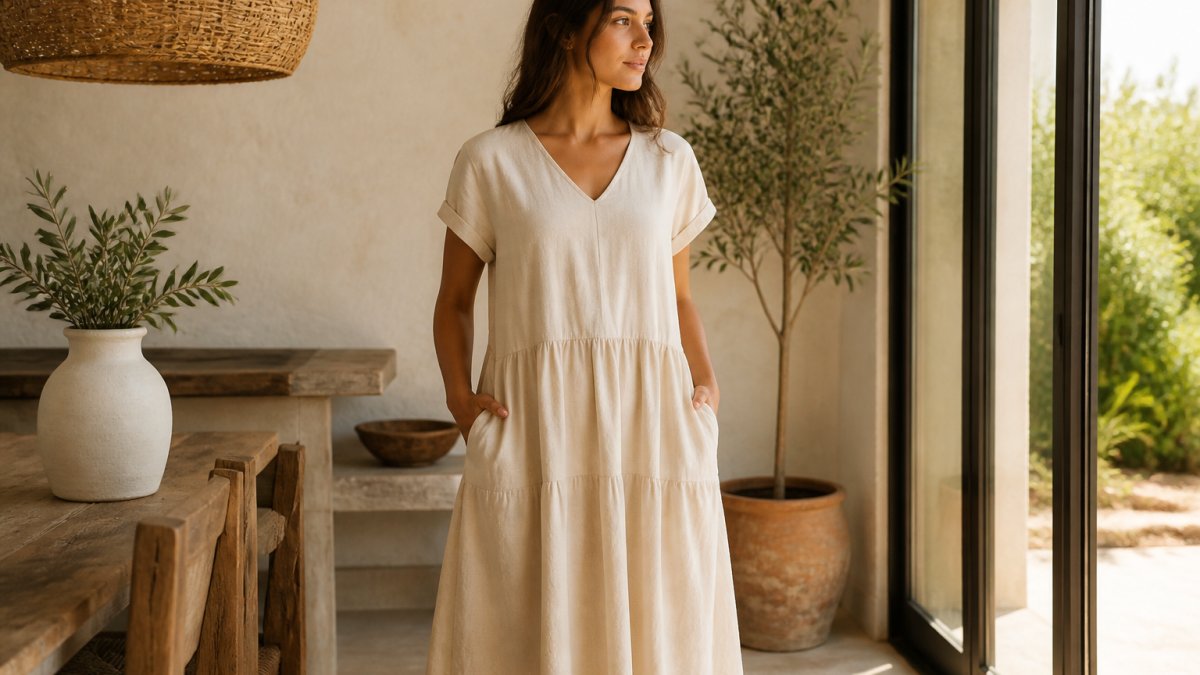
A dress-fabric guide from Simplifi Fabric's 2026 eco-friendly fabric guide recommends organic cotton or hemp-cotton blends for everyday dresses expected to be worn 50 or more times.
(https://www.ams.usda.gov/rules-regulations/organic), while conventional cotton relies on conventional farming inputs. Research published in [PubMed Central on perceived sustainability in clothing choices](https://pmc.ncbi.nlm.nih.gov/articles/PMC12504660/) lists organic cotton among the common sustainable fashion materials consumers recognize, alongside recycled polyester, linen, and wool.2. Linen Dresses: Warm-Weather Breathability
Linen dresses are the best choice for warm weather: flax fibers move heat and moisture away from the body faster than cotton, and the fabric softens with every wash.
Flax needs less irrigation than cotton in most growing regions, which is why linen anchors so many low-impact collections.
What most guides miss: linen blends. A linen-cotton blend creases less and costs less, but loses the crisp hand that makes pure linen worth buying.
3. Tencel, Lyocell, and Regenerated Cellulose
Tencel and lyocell are brand and generic names for regenerated cellulose fibers made from wood pulp, and they earn their place in everyday dresses through drape. The fabric falls softly, resists clinging, and feels cool against skin, making it a strong pick for easy silhouettes and office dresses.
Lyocell production uses a closed-loop solvent process that recovers most of the chemicals used, a meaningful difference from older regenerated cellulose methods. Research from ScienceDirect on sustainable fashion trends and purchasing patterns groups these specialized textiles with recycled materials and organically cultivated natural fibers under the sustainable apparel umbrella.
The honest limitation: lyocell has lower abrasion resistance than cotton. A lyocell dress worn weekly against a rough bag strap will show wear sooner. Wash cold and it will hold its drape.
4. Hemp and Other Plant-Based Materials
Hemp is the most durable plant-based dress fabric available, and the one shoppers most often overlook. It resists pilling, holds structure in a tailored cut, and softens into a lived-in feel after a few washes.
Paige Eyelet Embroidered Puff Sleeve Blouse →
Hemp-cotton blends solve the break-in problem while keeping hemp's strength, and the Simplifi Fabric guide recommends that pairing for high-wear everyday dresses. Other plant-based options: bamboo blends, soft but variable in processing, and ramie, a linen relative with similar breathability.
5. Recycled Fabric Dresses: Giving Fibers a Second Life
Recycled fabric dresses turn post-industrial and post-consumer textile waste into new yarn, cutting demand for virgin fiber and keeping production waste out of landfills.
Quality varies by source. Mechanically recycled cotton has shorter fibers, so it is usually blended with virgin cotton to keep strength. Chemically recycled polyester performs close to virgin polyester while diverting plastic waste.
Our Women's Sustainable WannaBettaButt Skinny Distressed Jeans are built on recycled micro fibers, a good example of how recycled content works in a stretch garment: comfort and a slimming silhouette, with a fiber mix of 74% cotton, 23% polyester, 3% viscose, and 2% Lycra.

6. Wool, Alpaca, and Animal-Based Materials
Wool and alpaca are the strongest animal-based options for cool-weather dresses: both regulate temperature and resist odor, meaning fewer washes and a longer useful life.
Animal-based fibers carry a higher environmental cost per kilogram than plant fibers, mostly from land use and methane, so their case rests on durability and wear frequency.
Care is the barrier. Wool needs cold hand washing or dry cleaning, and it pills under friction.
How to Verify a Sustainability Claim
Certifications are the fastest way to check a sustainability claim, but only if you know which apply to which part of the supply chain. A label that says "sustainable" without a certifier name and traceable license number is marketing, not verification. Separate claims into three buckets: fiber content, processing and chemistry, and labor and traceability.
Fiber-content certifications
For organic cotton, the two names you will see most often are USDA Organic (for agricultural production) and the Global Organic Textile Standard (GOTS), which covers organic fiber content plus processing and social criteria. For recycled content, look for the Global Recycled Standard (GRS) or the Recycled Claim Standard (RCS); GRS adds processing and social requirements, while RCS verifies recycled content only.
Processing, chemistry, and finishes
Fiber content is only half the story; dyes, finishes, and construction affect comfort and end-of-life. Look for OEKO-TEX Standard 100 for assurance the finished garment was tested for harmful substances, and bluesign for processing-level chemical management. Vague finishes like "wrinkle-resistant," "moisture-wicking," and "antimicrobial" usually mean a chemical treatment that can interfere with biodegradability and recycling. If a dress is advertised as a sustainable fabric but carries a performance finish, ask what it is and whether it is applied without a fluorinated compound.
Blends, elastane, and recyclability
A 95% cotton / 5% elastane dress is comfortable, but elastane makes it harder to recycle mechanically and slows biodegradation. That does not make it a bad choice; the sustainability case rests on wearing it often and caring for it well. With any blend, check the percentages and whether the garment can be repaired.
Construction and care as verification signals
Construction tells you how long a dress will last. French seams, bound edges, reinforced stress points, and lined bodices add wear life; unfinished seams and loose buttons signal a short lifecycle. Care instructions are a signal too: cold wash and line dry aligns with the fiber's real needs, while machine-dry-hot on a delicate fiber is a red flag. Check the return policy as well; a brand confident in its fabric usually offers a reasonable window to assess fit and hand-feel.
A greenwashing checklist you can use in the store
- Fiber content listed as a percentage, not just a name
- Certifier named with a traceable license number (GOTS, GRS, RCS, RWS, RAS, OEKO-TEX, bluesign)
- Dyes and finishes disclosed, or at least not hidden behind vague performance language
Frequently Asked Questions
What are the best sustainable fabrics for everyday dresses?
Organic cotton, linen, Tencel (lyocell), hemp, and recycled fiber blends are the most practical sustainable fabric options for everyday dresses. Organic cotton handles frequent washing and works year-round, linen keeps you cool in warm weather, and Tencel drapes softly with a low-impact closed-loop production process. Hemp brings strength and durability, while recycled fibers give existing textiles a second life. Choose based on your climate, how often you'll wear the dress, and how much care you're willing to give it.
Is organic cotton a sustainable choice for dresses?
Organic cotton is grown without synthetic pesticides and uses crop rotation and natural methods to manage pests, which reduces chemical runoff compared with conventional cotton. It is biodegradable, breathable, and holds up to regular washing, making it a strong fit for everyday dresses. The trade-off is water use: cotton remains a thirsty crop even when grown organically. Look for third-party certification on the label so the organic claim is verified rather than a marketing phrase.
Are linen and hemp better for the environment than conventional cotton?
Linen comes from flax, which typically needs less irrigation and fewer chemical inputs than conventional cotton, and hemp grows quickly with dense planting that naturally suppresses weeds. Both are strong, breathable natural fibers. That said, the final impact depends on farming methods, processing, and how the garment is dyed and finished. A certified linen or hemp dress worn hundreds of times will generally outperform a conventional cotton dress bought and discarded quickly.
What recycled fabrics are suitable for everyday dresses?
Recycled cotton and recycled polyester are the two most common recycled fibers in everyday dresses. Recycled cotton comes from textile scraps and gives new life to production waste, while recycled polyester is made from post-consumer plastic bottles. Blends that combine recycled fibers with a small amount of elastane add stretch and shape retention. Check the percentage of recycled content on the care label, since a fabric marketed as recycled may contain only a small share.
How can you tell whether a dress fabric is sustainably made?
Start with third-party certifications rather than brand language. Look for GOTS for organic cotton, OEKO-TEX Standard 100 for chemical safety, and the Global Recycled Standard for recycled content. A transparent brand will list fiber percentages, describe where the fabric comes from, and publish care guidance that helps the dress last. If a label says only 'eco-friendly' with no certification or fiber breakdown, treat the claim as unverified until you find supporting detail.