
Midi Dress vs Maxi Dress for Summer: Which Length Wins?
Table of Contents
- Midi Dress vs Maxi Dress for Summer: The Quick Comparison
- How to Style Midi Dresses for Day and Night
- Choosing the Right Dress Length for Your Height
- Maxi Dress Outfit Ideas for Summer Events
- Fabric and Breathability: What Keeps You Cool in the Heat
- Mobility, Hemline Safety, and Travel Packing
- Conclusion: Which Summer Dress Length Is Right for You?
- Frequently Asked Questions
Last Updated: October 2, 2026
Midi Dress vs Maxi Dress for Summer: The Quick Comparison
The maxi dress market is projected to top $4 billion by 2032-2033, growing 6.5% to 7.2% annually, according to Sybaritic Boutique's maxi dress market analysis.
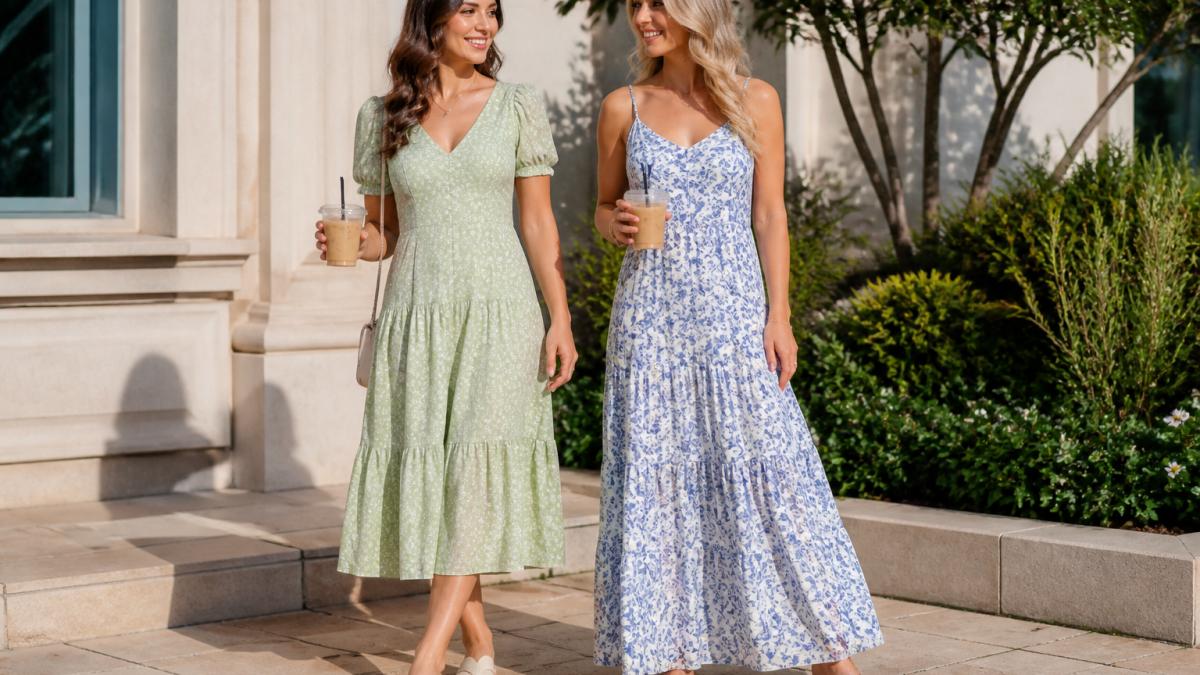
At Maison Amara Boutique, we see the split play out in real orders every week.
Here is the short version before we get into the details.
| Factor | Midi Dress | Maxi Dress |
|---|---|---|
| Hemline | Mid-calf | Ankle to floor |
| Best for | Active days, commuting | Events, resort wear |
| Mobility | Higher | Lower |
| Fabric needed | Less | More |
| Heat management | Better airflow at legs | Depends on fabric weight |
| Packing | Compact | Takes up space |
The maxi wins on drama and coverage; the midi wins on practicality and movement. Neither is "better" in the abstract.
For summer 2026, designers are pushing maxi dresses toward what NA-KD's dress guide calls a "stronger, more expressive identity," built on dramatic silhouettes and fluid movement. Midi dresses, meanwhile, are being positioned as the "wearable" choice. Armoire Style named wearable midi dresses a top summer 2026 trend specifically for their "one and done" styling ease.
That is the tension in one sentence: maxis perform, midis function.
How to Style Midi Dresses for Day and Night
Styling a midi dress for day and night starts with footwear and one layer change.
For evening, swap three things:
- Footwear: switch to wedges or heeled sandals
- Accessories: add statement earrings and a structured clutch
- Layer: throw on a fitted blazer or a cropped jacket
That is the entire day-to-night formula. The dress does not change. Your proportions do.
A midi also gives you more styling room than a maxi because the shorter hemline shows more shoe.
The one mistake we see most often is pairing a flowy midi with chunky sneakers for an evening event.
Choosing the Right Dress Length for Your Height
Choosing the right dress length for your height comes down to proportion, not rules.
For shorter frames, midi dresses are usually the safer bet. Maxi dresses can overwhelm a smaller frame with excess fabric length, as Diva Catwalk's fit guidance notes.
For taller frames, both lengths work. A maxi can run floor-length without dragging, and a midi hits at a flattering mid-calf point.
Three quick checks before you buy:
- Stand barefoot and note where the hem lands
- Check the model's height in the product photos, not just the size
- Look for "hem adjustment" or tailoring notes in the listing
The good news: a hem is one of the easiest alterations.
Maxi Dress Outfit Ideas for Summer Events
Maxi dress outfit ideas for summer events lean on fabric and footwear, since the dress does most of the visual work.
For a garden party or outdoor wedding, choose a flowing maxi in a breathable fabric with strappy sandals or espadrille wedges, plus a wide-brimmed straw hat and a woven bag.
For a resort or beach setting, a loose kaftan-style maxi works better than a structured one. The Liberated Loose Color Block Kaftan is built for exactly this: a lightweight polyester broadcloth with a silk-like feel, a pullover cut, and a loose, flowing fit. Pair it with barely-there sandals and a straw hat, and it handles a coastal promenade or a slow morning equally well.

For an evening event, go darker and more structured.
The common thread across all three: let one element lead. If the dress is dramatic, keep shoes and accessories quiet.
Sovereign Asymmetrical Cropped Two-Piece Set →
Fabric and Breathability: What Keeps You Cool in the Heat
Fabric and breathability decide whether a summer dress keeps you cool or traps heat, and length matters less than material and climate.
Dry heat: evaporation does the work. In low humidity, sweat evaporates quickly, so airflow matters most.
What to look for, by fiber:
- Linen: the strongest hot-weather performer. It wicks, dries fast, and its loose weave moves air. It wrinkles, and that is the trade-off. Best in both dry and humid heat.
- Cotton: breathable and comfortable, but it absorbs and holds moisture. Great in dry heat, slower to dry in humidity. Look for lightweight or open-weave cotton, not heavy poplin.
- Viscose and rayon: drape well, feel cool against skin, and wick reasonably. They can lose strength when wet and need gentle care. A solid humid-heat choice in a loose cut.
- Hemp: similar to linen in breathability and durability, with a slightly heavier hand. Excellent for maxis that need structure without heat retention.
- Chiffon: light and airy, but often synthetic and usually needs a lining, which adds a layer. Fine for dry heat, less ideal in humidity.
- Polyester and polyester blends: durable and wrinkle-resistant, but they do not absorb moisture, so in humidity they can feel clammy. A lightweight, loose polyester maxi is workable; a heavy one is not.
Fabric weight (grams per square meter, or GSM) is the number most shoppers ignore. Summer dresses generally sit in the 100-180 GSM range; anything above roughly 200 GSM feels heavy in heat regardless of fiber.
Cut matters as much as fiber.
For maximum airflow on the hottest, most humid days, a midi in linen, hemp, or a lightweight viscose is hard to beat. The shorter hemline simply exposes more leg to moving air. For dry, sun-exposed days, a loose linen or hemp maxi gives you shade plus ventilation. Match the fabric and cut to the climate, not just the calendar.
Mobility, Hemline Safety, and Travel Packing
Mobility and hemline safety are where the midi dress pulls ahead for most people, and the reasons are mechanical, not aesthetic.
Where each length wins, by scenario:
- Stairs and escalators: midi. A maxi hem can catch on the step edge or the escalator comb plate. If you wear a maxi, lift the hem slightly with one hand on stairs.
- Public transit: midi. Boarding a bus or train, a long hem catches on doors and seats. A midi clears them.
- Crowded sidewalks and markets: midi. A maxi drags on curbs and picks up grime.
- Wind and waterfront: midi. A lightweight maxi catches a breeze and lifts; a midi stays put.
- Sitting for long periods: maxi can be more comfortable, since there is no hem riding up, but only if the fabric is loose.
If you love maxis for active days, pick one with a side slit, a front slit, or a slightly raised hem.
A practical carry-on capsule built around midis:
- 2 midi dresses (one casual, one dressier)
- 1 pair flat sandals, 1 pair wedges
- 1 light layer (linen shirt or cropped jacket)
- 1 crossbody bag
That covers a long weekend with room to spare.
Fabric choice changes the math too: linen and cotton wrinkle in a suitcase, while viscose and polyester blends travel flatter.
One more consideration: hemline safety in wind and around water. A lightweight maxi catches a breeze and lifts, which can be awkward on a rooftop or ferry, while a midi stays put. If your plans involve open-air transit, waterfronts, or unpredictable gusts, the midi is the lower-risk choice.
Conclusion: Which Summer Dress Length Is Right for You?
The midi dress vs maxi dress for summer choice is not about which is more fashionable. It is about matching the dress to your day.
If you want both, start with a breathable midi for daily wear and add one well-cut maxi for occasions, that pairing covers almost every summer plan.
Maison Amara Boutique curates modern, trendy dresses and accessories designed for everyday elegance, with free shipping on orders of $50 and more.
Frequently Asked Questions
What is the difference between a midi and a maxi dress?
A midi dress ends between the knee and ankle, usually at mid-calf, while a maxi dress reaches the ankle or floor. This length difference changes how each style moves, how much fabric touches your legs, and how easy it is to walk or climb stairs. Midi dresses offer more mobility for active days, while maxi dresses deliver dramatic drape and coverage. Both work for summer depending on your plans.
Which dress length is more flattering for summer?
Flattery depends on your height and proportions, not the length itself. Midi dresses often suit petite frames better because they avoid overwhelming the body with excess fabric. Maxi dresses can elongate taller frames and create a flowing silhouette. For summer, choose a hemline that hits at a flattering point on your leg and pair it with the right footwear to balance proportions.
Can you wear a maxi dress to a formal summer event?
Yes, a maxi dress works for formal summer events when the fabric and cut match the occasion. Look for floor-length styles in chiffon, linen, or viscose with elegant draping. A maxi dress in a solid color or subtle print, paired with wedges or dressy sandals and statement jewelry, reads formal enough for weddings, garden parties, or evening events. Avoid casual jersey or beachy prints for dressier settings.
Which dress style is better for hot weather?
Both can work, but fabric matters more than length. Linen, cotton, and moisture-wicking blends keep you cool by allowing airflow and managing sweat. A midi dress in lightweight cotton may feel cooler than a heavy maxi. For extreme heat, choose loose silhouettes in breathable fabrics. Maxi dresses provide sun protection for legs, while midi dresses offer more ventilation around the ankles.
The real challenge is not picking a length. It is finding pieces that fit well, last, and work across your actual life. Maison Amara Boutique makes that easier with a curated selection of stylish dresses and accessories, free shipping on orders of $50 and more, and a shopping experience built for convenience. Get started with Maison Amara Boutique and refresh your summer wardrobe with pieces you will actually wear.