
Is Gold-Plated Jewelry Good for Daily Wear?
Table of Contents
- Can You Wear Gold-Plated Jewelry Every Day?
- Gold-Plated vs Gold-Filled Jewelry: Which Lasts Longer?
- How Long Does Gold-Plated Jewelry Last?
- Does Gold-Plated Jewelry Tarnish Over Time?
- How to Care for Gold-Plated Jewelry Daily
- Gold-Plated Jewelry Pros and Cons for Your Lifestyle
- When to Choose Gold-Plated vs Solid Gold
- Frequently Asked Questions
Last Updated: October 9, 2026
Can You Wear Gold-Plated Jewelry Every Day?
Whether is gold plated jewelry good for daily wear depends on your lifestyle, but it requires careful maintenance and is less durable than solid gold or gold-filled for constant wear.
At Maison Amara Boutique, we know customers want versatile pieces that transition from work to weekend.
Daily wear stresses jewelry through skin contact, sweat, friction, and exposure to water and chemicals.
The real question about whether is gold plated jewelry good for daily wear isn't just capability, but whether you're willing to rotate pieces, limit moisture and sweat exposure, and maintain a consistent care routine.
Gold-Plated vs Gold-Filled Jewelry: Which Lasts Longer?
Gold-filled jewelry sits between gold-plated and solid gold in durability and cost.
Gold-plated jewelry uses electroplating to apply a thin gold layer over a base metal like brass or copper, typically 0.5 to 2.5 microns thick.
Gold-filled jewelry contains a thicker gold layer mechanically bonded to a base metal.
The practical difference: gold-filled jewelry can last 10 to 30 years with normal wear, while gold-plated typically lasts 1 to 3 years, up to 5 with meticulous care, though that's optimistic.
For daily wear, gold-filled is the better choice if budget allows, since it resists fading and scratching far better, though it costs 2 to 4 times more.
| Jewelry Type | Gold Content | Plating Thickness | Expected Lifespan | Best For |
|---|---|---|---|---|
| Gold-Plated | 0.1-2.5% | 0.5-2.5 microns | 1-3 years | Trendy, rotated pieces |
| Gold-Filled | 5%+ | 10-100 microns | 10-30 years | Daily wear, long-term pieces |
| Solid Gold | 100% | N/A | Lifetime | Investment pieces |
How Long Does Gold-Plated Jewelry Last?
Lifespan is the product of plating thickness, base metal, karat of the gold layer, the specific piece, and how hard you wear it. Two pieces both labeled "18k gold-plated" can differ by years of usable life.
Start with the measurable specs, not the marketing words.
- Plating thickness (microns). The single strongest predictor. Under 1 micron is flash plating that often shows wear in months; 1 to 2.5 microns is standard commercial plating; 2.5 to 5 microns is better-grade. If a listing doesn't state microns, treat the claim as unverified.
- Karat of the plating. "14k" or "18k" describes the alloy of the gold layer, not its thickness. A high-karat label on a 0.5-micron layer is still thin. Karat affects color and hardness, not wear-through time.
- Base metal. Brass and copper are common and affordable; brass is generally more stable. The base determines what you see when the gold wears through and how fast it discolors.
- Manufacturing quality. A uniform, well-bonded plate resists flaking better than a patchy one. Poor adhesion, not just thinness, causes early peeling.
Realistic wear-life ranges by jewelry type. Typical ranges for ordinary plating (roughly 1 to 2.5 microns) under regular use, not guarantees.
| Piece | Typical daily-wear life | Why |
|---|---|---|
| Ring | Often 6 months to 2 years | Highest friction, constant contact, frequent handwashing |
| Bracelet | Often 1 to 2 years | Constant skin and surface contact, sweat exposure |
| Necklace | Often 1 to 3 years | Less friction, but sweat, oils, and perfume exposure |
| Earrings (studs) | Often 2 to 5 years | Minimal friction and chemical contact |
| Pendant or chain worn occasionally | Often 3 to 5+ years | Low wear hours, limited abrasion |
What shortens or extends those ranges.
- Friction and abrasion. A ring worn on a dominant hand against a keyboard or gym equipment wears fastest; a necklace that sits still against skin wears slowest.
- Moisture and sweat. Handwashing, swimming, and workouts accelerate wear-through and discoloration.
- Chemicals. Perfume, hair products, sunscreen, and cleaning agents weaken the bond between plate and base.
- Body chemistry. Some people's sweat and skin oils are more reactive with certain base metals, so the same piece can wear differently on two people.
- Care and rotation. Removing pieces before water and chemical exposure and rotating among several items extends each piece's usable life.
Why "anti-tarnish" and "water-resistant" labels do not change the math. These terms usually describe a topcoat or lacquer over the plating, not a thicker gold layer.
Does Gold-Plated Jewelry Tarnish Over Time?
Gold-plated jewelry doesn't tarnish the way silver does, but it does fade, discolor, and lose its shine over time.
The base metal underneath can tarnish or oxidize, especially if the plating wears through.
The gold layer itself gradually fades from air, sweat, and skin oils, making the jewelry look duller.
Moisture accelerates this. Water, chlorine, and humidity speed up oxidation and can cause the plating to separate or bubble.
Chemicals from lotions, perfumes, cleaning products, and cosmetics also weaken the bond between the gold layer and base metal, causing it to flake or peel.
The good news: fading and minor discoloration don't mean the jewelry is ruined.
How to Care for Gold-Plated Jewelry Daily
Most care advice stops at "keep it dry." That's necessary but not sufficient. The routine below covers what actually drives wear: chemistry, abrasion, storage contact, skin sensitivity, and what to do once plating starts to go.
The daily routine (about 60 seconds).
- Put jewelry on last. Apply lotion, sunscreen, perfume, and hair products first, let them dry, then put on your pieces, keeping the highest concentration of chemicals off the plating.
- Take jewelry off first. Remove pieces before washing hands, showering, swimming, exercising, cleaning, or doing dishes. This single habit prevents most premature wear.
- Wipe after wearing. Use a soft, dry, lint-free cloth to remove skin oils and sweat before storage. Don't rub hard; abrasion thins plating.
Cleaning: what works and what damages plating.
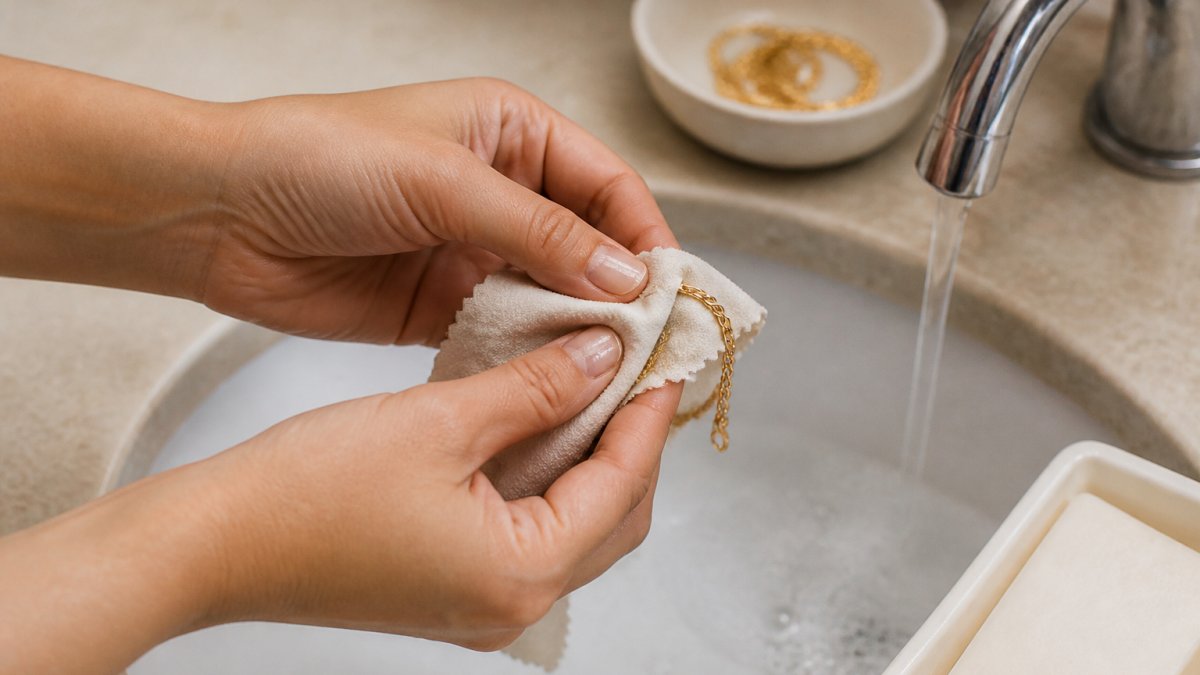
- Mild soap and lukewarm water. A drop of gentle, non-abrasive dish soap in lukewarm water, applied with fingertips or a very soft cloth, is the safest deeper clean. Rinse and dry immediately and thoroughly.
- Avoid abrasives. Baking soda, toothpaste, salt scrubs, and polishing compounds will scratch or strip plating.
- Avoid ultrasonic and steam cleaners. Vibration and heat can loosen the bond between plate and base, causing flaking.
- Avoid harsh chemicals. Bleach, ammonia, vinegar, acetone, and chlorine are damaging. Frequent hand sanitizer also dulls plating; remove rings before applying it.
- Do not soak. Prolonged soaking lets water reach the base metal through pinholes or worn spots, starting discoloration from underneath.
Storage mechanics that actually protect plating.
- Dry first, always. Storing a damp piece traps moisture against the metal.
- Separate pieces. Store each in its own soft pouch or compartment; metal-on-metal contact causes scratches that expose base metal.
- Control humidity. A cool, dry drawer or jewelry box away from bathrooms and direct sunlight is ideal; a silica gel packet helps in humid climates.
- Limit air exposure for pieces you rarely wear. An airtight or tarnish-resistant pouch slows oxidation at worn edges.
Skin sensitivity and metal allergies.
Gold itself is generally well tolerated, but plated jewelry's problem is the base metal. Brass, copper, and nickel-containing alloys can trigger irritation, especially where plating has worn thin or at edges, clasps, and posts.
When plating starts to wear: repair and replating options.
- Replating. A jeweler can electroplate a new gold layer over the piece. This is worthwhile for pieces you love or with sentimental value, and far cheaper than replacing with solid gold. Ask what thickness they'll apply; a thin re-plate wears through quickly.
- Spot repair. Small worn areas on clasps or edges can sometimes be touched up, though results vary.
- Refinishing alternatives. Some jewelers offer rhodium or other finishes, but these change the color and aren't a gold restoration.
- When to retire a piece. If the base metal is pitting, the structure is compromised, or replating cost approaches a new piece, replacement is the practical choice.
A note on rotation. Wearing the same plated ring daily concentrates all friction and chemical exposure on one piece. Rotating among two or three pieces spreads that wear and extends each piece's usable life, the cheapest durability upgrade available.
Gold-Plated Jewelry Pros and Cons for Your Lifestyle
Gold-plated jewelry has clear advantages and real limitations. The right choice depends on your lifestyle, budget, and expectations.
Pros:
- Affordable entry point to gold styling
- Wide variety of trendy designs at low price points
- Experiment with styles without major investment
- Looks identical to solid gold from a distance
- Lightweight and comfortable for extended wear
- Easy to build a rotating collection within budget
Cons:
- Short lifespan compared to gold-filled or solid gold
- Plating eventually wears through, revealing base metal
- Not suitable for constant, uninterrupted daily wear
- Requires consistent maintenance and careful handling
- May cause skin irritation if base metal reacts with sweat
- Replating costs add up over time
- Not hypoallergenic; base metals can trigger allergies
Lifestyle fit matters most. If you wear jewelry casually, rotate pieces, and don't mind replacing items every few years, gold-plated works fine.
Consider daily activities too. A desk job with minimal moisture exposure is much gentler on gold plating than work involving water, chemicals, or heavy physical activity. Outdoor work, fitness, or frequent swimming makes gold-plated a poor choice.
Budget is the final factor. Gold-plated pieces cost significantly less than gold-filled or solid gold. If you love trying new styles and don't mind replacing pieces, the lower price makes gold-plated attractive.
When to Choose Gold-Plated vs Solid Gold
The decision between gold-plated and solid gold comes down to intended use, budget, and longevity expectations.
Choose gold-plated if:
- You want to experiment with styles without major investment
- You enjoy rotating jewelry and building a diverse collection
- You wear pieces occasionally rather than constantly
- Your lifestyle involves minimal water and chemical exposure
- You have a limited jewelry budget
- You're building a trendy wardrobe that changes seasonally
Choose solid gold if:
- You want a piece to last a lifetime
- You wear jewelry daily in all conditions
- You need hypoallergenic options (solid gold doesn't react with skin)
- You view jewelry as an investment
- You want minimal maintenance and maximum durability
- You're buying a statement piece for significant occasions
The middle ground is gold-filled jewelry: more than gold-plated but far less than solid gold, lasting 10 to 30 years, long enough for most everyday needs. If budget allows, gold-filled is often the sweet spot for daily wear.
Solid gold is the premium choice. It never wears through, never fades, and can be passed down through generations. The higher initial cost pays off over decades.
Gold-plated jewelry offers an accessible way to enjoy gold styling without the investment of solid gold, but daily wear requires honest expectations about durability and a commitment to proper care.
Frequently Asked Questions
Can you wear gold-plated jewelry every day?
Yes, gold-plated jewelry can be worn daily, but with important caveats. The plating itself is thin, so frequent contact with skin, sweat, and chemicals will shorten its lifespan. Most sources recommend rotating pieces rather than wearing the same gold-plated jewelry continuously. With proper care and rotation, daily wear is possible, but expect the plating to wear noticeably over time compared to solid gold.
How long does gold-plated jewelry last with daily wear?
Gold-plated jewelry typically lasts 2-3 years with daily wear and proper care, though higher-quality pieces may extend to 5 years. Lifespan depends heavily on plating thickness, the base metal underneath, and how often you expose it to water, sweat, and chemicals. Rings experience faster wear than earrings or necklaces because they endure more friction and contact with daily activities.
Is gold-filled jewelry better than gold-plated jewelry for everyday use?
Yes, gold-filled jewelry is significantly more durable for daily wear. Gold-filled has a thicker layer of gold bonded to the base metal, typically lasting 10-30 years compared to 2-5 years for gold-plated. Gold-filled costs more upfront but offers better value for everyday accessories you plan to wear regularly. Choose gold-plated for occasional wear or trendy pieces; choose gold-filled if durability and longevity matter most.
Does gold-plated jewelry tarnish?
Gold-plated jewelry does not tarnish in the traditional sense, but the plating can fade, discolor, and wear away with exposure to moisture, sweat, and chemicals. The base metal underneath may tarnish or corrode once the plating wears through. An anti-tarnish finish can extend the life of the plating, but it is not permanent. Regular cleaning and proper storage help prevent discoloration and slow the wear process.