
Inclusive Sizing Online: How to Shop and Get the Fit Right
Last Updated: October 29, 2026
Quick Summary
To shop for inclusive sizing online, measure your bust, waist, and hips and compare those numbers to each brand's body-measurement chart instead of trusting your usual size label. Check fabric stretch percentage and recovery, read reviews for fit language, and confirm the return window before ordering.
- Measure bust, waist, and hips against bare skin, then re-measure twice to confirm your numbers.
- If your measurements straddle two sizes, size to the largest measurement and plan to tailor the smaller areas.
- Cotton and cotton-blend garments commonly shrink 3% to 5% in length after a first hot wash and dry.
- Search reviews for your height and usual size, and look for phrases like true to size.
- Choose stores whose size charts list body measurements in inches and whose return window is at least 30 days.
Table of Contents
- Start With Your Own Numbers, Not the Size Label
- How to Measure Your Body for Clothing Size
- Understanding Clothing Size Charts Without Guessing
- Why the Same Size Fits Differently at Every Brand
- Read Fabric Composition Before You Read the Size Range
- Use Reviews, Fit Tools, and Return Policies as One System
- What to Look for in the Best Size Inclusive Online Clothing Stores
- Fix the Fit You Already Bought: Tailoring and Common Sizing Problems
- Frequently Asked Questions
Start With Your Own Numbers, Not the Size Label
Learning how to shop for inclusive sizing online starts with one shift in habit: trust your measurements, not the number on the tag. According to IBISWorld's 2026 industry report, the U.S. plus-size women's clothing store industry includes 55,167 businesses and grew at a 15.2% compound annual rate from 2021 to 2026.
Fit anxiety is a common reason shoppers hesitate online. The fix is a system, not luck. Below, we break down exactly how to measure, read charts, judge fabric, and use reviews so you order once and keep what arrives.
The 2026 numbers back up the demand. A Gitnux roundup of plus-size industry statistics reports that 65% of consumers prefer brands offering size ranges from 00 to 32.
How to Measure Your Body for Clothing Size
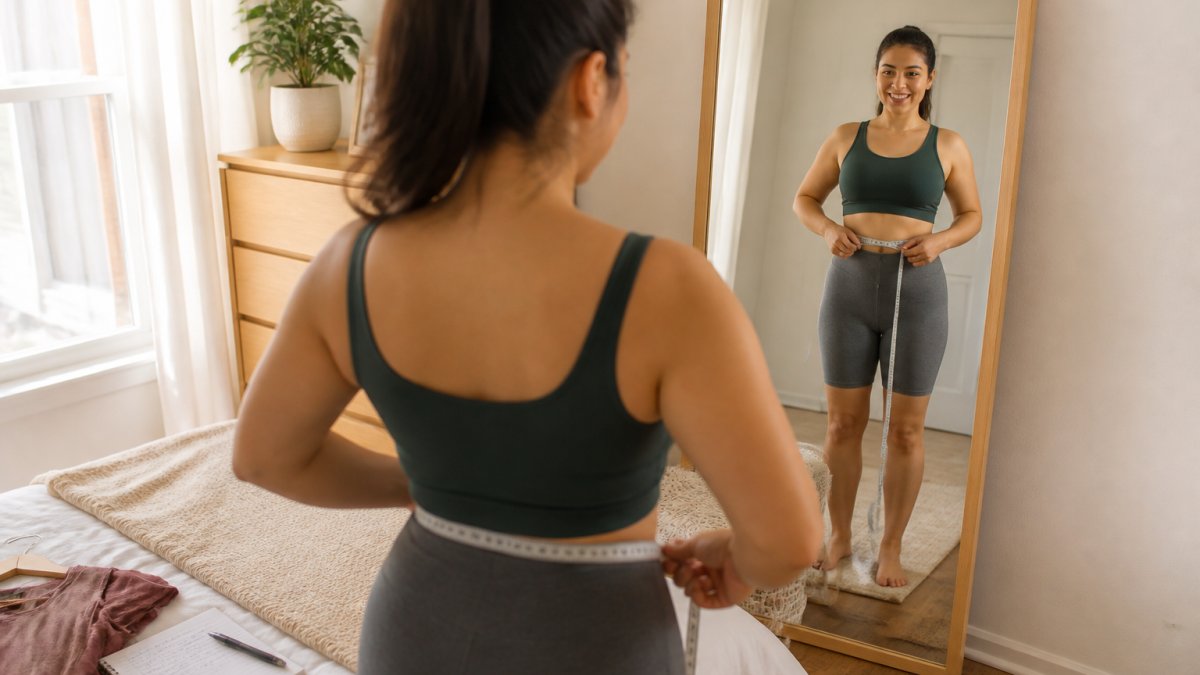
To measure your body for clothing size, use a soft measuring tape against bare skin or thin clothing, keep the tape level and snug but not tight, and write down bust, waist, and hip numbers in inches. Re-measure twice.
Bust, Waist, and Hip: The Three Measurements That Decide the Fit
These three numbers drive nearly every size chart:
- Bust: measure around the fullest part, tape parallel to the floor
- Waist: measure at the narrowest point, usually just above the navel
- Hips: measure around the fullest part, feet together
For step-by-step detail, our guide on how to measure dress size accurately walks through each one.
Rise and Inseam: The Numbers Most Shoppers Skip
Rise and inseam decide whether pants actually sit and fall correctly. Rise runs from the crotch seam to the top of the waistband. Inseam runs from crotch to hem. Our bootcut jeans, for example, list a 9-inch rise and 33-inch inseam based on size 5, so you can compare directly against your own numbers.
Understanding Clothing Size Charts Without Guessing
A clothing size chart converts your measurements into a brand's size labels, and it only works if you compare your numbers to the chart, never your usual size.
Vanity sizing is the practice of labeling larger garments with smaller numbers to flatter shoppers. It is why a size 8 at one store fits like a 12 at another. Ignore the label.
Body Measurements vs. Garment Dimensions
The first thing to check is what the chart actually lists. Body-measurement charts tell you the bust, waist, and hip circumference the garment is designed to fit. Garment-dimension charts list the flat-laid measurements of the clothing itself, usually doubled at the bust and waist. Mixing the two is the single most common chart-reading error. If a chart says "bust 40 inches" and you measure 40 inches around your body, that is a body chart.
A Universal Conversion Guide for Vanity Sizing
Most guides tell you to measure, then stop. The harder problem is that a size 12 at one retailer can match a size 16 at another. Use this conversion method instead of trusting any single label:
- Write down your bust, waist, and hip in inches.
- Open the brand's body-measurement chart.
- Find the row where all three of your numbers fall inside the listed range.
- If your numbers straddle two sizes, size to the largest measurement, then plan to tailor the smaller areas.
- Record the brand, the size you chose, and the date in a note on your phone.
A common pattern is that budget fast-fashion brands run one to two sizes smaller than legacy department-store brands, while athletic and outdoor brands often run large through the shoulder and chest. Treat every brand as its own country with its own passport control.
International Sizing: U.S., U.K., and E.U. Equivalents
If you shop brands based outside the U.S., convert before you compare. A U.S. women's size 8 is roughly a U.K. 12 and an E.U. 40. A U.S. 16 is roughly a U.K. 20 and an E.U. 44. These are approximate because no U.S. law enforces a standard women's size scale, so always confirm against the brand's own chart rather than a third-party converter.
Three Habits That Make Charts Reliable
- Check whether the chart lists body measurements or garment dimensions, and convert flat measurements by doubling them
- Note the unit, since some charts use centimeters and 1 inch equals 2.54 centimeters
- Look for a fit note, such as "runs small" or "relaxed through the hip," and weight it against the chart
For deeper help translating your numbers into a specific brand's chart, read how to find accurate online dress sizing.
Why the Same Size Fits Differently at Every Brand
The same size fits differently at every brand because there is no enforced standard for women's sizing, so each company builds its own fit model. A 2026 analysis from Bold Metrics on apparel sizing data points to fragmented fit data across retailers as a core cause of online fit errors.
This is where fit consistency becomes your shopping strategy. Track the brands that match your measurements and note the specific size you ordered. Build a short list of proven fits instead of starting fresh with every order.
Read Fabric Composition Before You Read the Size Range
Fabric composition tells you how a garment will stretch, drape, and hold shape, which matters more for fit than the size label does. A fabric with 2% spandex behaves very differently from a stiff 100% cotton weave. Most guides stop at naming fibers. The technical skill is reading the percentage blend and predicting how the garment will behave after ten wears and five washes.
Women's Luxe Mid Rise WannaBettaButt Bootcut Jeans →
Read the Blend, Not Just the Fiber List
Check the fiber list before you check the size range, and read the percentages in order, since the first fiber listed is the largest share:
- Elastane, spandex, or Lycra: adds stretch and recovery. Below 2% gives light give; 2% to 5% gives real stretch; above 5% behaves like activewear and may lose shape over time.
- Cotton: breathable but can shrink. 100% cotton denim has almost no give and will mold to your body over months rather than stretch on day one.
- Polyester and rayon: add drape and durability. High polyester blends resist wrinkling but trap heat.
Stretch Percentage and Recovery: The Numbers That Predict Fit
Stretch percentage tells you how far a fabric extends. Recovery tells you whether it snaps back. A fabric with 3% spandex and good recovery will hold its shape through a workday. A fabric with 5% spandex and poor recovery will bag at the knee by lunch. When a product page lists only "stretch fabric" with no percentage, treat that as a warning sign and check reviews for phrases like "stretches out" or "holds shape all day."
Shrinkage and Care: What the Label Won't Tell You
Cotton and cotton-blend garments commonly shrink 3% to 5% in length after the first hot wash and dry. That is enough to turn a perfect inseam into a cropped pant.
Our super soft skinny jeans use 41% cotton, 38% Lyocell, 19% polyester, and 2% spandex, which explains their stretch and soft hand feel. The 2% spandex is enough for comfort through the hip without the bagging that comes from higher stretch content.
Use Reviews, Fit Tools, and Return Policies as One System
Reviews, virtual fit tools, and return policies work best as one system: reviews tell you how a garment fits real bodies, fit tools narrow the size choice, and the return policy limits your risk if it still misses. Retailers are now adding virtual sizing tools and AI-driven recommendations to cut returns on inclusive-size apparel, according to Business Research Insights' 2026 market report.
Read reviews for fit language, not star ratings:
- Search for your height and usual size in the reviews
- Look for phrases like "true to size" or "size up in the hip"
- Check for customer photos when available
Our guide on where to find reliable clothing reviews shows how to spot fake feedback. If you want to avoid return fees entirely, how to return clothes without fees covers prepaid labels and your rights.
What to Look for in the Best Size Inclusive Online Clothing Stores
The best size inclusive online clothing stores publish real body measurements, show garments on multiple body types, and state a clear return policy. A wide size range alone is not enough. According to Baymard Institute's e-commerce usability research, 83% of apparel sites still do not provide sufficient sizing information.
Use this checklist before you buy anywhere:
- Size chart lists body measurements in inches
- Product pages show rise, inseam, and leg opening
- Fabric composition is listed with stretch percentage
At Maison Amara Boutique, orders of $50 and more ship free.
Fix the Fit You Already Bought: Tailoring and Common Sizing Problems
Tailoring fixes most fit problems for a fraction of the cost of replacing a garment. A hem, a waist taken in, or straps shortened often costs less than a new dress.
Here is how to troubleshoot common issues:
| Problem | Likely Cause | Fix |
|---|---|---|
| Waist gapes at back | Curvy hip, smaller waist | Take in waistband |
| Pants too long | Inseam mismatch | Hem 1-2 inches |
| Tight through hip | Low stretch fabric | Size up, tailor waist |
| Shoulders pull | Garment cut narrow | Try a different fit model |
Watch out: washing stretch denim in hot water can shrink the fibers and change the fit permanently. Wash cold and tumble dry low.
Frequently Asked Questions
What does size-inclusive actually mean in fashion?
Size-inclusive means a brand sells a continuous range of sizes rather than stopping at a mid-range cut-off. In practice, look for a stated size range on the product page and whether the same style is offered across that range. A wide range is a starting point, not proof of fit.
How do I accurately measure myself for online clothing shopping?
Use a soft measuring tape and measure over light clothing, keeping the tape level and snug but not tight. Record three numbers: bust at the fullest point, natural waist at the narrowest point above the navel, and hips at the fullest point. Add rise and inseam if you are buying pants. Write the numbers down and compare them to each brand's chart rather than to the size you wear elsewhere. Remeasure every few months, since body measurements shift.
Why do clothing sizes vary so much between different online brands?
There is no single enforced sizing standard across apparel brands, so each company builds its own fit model and grades patterns from it. That is why a medium at one retailer can match a large at another. Vanity sizing adds to the confusion by shifting numbers downward over time. The practical fix is to ignore the letter on the tag and shop from your measurements plus each brand's published garment dimensions.
How can I tell if an online store is truly size-inclusive?
Check four things before you buy. First, the size range is stated on the product page, not buried in a general FAQ. Second, a size chart lists body measurements and, ideally, garment dimensions. Third, reviews mention fit and include shoppers of different sizes. Fourth, the return policy is clear about who pays return shipping. A store that shows real customers wearing the clothes and publishes specific measurements gives shoppers more to judge fit by.
Fit anxiety online is real, but it is solvable with measurements, honest size charts, and fabric details you can actually read. Maison Amara Boutique makes that easier with clear sizing specs on every product, trendy dresses and accessories for everyday elegance, and free shipping on orders of $50 and more. Get started with Maison Amara Boutique and shop pieces that fit right the first time.
