
How to Transition Dresses from Day to Night
Table of Contents
- Start With a Versatile Base Outfit
- Day to Night Outfit Ideas That Actually Work
- The Accessory Swap: How to Accessorize a Dress for Evening
- Layering Dresses for Different Occasions and Temperatures
- Footwear Transitions: From Flats to Heels
- How to Transition Dresses from Day to Night on a Budget
- Frequently Asked Questions
Last Updated: October 1, 2026
Start With a Versatile Base Outfit
The best way to transition dresses from day to night starts with one smart choice: pick a dress that already works for both. A versatile base outfit is a dress you can wear to the office at 9 a.m. and to dinner at 8 p.m. with only small changes.
So what makes a dress versatile?
- A midi or wrap dress in a solid, dark color
- A silhouette that skims rather than clings
- Fabric with enough weight to hold its shape
Day to Night Outfit Ideas That Actually Work
Day to night outfit ideas work best when you plan the swap in advance. The trick is to change two or three things, not everything.
Here are three combos that hold up:
- Wrap dress + blazer + loafers for work, then swap the blazer for a leather jacket and add heels.
- Slip dress + oversized cardigan + flats for brunch, then lose the cardigan and add a statement necklace.
- Midi dress + denim jacket + sneakers for errands, then switch to a clutch and heeled boots.
That's the whole method. Most people overthink it.

The Accessory Swap: How to Accessorize a Dress for Evening
To accessorize a dress for evening, swap three things: your bag, your jewelry, and one layer. That's the headline. But the swap that actually works depends on your dress silhouette and your body shape, which is the part most day-to-night guides skip entirely.
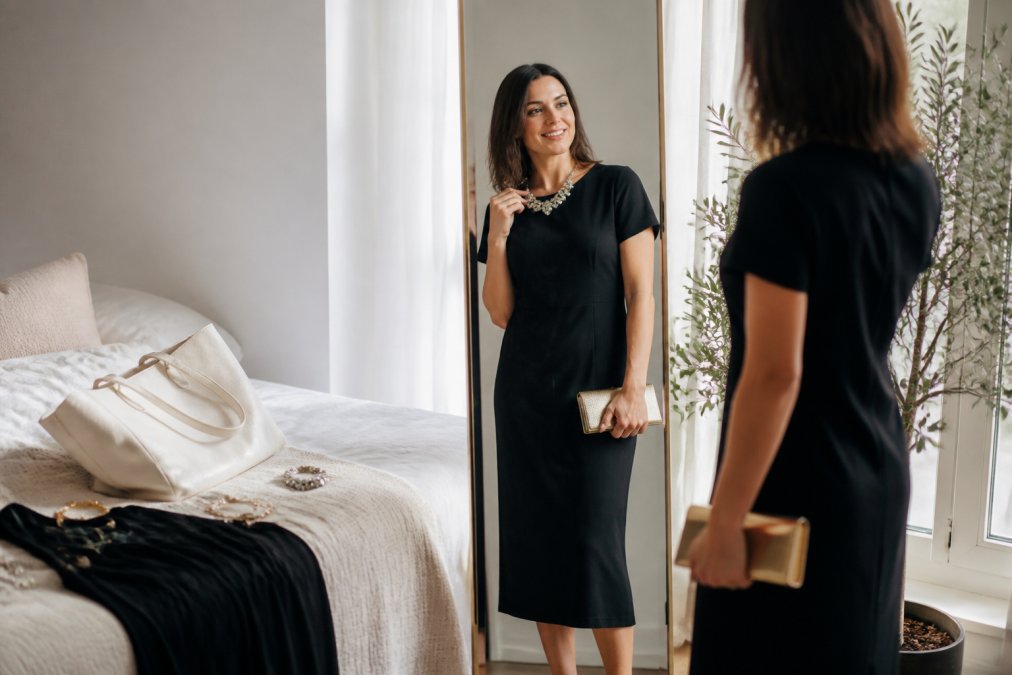
Match the swap to your dress silhouette
- Wrap dress: The tie waist already creates an hourglass line. For evening, swap a structured tote for a small clutch and add a single bold earring or collar. Skip the chunky necklace, it competes with the V-neckline.
- A-line or fit-and-flare: The volume sits at the hem, so draw the eye up. A statement collar, a stack of bangles, or a belt at the natural waist all read evening without fighting the skirt.
- Bodycon or slip dress: The dress is the statement. Keep jewelry minimal, one thin chain or a single cuff, and let the bag and shoes carry the evening signal. A structured clutch in a metallic finish does more than three layered necklaces.
- Shift or straight-cut: These can read flat on camera and in person. A belt at the waist, a long pendant, or a cropped jacket adds the dimension the silhouette lacks.
Match the swap to your body shape
A common pattern stylists use: accent the area you want noticed and simplify the rest.

- Pear shape (weight through hips and thighs): Keep the dress simple below the waist. Add a statement earring, a bright scarf, or a structured shoulder bag that sits high on the torso.
- Apple shape (weight through midsection): Skip the belt. Use a long pendant or an open, structured layer to create a vertical line down the center.
- Rectangle shape: Add a belt at the waist and a stacked bracelet or cuff to create curve and interest.
- Hourglass: Lean into the waist. A belt, a fitted blazer, and a mid-size clutch keep the proportions clean.
The bag swap, ranked by effort
Start with the bag. A structured tote says "work." A clutch says "dinner." Same dress, different message.
- Fastest swap (under 10 seconds): Tote to clutch. This alone changes the read of the outfit more than any other single change.
- Medium swap (under a minute): Add statement jewelry. Net-a-Porter's Fall/Winter 2026 trend analysis points to bold collars and chunky pieces as key evening accents this season.
- Full swap (2-3 minutes): Add one layer. A blazer reads formal. A cardigan reads relaxed. A cropped jacket reads edgy.
Seasonal adjustments to the accessory swap
- Summer to fall: Swap a straw or canvas tote for a leather clutch, trade hoop earrings for a gold cuff, and add a lightweight scarf you can drape or remove.
- Winter to spring: Swap a heavy knit scarf for a silk square, trade a large leather tote for a small structured bag, and reduce metal weight, one piece instead of three.
Layering Dresses for Different Occasions and Temperatures
Layering dresses for different occasions comes down to one rule: thin layers for warmth, structured layers for polish. You can do both at once.
For a desk-to-dinner day, try this:
- Morning: dress + knit cardigan + flats
- Afternoon: remove the cardigan, add a belt
- Evening: add a cropped jacket and heels
Footwear Transitions: From Flats to Heels
Footwear is the single biggest signal of day versus night. Flats say daytime. Heels say evening. But the right shoe depends on your dress silhouette, your heel tolerance, and the season, not just the clock.
Confident Batwing Cropped Jacket →
Match the shoe to the dress silhouette
- Wrap dress: A pointed flat or a block heel both work. The wrap's V-neckline and tie waist already create a vertical line, so the shoe doesn't need to do heavy lifting.
- A-line or fit-and-flare: A heel with a little weight, block, kitten, or wedge, balances the volume at the hem. A stiletto can look top-heavy against a full skirt.
- Bodycon or slip dress: A strappy heel or a pointed mule keeps the line clean. A chunky sneaker can work for daytime but reads casual for evening unless the rest of the outfit is deliberately dressed down.
- Midi dress: The hem hits mid-calf, which is the trickiest length for shoes. A pointed toe or a heel with a visible ankle strap lengthens the leg. A round-toe flat can visually shorten it.
Heel height, by the numbers
A common pattern among stylists: match heel height to the event length, not the event formality.
- Under 2 inches (kitten heel, low block): Best for commutes, long workdays, and any event where you'll be standing for more than two hours.
- 2 to 3 inches (mid heel, slingback): The most versatile range. Works for office, happy hour, and most dinners.
- 3.5 inches and up (stiletto, strappy heel): Reserve for seated dinners, short events, or occasions where you can sit between arrivals and the main event.
The foldable-flat strategy
Keep a pair of foldable flats in your bag. Wear the heels for the event, then switch back for the walk home. Your feet will thank you.
Seasonal footwear transitions
- Summer to fall: Swap open-toe sandals for closed-toe mules or slingbacks. Add a sheer or opaque tight as temperatures drop, a 40-denier tight reads fall, a 15-denier reads late summer.
- Winter to spring: Swap heeled boots for pumps or mules. Keep a pair of no-show socks in your bag for the transition weeks when mornings are cold and afternoons are warm.
Quick reference
| Time of Day | Best Footwear | Why It Works |
|---|---|---|
| Morning commute | Flats or loafers | Comfort for walking |
| Office hours | Block heels | Height without strain |
| Happy hour | Mules or slingbacks | Easy to slip on |
| Dinner | Strappy heels | Dressy and clean |
| Late night | Sneakers | Practical for the ride home |
If heels aren't your thing, pointed flats work for evening too. The shape does the work, not the height. A pointed flat in a metallic or patent finish reads more evening than a round-toe flat in matte leather.
How to Transition Dresses from Day to Night on a Budget
Budget-friendly styling comes down to buying fewer, smarter pieces. You don't need a second wardrobe. You need three or four items that do double duty.
Here's a starter kit that covers most transitions:
- One black or navy midi dress
- One structured blazer
- One clutch
- One pair of heels you can actually walk in
- One statement necklace
Frequently Asked Questions
What accessories help transition a dress from day to night?
The fastest way to transition dresses from day to night is swapping accessories. Trade a structured tote for a clutch, switch flat sandals for heels, and add statement jewelry like chunky earrings or a bold necklace. A blazer or cardigan can be removed for evening. MasterClass (2026) recommends pairing a black dress with a blazer and sneakers for daytime, then switching to heels and chunky jewelry for evening.
How do you style a casual dress for a formal evening event?
Start with a simple base dress in a solid color, then layer on formal elements. Add a structured blazer or a belted jacket to define your waist. Swap casual shoes for heels and choose a clutch over a crossbody bag. Statement jewelry and a bold lip color can elevate the look.
What shoes are best for transitioning outfits from day to night?
For daytime, opt for flats, sneakers, or low block heels. For evening, switch to strappy heels, pumps, or dressy mules. A mid-heel pump in a neutral color works for both. If you're on your feet all day, keep a pair of heels in your bag or car for a quick swap. The key is choosing a shoe that matches the formality of your destination.
How can I make a work dress look appropriate for happy hour?
Remove any conservative layers like a buttoned cardigan or blazer. Add a statement necklace or hoop earrings. Swap your work tote for a clutch and change from flats to heels. If your dress is plain, add a belt to cinch the waist. A quick lip color change and letting your hair down can also shift the vibe from office to cocktail hour.
Most women own a dress that could work for both day and night. They just haven't found the right layer, bag, or shoe to make it happen. At Maison Amara Boutique, we make that easier with trendy dresses and accessories built for real life, plus free shipping on orders of $50 and more. Shop now and build a wardrobe that moves with you from morning meetings to evening plans.