
How to Layer Dresses for Cooler Weather Styling
Last Updated: October 23, 2026
Quick Summary
To layer dresses for cooler weather, start with a thin, form-fitting base layer closest to your skin, then add a middle layer like a cardigan or sweater and finish with a wind-blocking coat or jacket. Keep the thinnest layer closest to the body and limit yourself to one thick piece so the silhouette stays clean.
- Choose a slim long-sleeve or thermal top as your base layer, not a chunky ribbed knit.
- A cardigan is the easiest middle layer because it slips on, buttons up, and comes off indoors.
- Pick opaque tights for winter cold and fleece-lined tights for the coldest days.
- Match coat length to dress hem: a long coat over a midi dress creates a clean line.
- Wash knits in a mesh bag on a gentle cycle and lay them flat to dry.
Table of Contents
- Start With the Right Base Layer for Cooler Weather
- What to Wear Over a Dress in Winter: Middle and Outer Layers
- How to Wear Tights with Dresses for Real Warmth
- How to Layer Clothes Without Looking Bulky
- Winter Dress Outfit Ideas for Work, Weekends, and Evenings
- Fabric, Fit, and Static: Troubleshooting Your Layers
- Care Tips That Keep Layered Pieces Looking New
- Conclusion
- Frequently Asked Questions
Start With the Right Base Layer for Cooler Weather
Cold-weather layering fails when you pile on thick pieces. The secret to how to layer dresses for cooler weather styling is a thin, close-fitting base. That first layer traps warmth against your body without adding bulk.
A base layer is the thin garment worn closest to your skin under a dress. It adds warmth and wicks moisture while staying invisible under the fabric.
Choosing Slim, Comfortable Base Layers
Reach for form-fitting, lightweight pieces that sit flush against your body. Bulk starts here, so keep it flat.
- Long-sleeve tops in thin knits or cotton blends
- Thermal layers made for everyday wear, not ski gear
- Seamless turtlenecks that slide under a neckline
Avoid chunky ribbed knits as a base. They bunch under a dress and create lumps. A common mistake is buying a thermal layer two sizes too big. Slim fit beats thick fabric every time.
Layering Under Sleeveless and Lightweight Dresses
Sleeveless dresses become year-round pieces with the right base underneath. Slip a fitted long-sleeve top under the straps and you have a whole new outfit.
Match the base color to the dress for a clean line. Contrast tones work too, but keep textures smooth. A lightweight dress in summer fabric reads winter-ready once a thermal layer sits beneath it.
What to Wear Over a Dress in Winter: Middle and Outer Layers
The middle layer adds warmth and texture. The outer layer blocks wind and cold. Together they turn a simple dress into a full winter outfit.
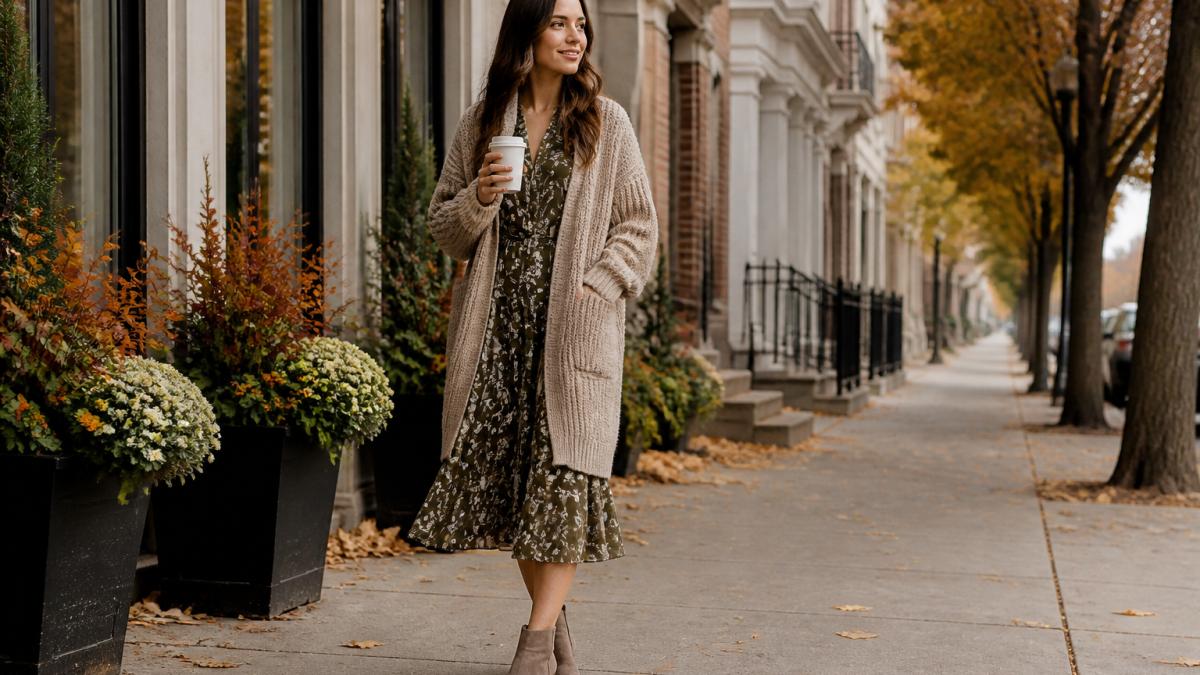
Sweaters, Cardigans, and Vests
A cardigan is the easiest middle layer for dresses. Our Grounded Knitted Oversized Cardigan has a loose fit and thick knit, ideal for draping over a slip dress on a cool morning. For a lighter option, the Wrenley Checkered Open Front Drop Shoulder Cardigan adds a checkered print and soft knit without weight. The Sadie Drop Shoulder Cardigan Sweater brings a bold striped pattern and a V-neck that flatters layered looks.


Vests work over long-sleeve bases, and pullover sweaters layer best over slim dresses. Keep the sweater length near your hip for balance.
Jackets, Coats, and Shackets
Finish with an outer layer that suits the temperature. A leather jacket or blazer handles transitional weather. A peacoat or long coat takes on real cold. The shacket, a shirt-jacket hybrid, sits in between for mild fall days.
Match the coat length to the dress hem. A long coat over a midi dress creates a clean line. A cropped jacket over a longer dress adds proportion.
How to Wear Tights with Dresses for Real Warmth
Tights are the fastest way to warm up a dress. They add a full layer of insulation without changing the dress itself. Here is how to wear tights with dresses and stay warm.
- Pick the denier for the weather. Sheer tights suit fall. Opaque tights handle winter cold.
- Choose fleece-lined tights for the coldest days.
- Match tone to your boots for a longer leg line.
Layer socks over tights inside boots for another pocket of warmth. Thermal socks make a real difference on freezing mornings.
How to Layer Clothes Without Looking Bulky
Bulk comes from too many thick layers, not from layering itself. The fix is thin layers stacked in the right order, with each layer doing one job. Here is how to layer clothes without looking bulky.
| Layer | Job | Best Pick | Weight to Aim For |
|---|---|---|---|
| Base | Warmth next to skin | Slim long-sleeve or thermal top | Lightweight, under 6 oz per square yard |
| Middle | Insulation and texture | Light cardigan or thin sweater | Mid-weight knit, 8-12 gauge |
| Outer | Wind and cold block | Coat, jacket, or shacket | Wind-resistant shell or dense wool |
The Three Rules That Kill Bulk
Rule 1: One thick layer, not three. Pick a single heavy piece, a chunky cardigan, a wool coat, a fleece-lined tight, and keep everything else thin.
Grounded Knitted Oversized Cardigan →
Rule 2: Match layer weight to the dress fabric. A lightweight slip dress needs a thin base and a mid-weight cardigan.
Rule 3: Keep the thinnest layer closest to the body. Thin base, medium middle, thick outer.
Proportion Fixes for Common Problems
- Loose top layer, fitted lower half. An oversized cardigan over a slim base and opaque tights keeps your shape. Balance the volume at the top with a narrow line below.
- Cropped outer layer over a longer dress. A cropped jacket or shacket over a midi dress adds proportion without hiding the hem.
- Long coat over a midi dress. A coat that hits at or below the dress hem creates one clean vertical line.
Fabric Weight Cheat Sheet
- Base layers: 4-6 oz per square yard. Anything heavier bunches at the waist.
- Middle layers: 8-12 oz per square yard. A 10-gauge knit is the sweet spot for cardigans.
- Outer layers: 14 oz and up for wool coats; wind-resistant shells can be lighter but should block air.
If you do not know a garment's weight, use the hand test: if you can see your hand through the fabric when held to a light, it is a base layer. If it blocks light but drapes softly, it is a middle layer. If it holds its shape on its own, it is an outer layer.
Winter Dress Outfit Ideas for Work, Weekends, and Evenings
Winter dress outfit ideas start with the same formula and shift by occasion. Adjust the layers, not the dress.
- Work: A midi dress, slim turtleneck, blazer, opaque tights, and loafers.
- Weekend: A knit dress, oversized cardigan, scarf, and ankle boots.
- Evening: A slip dress, fitted base, long coat, and heeled boots.
For the weekend look, finish with boot styling ideas from our guide on how to style dresses with boots. The right boots pull the whole outfit together.
Fabric, Fit, and Static: Troubleshooting Your Layers
Static and friction ruin a good layered look, and most guides stop at "use a dryer sheet." The real fix is understanding why fabrics cling, grab, and bunch, then choosing layers that work together before you get dressed. Dry winter air makes this worse.
Why Static Happens and How to Stop It
Static builds when two fabrics rub together and electrons transfer from one surface to the other. Synthetics, polyester, nylon, acrylic, hold that charge, while natural fibers like cotton, wool, and silk dissipate it. That is why a polyester slip under a wool dress crackles while a silk slip stays quiet.
- Prevent it at the fabric level. Choose a natural-fiber base layer (cotton, merino wool, silk) under synthetic dresses, or a natural-fiber slip under synthetic dresses. Pairing like with unlike reduces charge buildup.
- Add humidity. A humidifier in the room where you dress cuts static dramatically. A quick steam of the dress and tights before putting them on works the same way.
- Use a conductive finish. Rub a dryer sheet, a dab of lotion, or a light mist of hairspray on your hands and smooth it over tights and slips. These leave a thin film that lets charge dissipate.
Friction: Why Layers Grab and Bunch
Friction is a texture problem, not a fit problem. Smooth fabrics slide against each other; rough knits grab. When a rough knit sits over a smooth dress, the knit catches and rides up. When two rough fabrics meet, they lock in place and create lumps.
- Pair like textures. Smooth over smooth (silk slip under a smooth dress), rough over rough (wool cardigan over a wool dress). Avoid rough over smooth unless the rough layer is the outer layer and can move freely.
- Use a slip as a buffer. A slip between the dress and tights stops the dress from clinging to the tights and riding up.
- Check the seams. Flatlock or seamless construction on base layers reduces the ridges that catch on dress linings.
Fit: When to Size Down and When to Size Up
Bunching almost always means a layer is too thick or too big, not too small. A base layer should sit flush against the skin with no wrinkles at the waist or under the arms. If you can pinch more than half an inch of fabric at the side seam, size down.
- Base layers: size down if they bunch; the fabric should feel snug but not restrictive.
- Middle layers: size true to size; a cardigan should close without pulling across the chest.
- Tights: size by height and weight, not by dress size. Tights that are too small create a compressed, shiny look; too large and they sag at the knee and ankle.
Cling and Movement
Cling is static plus friction plus moisture. If a dress sticks to your legs, the cause is usually synthetic tights under a synthetic lining. Swap to a cotton-blend or wool-blend tight, or add a slip. If sleeves restrict movement, the base layer is too tight at the armhole, look for a raglan or drop-shoulder cut that gives the shoulder room to rotate.
Care Tips That Keep Layered Pieces Looking New
Layers take more wear than single pieces, so care matters. Wash knits inside a mesh bag on a gentle cycle. Lay them flat to dry to hold their shape.
- Hand wash delicate knits in cold water
- Skip harsh detergents and bleach
- Store folded to avoid hanger marks
Our guide on maintaining clothing quality after washing covers the full routine. Good care keeps your layers ready for next season.
Conclusion
Building warm, flattering outfits from dresses takes the right layers, not more of them. Start slim at the base, add a cardigan or coat, and finish with tights and boots that fit the weather. Maison Amara Boutique makes this easy with trendy dresses and cardigans, free shipping on orders of $50 and more, and a curated collection built for everyday elegance.
Frequently Asked Questions
What is the best way to dress in cold weather without looking bulky?
Build from thin to thick. Start with a slim, form-fitting base layer, add a lightweight middle layer like a fine-knit cardigan, then finish with one structured outer layer. Keep each piece close to the body and avoid stacking two chunky knits. Choosing fitted tights and boots that meet the hem also removes gaps where cold air gets in. The goal is insulation in thin layers, not one heavy piece that adds width.
Can you wear tights with a dress in cold weather?
Yes, and tights are the single most effective way to extend a dress into cooler months. Opaque tights in 80 to 100 denier add real warmth, while sheer or patterned pairs work for milder days. Match tights to your shoe color to lengthen the leg line, and choose a pair with a wide, comfortable waistband so it stays put under the dress. Add socks inside boots on the coldest days for extra insulation.
How do you layer clothes under a dress without adding bulk?
Pick base layers made from thin, smooth fabrics such as lightweight knit or thermal blends, and make sure they sit close to the skin. A long-sleeve top with a slim fit slides under a sleeveless or lightweight dress without creating ridges. Avoid ribbed or textured pieces underneath, since those show through. If the dress is fitted, choose a bodysuit-style layer so nothing bunches at the waist.
What shoes go best with dresses in cold weather?
Ankle boots, knee-high boots, and loafers with socks all work well with layered dresses. Boots that meet or overlap the hem of your dress keep the leg warmer than a low-cut shoe. Choose a block heel or flat sole for wet sidewalks, and treat leather or suede before the season starts. Matching your boot color to your tights creates one continuous line, which keeps the outfit looking long and elegant rather than chopped up.
