
Choosing the Right Dress Silhouette for Your Shape
Table of Contents
- How to Find Your Body Shape (Without Getting Lost in Labels)
- Silhouette Basics: What Each Dress Shape Actually Does
- A-Line Dress vs. Fit-and-Flare Dress: The Real Difference
- Dress Styles That Flatter the Stomach: Wrap, Empire, and Draped
- Matching Your Silhouette to Your Shape: A Practical Map
- Dress Fit and Proportion Tips for Real Bodies
- When Personal Style Beats Body-Shape Rules
- Frequently Asked Questions
Last Updated: October 12, 2026
How to Find Your Body Shape (Without Getting Lost in Labels)
Choosing the right dress silhouette for your shape starts with three numbers, not a label. At Maison Amara Boutique, we hear from shoppers every week who gave up on dresses because a size tag told them nothing useful.
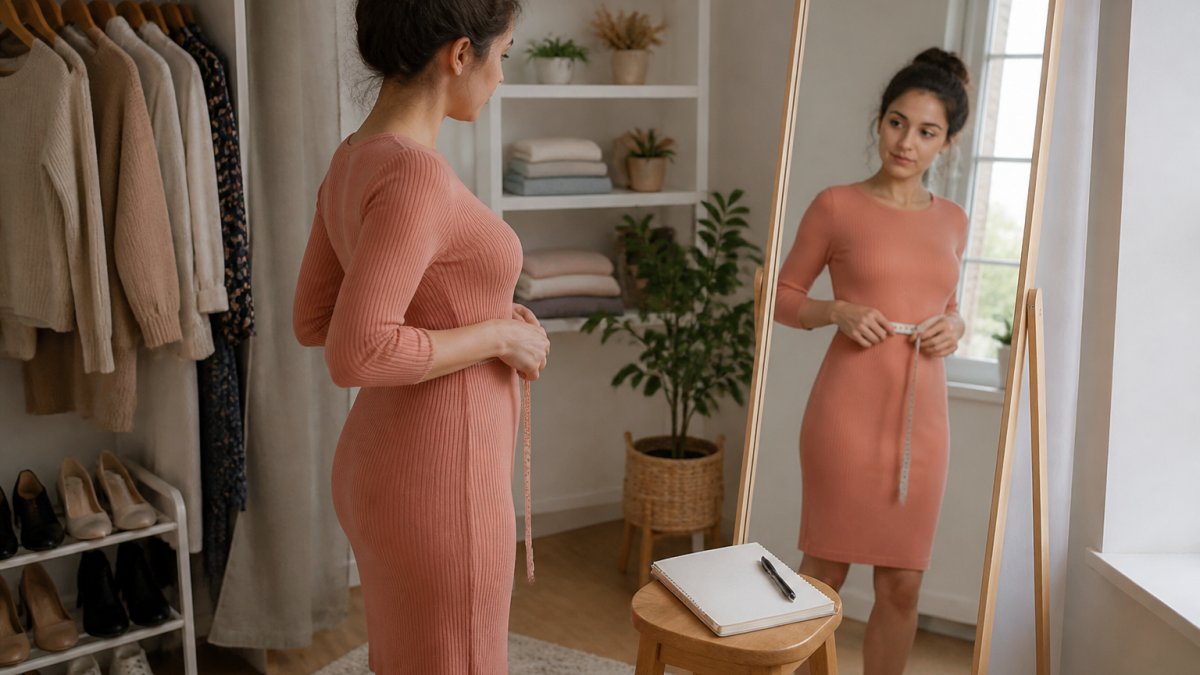
Take Three Measurements and Write Them Down
Use a soft tape measure and keep it snug, not tight. Write down:
- Shoulders: measure across the widest point of your back
- Waist: measure at the narrowest part of your torso
- Hips: measure at the fullest point
Wear light clothing and stand naturally. Don't suck in.
Read Your Ratios, Not the Mirror
Your shape comes from how those three numbers compare. Roughly:
- Hourglass: shoulders and hips are close in width, with a clear waist
- Pear: hips are wider than shoulders
- Inverted triangle: shoulders are wider than hips
Mirrors lie. Numbers don't.
Silhouette Basics: What Each Dress Shape Actually Does
A dress silhouette is the overall outline a dress creates from shoulder to hem. It controls where volume sits and where the eye lands. That's why two dresses in the same size can look completely different on you.
The main silhouettes:
- A-line: narrow at the top, gently wider toward the hem
- Fit-and-flare: fitted through the bodice, flared from the waist down
- Wrap: crosses at the front and ties at the waist
A-Line Dress vs. Fit-and-Flare Dress: The Real Difference
The main difference is where the flare begins. An A-line dress widens gradually from the shoulders down, so it skims the waist. A fit-and-flare stays fitted through the bodice and waist, then flares out sharply at the hip.
Both balance proportions, but they do it differently.
When Each One Works Better
- Choose A-line if you want an easy, forgiving fit for work or all-day wear
- Choose fit-and-flare if you want a defined waist and a bit of drama
- A-line suits apple and rectangle shapes well
Neither is "better." They solve different problems.
Dress Styles That Flatter the Stomach: Wrap, Empire, and Draped
If your middle is the area you'd rather not highlight, three styles do the most work: wrap, empire, and draped.
A wrap dress creates a V neckline and a cinched waist, which pulls the eye upward and inward. An empire waist lifts the waistline to just under the bust, so the fabric flows over the stomach. Draped or ruched styles add soft folds that distract from a flat front panel.
- Wrap: best for hourglass and pear shapes
- Empire: best for apple shapes and early pregnancy
- Draped: works across most shapes
A common mistake is choosing a loose, boxy dress to "hide" the stomach. In practice, that adds bulk.
Matching Your Silhouette to Your Shape: A Practical Map
Use the table below as a starting point, not a verdict. Every recommendation assumes an average height and torso length, so the second half of this section explains how to adjust for the proportions that actually change the answer.
| Body Shape | Best Silhouettes | Why It Works | Watch Out For |
|---|---|---|---|
| Hourglass | Wrap, fit-and-flare, sheath | Follows natural curves, defines waist | Stiff fabrics that erase the waist |
| Pear | A-line, fit-and-flare, ballgown | Balances wider hips with top volume | Skirts that cling at the hip before flaring |
| Inverted triangle | A-line, empire, full skirts | Adds volume below, softens shoulders | Puff sleeves and boat necks |
| Apple | Empire, wrap, draped | Skims the middle, lifts the waist | Drop-waist seams that sit on the fullest point |
| Rectangle | Fit-and-flare, belted, peplum | Creates the illusion of curves | Straight sheath cuts with no waist seam |
The Iowa State University Digital Press study on style recommendations found that stylists weighed height, facial shape, and torso length alongside body shape. That matters more than most guides admit.
Adjust the Map for Height and Torso Length
- Short torso (waist sits high, close to the bust): a natural-waist seam will land under your ribs and look like an empire. Choose empire, drop-waist, or a wrap you can tie lower. Skip belted shirt dresses.
- Long torso (waist sits low, close to the hip): a natural-waist seam will land at your hip and read as a drop waist. Choose fit-and-flare, sheath with a defined waist, or add a belt at your true waist.
- Petite (generally under 5'4"): a skirt that flares too low shortens the leg line. Look for flare points at or above the knee and hems at or above the knee.
Adjust the Map for Size, Age, and Mobility
Silhouette advice written for a size 6 sample doesn't automatically translate to a size 20, and it rarely accounts for bodies that sit, use a wheelchair, or need easy closures.
Liberated Loose Color Block Kaftan →
- Plus and extended sizes: the same silhouette behaves differently because pattern grading adds width faster than it adds length. A fit-and-flare that flares at the hip on a straight-size frame may flare at the thigh on an extended-size frame. Check where the flare actually starts on your body, not on the size chart.
- Mature shoppers: arm coverage and neckline depth often matter more than waist definition. A sheath with a three-quarter sleeve and a scoop neck can outperform a wrap if the wrap's V feels too deep.
- Seated and limited-mobility wearers: prioritize stretch wovens or knits, side or back zippers over back-only, and skirts with enough sweep to clear the lap without riding up. A-line and empire generally work better seated than sheath or bodycon.
A Quick Way to Test the Map Before You Buy
Before ordering, hold the dress up against your body in a mirror and mark three points with your finger: your natural waist, the dress's waist seam, and where the skirt starts to flare. If those three points don't line up with the table's logic for your shape, the dress will fight you no matter what the tag says.
Dress Fit and Proportion Tips for Real Bodies
Fit beats theory every time, but "check the shoulders" only helps if you know what a correct shoulder looks like and how to fix it when it's wrong. This section covers the measurement method, the fabric and construction mechanics that change how a silhouette behaves, and a real-world movement test you can run in a fitting room.
Measure Before You Shop
You need four numbers, taken over light clothing with a soft tape held snug but not tight:
- Bust: across the fullest point, tape parallel to the floor
- Natural waist: the narrowest point of your torso, usually just above the navel, bend sideways and the crease marks it
- Hip: the fullest point, usually 7-9 inches below the waist
Write these down and bring them to the store. Compare them to the brand's size chart, not to your usual size, vanity sizing varies by several inches between brands, and a number that fits at one retailer may be two sizes off at another.
Read the Construction, Not Just the Cut
Two dresses labeled "fit-and-flare" can fit completely differently because of how they're built:
- Fabric weight and stretch: A ponte knit with 5% spandex skims and recovers; a crisp cotton poplin holds a shape but shows every seam. Stretch fabrics forgive a half-inch; wovens do not.
- Lining: A lined bodice adds structure and hides seams; an unlined one drapes closer to the body and can cling.
- Seam placement: Princess seams run vertically and shape the bust and waist without darts. A single horizontal waist seam creates a hard visual line, useful for defining a waist, unforgiving if it lands in the wrong spot.
The Movement Test
Run this in the fitting room before you decide. If a dress fails any step, it will fail in real life too.
- Sit down and check that the waistband doesn't dig or gap
- Raise both arms overhead and check that the bodice doesn't ride up past your bra line
- Walk ten steps and check that the hem doesn't catch between your thighs
- Bend forward and check that the neckline doesn't gap open
Alterations Are Part of the Fit
Most dresses are cut for a fit model, not for you. Budget for simple alterations the way you'd budget for shoes:
- Take in the waist rather than sizing down, a waist seam moved 1-2 inches is a common, inexpensive fix.
- Hem to your shoe height. Heel height changes the hem by an inch or more; bring the shoes you'll wear.
- Shorten straps or raise a neckline if the bodice gaps when you bend.
- Add a snap or hook at a wrap or surplice neckline to control how deep it opens.
A Note on Comfort and Confidence
A dress that passes the movement test and fits your largest point will almost always look better than one that matches a chart but restricts you. Flattering is subjective; comfort is measurable. Prioritize the dress you can sit, walk, and breathe in, then adjust the styling, a belt, a layer, a hem, to get the line you want.
When Personal Style Beats Body-Shape Rules
Here's the part most guides skip: body-shape rules are a starting point, not a verdict. If you love a silhouette that isn't "supposed" to suit you, wear it.
This is where personal style matters. A Vogue guide to modern dress silhouettes notes that today's styling leans toward mixing shapes and breaking old rules. We agree.
The best dress is the one you'll actually reach for.
Frequently Asked Questions
How do I find the right dress for my body shape?
Start with three measurements: bust, waist, and hips. Compare the numbers to see where your width sits. From there, pick a dress silhouette that adds volume where you are narrow and skims where you are wider. An A-line dress balances a fuller hip, a wrap dress defines a waist, and a sheath dress works when your bust and hips are close in width. Fit matters more than the label on the size tag.
What is the difference between an A-line dress and a fit-and-flare dress?
An A-line dress flares gradually from the shoulders or bust down to the hem, creating a straight, triangular line. A fit-and-flare dress hugs the bust and waist, then flares out sharply at the hip. The fit-and-flare highlights a defined waist; the A-line skims over the midsection and hips. Both work across body shapes, but the fit-and-flare shows more curve through the torso.
What silhouette looks best on me?
The one that matches how you want to feel that day. Stylists in an Iowa State University Digital Press study considered height, facial shape, and torso length alongside body shape, so no single silhouette is a universal answer. Try an A-line or wrap dress if you want waist definition without cling. Try a sheath or column dress if you prefer a clean, straight line. Take two sizes into the fitting room and compare.
Which dress styles flatter the stomach while still looking elegant?
Wrap dresses, empire-waist styles, and draped or ruched designs work well. A wrap dress creates a V-neckline and a cinched waist that draws the eye upward. Empire waists sit just under the bust, so fabric flows over the stomach. Draped and ruched fabric adds soft movement instead of a flat panel. A loose kaftan, like the Liberated Loose Color Block Kaftan at $59.84, also skims the midsection with a flowing drape.
Finding a dress that fits your shape, your budget, and your life shouldn't feel like a gamble. At Maison Amara Boutique, we make it easier with trendy women's dresses, a curated accessory lineup, and free shipping on orders of $50 or more. Browse our collection, use our fit tips, and shop now to find your next favorite silhouette.