
Cheap Trendy Clothes for College Students in 2026
Table of Contents
- Cheap Trendy Clothes for College Students in 2026: The Cost-Per-Wear Method
- 2026 Campus Fashion Trends That Won't Break Your Budget
- Build a Capsule Wardrobe for College Students
- Where to Score Affordable Trendy Dresses for Women
- Stack Student Discount Fashion Brands and Cash Back
- Thrifting and Secondhand Secrets for Unique Style
- Care Tips to Make Your Cheap Finds Last Longer
- Frequently Asked Questions
Last Updated: September 8, 2026
Cheap Trendy Clothes for College Students in 2026: The Cost-Per-Wear Method
Back-to-school shoppers estimate they will spend an average of $611 on expenses this year (NerdWallet 2026 Back-to-School Shopping Report(https://www.nerdwallet.com/finance/studies/back-to-school-shopping-report)). For students watching every dollar, cheap trendy clothes for college students in 2026 are less about finding the lowest price tag and more about mastering the cost-per-wear calculation. Budget-conscious shoppers build stylish wardrobes without sacrificing quality or their savings account. The smartest approach combines thrifted finds, strategic student discounts, and a capsule wardrobe built on versatile staples.
The cost-per-wear method is simple: divide the price of an item by the number of times you will actually wear it. A $40 pair of jeans worn 80 times costs 50 cents per wear, while a $15 fast fashion top worn twice costs $7.50 per wear.
Quick Picks:
- Best Overall: Maison Amara Boutique, trendy dresses and versatile staples with free shipping over $50
- Best Budget Strategy: Thrifting and secondhand shopping for unique, low-cost pieces
- Best for Maximizing Savings: Stacking student discount fashion brands with cash-back apps
2026 Campus Fashion Trends That Won't Break Your Budget
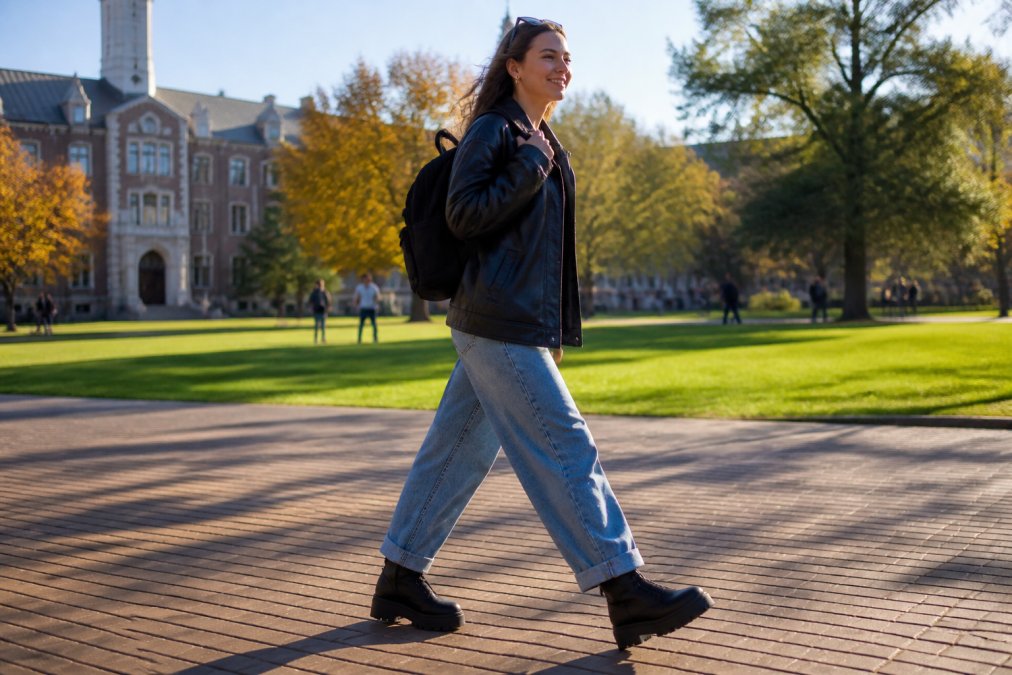
The biggest campus fashion trends for 2026 lean into statement pieces you can find secondhand for a fraction of retail prices. Platform boots paired with barrel-leg jeans and leather jackets dominate campus style this year, according to Gorgeautiful's 2026 campus trend analysis(https://www.gorgeautiful.com/emerging-fashion-trends-college-campuses-2026/). What makes these trends budget-friendly is that they are built on oversized silhouettes and elevated athleisure, both of which translate well to thrifted shopping.
Trends like cargo pants, baby tees, and Y2K-inspired pieces remain strong for 2026, alongside "Poetcore" aesthetics that Teen Vogue identifies as a major influence on student wardrobes this fall (Teen Vogue's biggest fashion trends for 2026(https://www.teenvogue.com/story/biggest-fashion-trends)). The key is knowing which trends have staying power and which will feel dated by spring semester.
| Trend | Secondhand Price Range | Cost-Per-Wear Potential | Best Source |
|---|---|---|---|
| Oversized blazers | $15-$30 | High with layering | Thrift stores |
| Vintage quarter-zips | $10-$20 | High for fall rotation | Secondhand shops |
| Leopard print pieces | $10-$25 | Medium, statement item | Online resale |
| Platform boots | $20-$40 | High with barrel-leg jeans | Thrift or resale apps |
Build a Capsule Wardrobe for College Students
A capsule wardrobe for college students is a curated collection of 20 to 30 pieces that mix and match to create dozens of outfits. This approach directly counters the fast fashion trap of buying cheap, trendy items that fall apart after a few washes. Research from the University of Minnesota found that domestically manufactured leggings proved more environmentally sustainable than fast fashion alternatives, supporting the case for fewer, better pieces (EXTERNAL_LINK: University of Minnesota sustainable fashion research | rooseveltinstitute.org).
But a capsule only works if you build it around your actual campus life. A commuter needs wrinkle-resistant layers; a dorm resident needs waterproof footwear; an intern needs one blazer that does double duty. The mistake most students make is copying a generic "10-piece wardrobe" list from a blog written for office workers.
The Real Cost Breakdown: What a Semester Capsule Actually Costs
Most articles tell you to "buy fewer, better pieces" but never show the math. Here is a realistic starter budget for a 22-piece capsule covering a 15-week semester, mixing new basics with thrifted statement items:
| Category | Items | New Cost (Budget Retailer) | Thrifted/Resale Cost | Cost-Per-Wear (Over 15 Weeks) |
|---|---|---|---|---|
| Bottoms (jeans, trousers, shorts) | 4 | $120 | $40-$60 | $0.20-$0.40 per wear |
| Tops (tees, blouses, sweaters) | 8 | $100 | $30-$50 | $0.15-$0.30 per wear |
| Outerwear (jacket, cardigan, blazer) | 3 | $90 | $30-$45 | $0.30-$0.50 per wear |
| Dresses/Jumpsuits | 2 | $60 | $20-$30 | $0.40-$0.60 per wear |
| Shoes (sneakers, boots, flats) | 3 | $120 | $40-$60 | $0.50-$0.80 per wear |
| Accessories (bag, scarf, sunglasses) | 2 | $40 | $15-$25 | $0.10-$0.20 per wear |
| Total | 22 | $530 | $175-$270 | ~$0.30 average per wear |
That $175-$270 thrifted total breaks down to roughly $12-$18 per week, less than the cost of one fast-fashion dress that will fall apart by Thanksgiving. The new-only route costs $530, still under the average $611 back-to-school spend, but the thrifted route frees up $260+ for textbooks or a spring break trip.
The 7 Essential Pieces to Start With (and the Math Behind Them)
- A versatile denim jacket, A versatile denim jacket layers over dresses, tees, and hoodies for three full seasons. The Unstoppable Cropped Denim Jacket at $115.28 is a stylish option. A thrifted Levi's jacket at $20 drops that to $0.33 per wear.
- Straight-leg jeans, Straight-leg jeans pair with everything from sneakers to boots. The Elia Cuffed Straight Loose Jeans are available at $37.39. Thrifted versions run $8-$15, dropping cost-per-wear to $0.27-$0.50.
- A striped shift dress, A striped shift dress works for class, brunch, or a casual internship. The Monroe Sleeve Shift T Shirt Dress is available at $23.09.
- One cozy cardigan, One cozy cardigan, like the Wrenley Checkered Open Front Drop Shoulder Cardigan at $30.79, adds pattern without trying too hard.
- A basic graphic tee, A basic graphic tee, such as the 1776 USA Vintage Graphic Tee at $16.49, is a relaxed fit that dresses up or down.
- A crochet or knit top, A crochet or knit top, like the Alaya Crochet Tank Top at $25.29, elevates high-waisted bottoms instantly.
- Oversized sunglasses, Oversized sunglasses, such as the Daring Alloy Oversized Sunglasses at $19.99, make any outfit look intentional.
The Commuter vs. Dorm-Life vs. Internship Split
Your capsule should shift based on where you spend your time:

- Commuter style: Prioritize wrinkle-resistant fabrics (ponte, jersey, wool blends), a structured tote that fits a laptop, and one pair of walking shoes that survive a mile-long campus trek. Skip the dry-clean-only blazer; buy a machine-washable knit blazer instead.
- Dorm-life comfort: You live in public spaces, so prioritize lounge-adjacent pieces that still look intentional, matching sweatsuits, oversized hoodies with a clean hem, and slides that pass for shoes when you run to the dining hall. Thrift these; they are the most commonly donated items.
- Internship/career fair professional: One blazer, one pair of tailored trousers, and one sheath dress cover 90% of career events. Buy these new if you can, because thrifted suiting often fits poorly and tailoring costs $20-$40 per garment, which destroys your cost-per-wear math.
Where to Score Affordable Trendy Dresses for Women
Finding affordable trendy dresses for women on a student budget means knowing where to look and when to buy. Online retailers frequently run sales where dresses drop to as low as $7.49, and secondhand markets offer unique pieces that no one else on campus will have (EXTERNAL_LINK: BuzzFeed's budget-friendly online shopping analysis | buzzfeed.com). The sweet spot is combining sale timing with versatile silhouettes that work across seasons.
At Maison Amara Boutique, our striped shift dresses and casual dresses are priced to fit a student budget. The Monroe Sleeve Shift T Shirt Dress at $23.09 combines a classic crew neckline with a relaxed fit. For warmer months, the Heaven Rhinestone Raw Hem Denim Shorts at $25.29 transition from class to campus events.

Stack Student Discount Fashion Brands and Cash Back
Major brands including Nike, H&M, Crocs, and Marc Jacobs are actively using student discount programs to capture the college market (EXTERNAL_LINK: Student Beans 2026 student discount report | studentbeans.com). That means verified student status can unlock 10% to 20% off at brands you already shop, and stacking those discounts with cash-back apps and seasonal sales multiplies your savings.
The stacking strategy works in four layers:
- Verify your student status through a discount platform to unlock exclusive codes
- Shop during end-of-season sales when clearance items drop an additional 30% to 50%
- Use a cash-back browser extension to earn 2% to 10% back on your purchase
- Apply a first-time buyer code if you are shopping a new site
This approach matters because the retail calendar rewards patience. Shopping for fall clothes in October rather than August can cut your costs by nearly half, and the styles are still perfectly wearable for the season.
Thrifting and Secondhand Secrets for Unique Style
Secondhand shopping has moved from budget necessity to primary shopping behavior, particularly among Generation Z consumers who show high engagement in circular fashion (EXTERNAL_LINK: ScienceDirect research on secondhand clothing intent | sciencedirect.com). The psychological drivers behind this shift include cost savings, environmental concerns, and the appeal of owning pieces that no one else on campus has.
The practical side of thrifting requires a strategy. Oversized blazers run $15 to $30 and vintage quarter-zips run $10 to $20 at secondhand shops, making them the best value categories for building a unique wardrobe (Gorgeautiful campus fashion pricing guide(https://www.gorgeautiful.com/emerging-fashion-trends-college-campuses-2026/)). Focus on fabric first: natural fibers like cotton, wool, and linen hold up better than synthetics and are easier to clean.
Care Tips to Make Your Cheap Finds Last Longer
The cost-per-wear method only works if your clothes survive more than a semester. Fast fashion garments fall apart faster, which is why experts argue students should move away from mass-produced, cheap websites and invest in fewer, higher-quality wardrobe staples (EXTERNAL_LINK: The Daily Texan on quality over quantity | dailytexanonline.com). The counterargument is that fast fashion remains a necessary evil for students on limited budgets, which makes proper care even more critical (EXTERNAL_LINK: The Daily Toreador on fast fashion realities | dailytoreador.com).
Here is the uncomfortable truth: a $15 fast-fashion top and a $40 mid-range top are often made from the same polyester blend in the same factory. The difference in lifespan comes down to how you treat the garment. Most students lose clothes to three preventable killers: dryer heat, hanger stretching, and ignoring small tears.
The 5 Habits That Double Garment Lifespan
- Wash cold and hang dry, Heat is the enemy of elastic and synthetic fibers. Cold water and air drying preserve color and shape. If you live in a dorm without a drying rack, buy a $10 over-the-door hanger rack.
- Fold knits, hang everything else, Heavy sweaters stretch on hangers. Fold them, and use hangers only for structured pieces like jackets and button-downs. For delicate tops, use velvet hangers that grip fabric.
- Spot clean when possible, A stain on one area does not require a full wash cycle. Keep a $5 stain stick in your backpack and treat spots immediately. Coffee, ketchup, and grass stains come out easily if treated within an hour; after a full wash cycle, they set permanently.
- Use a garment shaver for pilling, That fuzzy buildup is not damage; it is loose fibers. A $10 fabric shaver removes pilling in two minutes and makes a $8 thrifted sweater look new again. This single tool extends the life of synthetic blends by months.
- Learn three basic hand-sewing stitches, You do not need a sewing machine. A $5 needle-and-thread kit handles 90% of repairs: reattaching a button, closing a seam gap, and patching a small hole. A loose button that takes 90 seconds to fix becomes a $15 tailor bill if you ignore it.
The Dorm Laundry Room Survival Guide
Shared laundry machines are brutal on clothes. Front-loaders are gentler than top-loaders, but both can snag delicate fabrics. Follow these rules:
- Turn everything inside out before washing. This protects prints, prevents pilling on the outer surface, and keeps zippers from catching on other garments.
- Use the delicate cycle even for jeans. Denim lasts twice as long when washed on cold/delicate and hung to dry. The agitation of a regular cycle breaks down cotton fibers.
- Skip the dryer entirely for anything with elastic. Athletic wear, bralettes, and leggings lose their stretch permanently in high heat. Hang them over a shower rod or on a collapsible rack.
- Wash like colors together for the first three washes. Cheap dyes bleed more than premium dyes. A $6 red graphic tee can turn an entire load of white shirts pink if you wash it warm in the first month.
Repair Before You Replace: The 15-Minute Fix
Before you toss a damaged garment, ask whether a 15-minute fix saves it:

| Problem | Fix | Time | Cost |
|---|---|---|---|
| Loose button | Hand-sew with doubled thread | 3 minutes | $0 (kit included) |
| Small seam gap (armhole, crotch) | Whip stitch closed | 5 minutes | $0 |
| Pilling on sweater | Fabric shaver | 2 minutes | $10 one-time |
| Faded black jeans | Re-dye with Rit dye in a bucket | 30 minutes | $8 |
| Snagged knit | Pull thread to inside with a crochet hook | 5 minutes | $3 hook |
| Stretched-out waistband | Sew elastic casing inside | 20 minutes | $4 elastic |
These fixes cost under $15 total in supplies and save you from replacing a $25 pair of jeans or a $30 sweater. Over a semester, that is $100-$200 in avoided replacements.
When Cheap Clothes Are Not Worth Saving
Some garments are not worth the repair effort. If a fast-fashion item has:
- Fabric that has gone see-through (hold it up to light, if you can see through the weave, it is done)
- Permanent stains that did not come out after two treatments
- Broken zippers on a $10 item (zipper replacement costs $15-$20 in labor)
- Elastic that has completely lost its stretch (cannot be fixed, only replaced)
...then donate it and apply the cost-per-wear lesson to your next purchase. A garment that lasted 5 wears at $3 per wear was a bad deal. A garment that lasted 50 wears at $0.30 per wear was a smart buy, even if it cost three times as much upfront.
Frequently Asked Questions
What are the college fashion trends for 2026?
For 2026, campus style leans into elevated athleisure and Y2K-inspired pieces like cargo pants and baby tees. Oversized silhouettes remain strong, and you'll see platform boots paired with barrel-leg jeans and leather jackets. 'Poetcore' is also emerging as a significant trend for Fall 2026. You can adopt these looks cheaply by shopping secondhand for oversized blazers ($15 to $30) or vintage quarter-zips ($10 to $20) instead of buying new.
How can I build a trendy college wardrobe on a budget?
Use the cost-per-wear method: divide the price by how often you'll wear it. A $30.79 cardigan can be a smart purchase, making it a better buy than a $10 top you wear twice. Start with a capsule wardrobe of versatile basics like a cropped denim jacket, cuffed straight jeans, and a striped t-shirt dress. Then layer in trend pieces from thrift stores or by using student discounts.
Where can I find affordable, high-quality clothing for students?
Look beyond traditional fast fashion. Secondhand markets offer excellent prices on trendy pieces, like leopard print items for $10 to $25. Online boutiques like Maison Amara Boutique offer trendy pieces at student-friendly prices, such as a $23.09 striped t-shirt dress or a $31.89 two-piece lounge set. Stack student discounts from major brands with cash-back apps and shop seasonal sales for the best value.
What is the 3-3-3 rule for building a capsule wardrobe?
The 3-3-3 rule is a simple styling challenge: pick 3 tops, 3 bottoms, and 3 pairs of shoes, then create 10 different outfits from those 9 items. It forces you to focus on versatile pieces that mix and match well. For a college capsule, choose items in a cohesive color palette. This method helps you buy fewer, higher-quality items, which is better for your wallet and the planet.
How do I balance style and comfort for daily campus life?
Prioritize pieces that are both comfortable and stylish. Think a soft cotton-blend pullover and shorts set for lounging, cuffed straight jeans with stretch for walking between classes, or a relaxed-fit graphic tee. Layering is key: a crochet tank top under an open cardigan works for a cool morning lecture and a warm afternoon. Look for fabrics with cotton or elastane that move with you.
Building a stylish wardrobe on a college budget comes down to buying fewer, better pieces and wearing them more often. Maison Amara Boutique makes that easier with trendy dresses and versatile staples priced for students, plus free shipping on orders over $50. Browse the collection and start building a wardrobe that works as hard as you do. Shop now.