
Capsule Wardrobe vs Seasonal Shopping for Women
Quick Summary
A capsule wardrobe is a small, curated set of mix-and-match pieces built around a neutral palette, while seasonal shopping means buying a new set of clothes each season. The capsule approach lowers recurring spend, and cost per wear is the clearest way to compare the two.
- Many guides suggest a seasonal capsule of 30 to 40 pieces, depending on lifestyle.
- Choose a color palette of three to five colors that work together.
- Test your capsule for two weeks; items never worn do not belong in it.
- Divide the purchase price by wears to compare cost per wear across approaches.
- Try a hybrid year-round core capsule with a smaller rotating seasonal layer.
Table of Contents
- What a Capsule Wardrobe and Seasonal Shopping Each Mean
- How to Build a Capsule Wardrobe Step by Step
- Using the 5-4-3-2-1 Wardrobe Method
- Seasonal Wardrobe Shopping List and Budget Controls
- Cost per Wear, Waste and Environmental Trade-Offs
- Capsule Wardrobe Across Seasons: A Hybrid Approach
- Choosing the Right Approach for Your Closet and Budget
- Frequently Asked Questions
Capsule Wardrobe vs Seasonal Shopping for Women
Last Updated: October 26, 2026
What a Capsule Wardrobe and Seasonal Shopping Each Mean
A capsule wardrobe is a small, curated set of clothing pieces that mix and match, usually built around a neutral palette. Seasonal shopping is the habit of buying a new set of clothes each season to refresh what you wear. You can decide which approach fits your budget and routine.
The market signal is clear. The capsule wardrobe market was valued at USD 1.3 billion in 2023 and is projected to reach USD 2.6 billion by 2030, growing at a 10.5% compound annual growth rate from 2024 (Strategic Market Research capsule wardrobe market estimate). That estimate is global, not U.S.-specific, but it shows the approach is gaining mainstream attention.
Seasonal shopping works differently. You refresh outfits with new purchases tied to the calendar, which keeps your closet current but adds recurring spend. The two approaches solve the same problem, looking good every day, with very different trade-offs.
How to Build a Capsule Wardrobe Step by Step
Start by inventorying what you already own. Pull everything out, sort it into keep, donate, and unsure piles, and count what remains. Many guides suggest a functional seasonal capsule of 30 to 40 pieces, though the right number depends on your lifestyle. For a full walkthrough, see step-by-step capsule wardrobe tips with color palettes and decluttering.
Next, choose a color palette of three to five colors that work together. Neutrals plus one accent color keep outfits easy to combine. Then fill gaps with versatile basics: a well-fitting cardigan, dark trousers, a classic knit, and a few transitional layers.
Finally, test your capsule for two weeks. If an item never gets worn, it does not belong in the capsule.
Using the 5-4-3-2-1 Wardrobe Method
The 5-4-3-2-1 method gives you a concrete structure: five bottoms, four tops, three layers, two pairs of shoes, and one statement accessory. Pick pieces that combine with each other so you can generate many outfits from a small set.
Apply the method by checking each category against your daily routine. A professional woman might prioritize tailored trousers and a structured blazer. A weekend-focused shopper might choose denim and relaxed knits. Explore our Essential Dress Styles for a Minimalist Capsule Wardrobe to see dress options that slot neatly into this structure.
Seasonal Wardrobe Shopping List and Budget Controls
Seasonal shopping fails when it runs on impulse. A written plan turns it into a controlled refresh. The goal is to buy only what fills a real gap, on a schedule you set in advance, inside a spending limit you can track.
Step 1: Run a gap audit before the season starts. Pull out the pieces you actually wore in the past 60 days. Note the categories where you ran out of options: work tops, weekend layers, shoes for wet weather, a dress for events. Write each gap as a specific need ("one machine-washable blazer for client meetings"), not a category ("more work clothes"). If you cannot name a situation where you lacked an outfit, you do not have a gap.
Step 2: Set a per-season cap, not a per-purchase cap. Decide the total you will spend on new clothing for the season, then divide it across your gap list. A common pattern is to allocate roughly 60% to workhorse pieces you will wear weekly, 25% to layers and shoes that extend existing outfits, and 15% to one trend or statement item. Track every purchase against the cap in a notes app or spreadsheet. When the cap is gone, the season's shopping is done, even if a sale appears.
Step 3: Use a shopping calendar. Map purchases to when you will actually wear them, not to when retailers release new stock. A practical sequence:
- Late winter (February): buy transitional layers for the stretch between cold and warm weather.
- Early spring (March-April): fill warm-weather gaps you identified last year, such as lighter trousers or breathable tops.
- Late summer (August): buy back-to-school or back-to-work pieces and any fall layers you know you will need.
- Late fall (October-November): add cold-weather items only after confirming what survived last winter.
Step 4: Apply a 48-hour rule to unplanned items. If something catches your eye outside the gap list, save the link and wait two days. Most impulse buys lose their appeal in that window; the ones that survive can be checked against the cap.
Step 5: Review at the end of the season. Count how many of the new pieces you wore at least five times. Items worn once or twice are a signal that the gap audit missed, and the next season's list should correct for it.
A simple budget worksheet keeps this honest: list each gap, the maximum you will pay, the date you plan to buy, and the actual price. If the total exceeds your cap, cut the lowest-priority gap rather than raising the cap. Free shipping on orders of USD 50 or more at Maison Amara Boutique can reduce the cost of filling smaller gaps, but it should not change what you buy. For ideas on affordable business casual outfits for each season, see our guide.
Grounded Knitted Oversized Cardigan →
For budget-conscious shopping, consider versatile clothing staples for a professional capsule that serve multiple seasons and reduce how often you need to refresh.
Cost per Wear, Waste and Environmental Trade-Offs
Cost per wear is the cleanest way to compare the two approaches because it turns very different shopping habits into one number. Divide the purchase price by the number of times you wear the item. A USD 80 cardigan worn 40 times costs USD 2 per wear. A USD 30 top worn three times costs USD 10 per wear. The cheaper item is the more expensive one per wearing.
A worked comparison. Suppose two women each spend USD 600 on clothing over a year.
- Capsule shopper: buys 12 versatile pieces at an average of USD 50 each, wears each piece about 40 times, and replaces roughly two items a year. Cost per wear lands near USD 1.25, and most of the spend goes to pieces that stay in rotation.
- Seasonal shopper: buys 24 pieces at an average of USD 25 each across four seasonal refreshes, wears each piece about 10 times, and replaces about half of them the following year. Cost per wear lands near USD 2.50, and half the closet turns over annually.
Same budget, very different return. The capsule approach front-loads spending on fewer, more durable pieces; seasonal shopping spreads spending across more items with shorter useful lives. Neither is automatically cheaper. To compare the best timeless clothing brands for women before investing, check our list. A seasonal shopper who buys only what she wears and keeps pieces for years can match a capsule on cost per wear. The difference is how much discipline each approach requires.
Total cost of ownership. Add three costs beyond the sticker price: replacement frequency, storage, and impulse purchases. Capsules tend to lower replacement frequency because versatile pieces are worn across more outfits and seasons. Seasonal shopping tends to raise it because trend-driven items date quickly. Storage matters if you keep off-season bins; a capsule usually needs less. Impulse purchases are the wild card: a written gap list and a per-season cap (see the budget section above) control them in either approach.
Waste and environmental impact. Buying fewer, more versatile items generally means fewer garments produced, worn briefly, and discarded. That is a reasonable expectation, not a proven guarantee: research on consumer motivations for adopting a capsule wardrobe is still developing, so treat the environmental benefit as likely rather than established (An Investigation of Consumer Motivations for Adopting a Capsule Wardrobe). Seasonal shopping raises waste risk when items are worn once or twice and then discarded, but a disciplined seasonal shopper who donates or resells unworn pieces narrows the gap.
The article's worked example makes the cost difference between the two approaches concrete.
| Shopper | Spend per year | Cost per wear |
|---|---|---|
| Capsule shopper | USD 600 | About USD 1.25 |
| Seasonal shopper | USD 600 | About USD 2.50 |
Capsule Wardrobe Across Seasons: A Hybrid Approach
Many women combine the two methods. Keep a year-round core capsule of basics, then rotate a smaller seasonal layer. This suits climates with warm summers and cold winters, a point one Reddit commenter raised when preferring seasonal capsules for that reason. That is an individual opinion, not survey evidence.
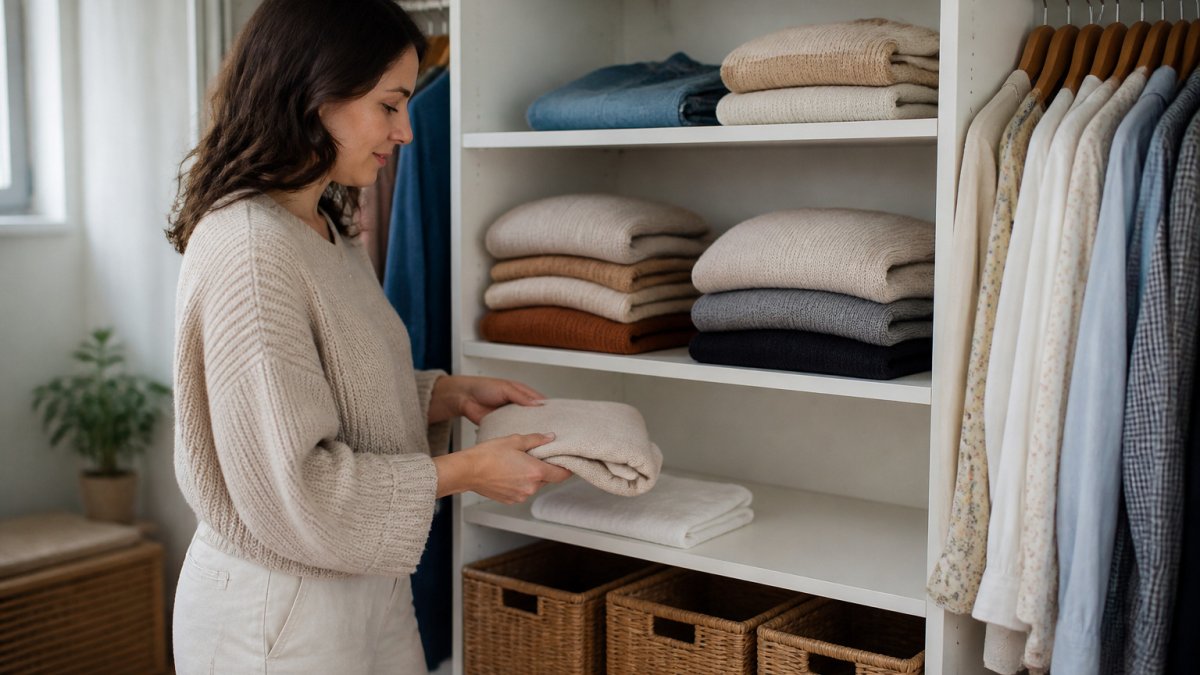
A woman in her 30s folding a cardigan and a light blouse into a neatly organized closet with clearly grouped seasonal pieces illustrates the idea. Store off-season items in labeled bins, and bring them out as the weather changes.
Try the hybrid approach for one year before deciding whether to lean toward a stricter capsule or more seasonal buying.
Choosing the Right Approach for Your Closet and Budget
Pick a full capsule if you want fewer decisions, lower recurring spend, and a closet that is easy to manage. Pick seasonal shopping if you enjoy trend-driven pieces and have a steady budget for new purchases. Choose the hybrid if your climate changes sharply and you want a stable core.
Our recommendation for most readers is to start with a 30-piece capsule and add one seasonal layer each quarter. This keeps spending controlled and your closet useful. Maison Amara Boutique's Women's Fashion Cable Knit Cardigan at USD 36.00 is a layering piece, and the Grounded Knitted Oversized Cardigan at USD 78.32 is a cozy knit.
Shop the Sadie Drop Shoulder Cardigan Sweater at USD 29.69. Choose the approach that fits your routine, and let your wardrobe grow from there.
Frequently Asked Questions
What is the difference between a capsule wardrobe and seasonal shopping?
A capsule wardrobe is a small, curated set of versatile pieces that mix and match across the year, so you buy fewer items and wear each one often. Seasonal shopping means buying a fresh batch of clothes each spring, summer, fall and winter to match the weather and trends. The capsule approach favors fewer, higher-use pieces, while seasonal shopping favors frequent refreshes. Many women combine the two by keeping a core capsule and adding a few seasonal pieces.
Is a capsule wardrobe cheaper than buying clothes each season?
It can be, but not automatically. A capsule wardrobe lowers total spending when you buy fewer pieces and wear each one often, which lowers the cost per wear. Seasonal shopping can cost less per visit but adds up if you buy new pieces every quarter. Track what you spend and how often you wear each item to see which approach works for your budget. Maison Amara Boutique's Sadie Drop Shoulder Cardigan Sweater is priced at $29.69.
How many pieces should a woman have in a capsule wardrobe?
Most capsule guides suggest a small set of pieces, often in the range of 30 to 40 items for a full seasonal capsule. The exact number depends on your climate, lifestyle and how many outfits you need each week. A Cladwell report published as a 2026 resource found a midpoint of 30 clothing and shoe pieces across the capsules it reviewed, though that figure comes from a single company's dataset. Treat it as a starting point, not a rule.
How often should you update a capsule wardrobe?
Review your capsule at the start of each season. Remove pieces you did not wear, replace items that have worn out, and add a few pieces that fill gaps in your color palette or lifestyle needs. Many women find that a seasonal review keeps the capsule fresh without the urge to buy a whole new wardrobe. The Grounded Knitted Oversized Cardigan is priced at $78.32.
