
Affordable Everyday Fashion With Returns
Table of Contents
- Why Return Policies Matter When Shopping for Affordable Everyday Fashion
- Best Clothing Return Policies Compared
- Sizing Consistency Across Online Retailers
- Cost-Per-Wear Analysis for Budget-Conscious Shoppers
- Tips for Shopping for Clothes Online Successfully
- How to Build a Capsule Wardrobe on a Budget
- Sustainable and Ethical Fashion on an Affordable Budget
- Conclusion
Last Updated: August 14, 2026
Why Return Policies Matter When Shopping for Affordable Everyday Fashion
Return policies are the hidden safety net of affordable everyday fashion. A $30 dress that costs $7 to return is actually a $37 purchase. A $50 piece with free returns is the better deal, even if the sticker price looks higher. Many budget-conscious shoppers focus entirely on sale prices and overlook what happens when something doesn't fit or arrives damaged, that's where return policies become the real cost of shopping online.
At Maison Amara Boutique, we understand that affordable everyday fashion works only when you can shop confidently. Free return shipping on orders over $50 removes the friction from the buying decision. You're not gambling on fit or calculating whether a return fee will wipe out your savings.
Best Clothing Return Policies Compared
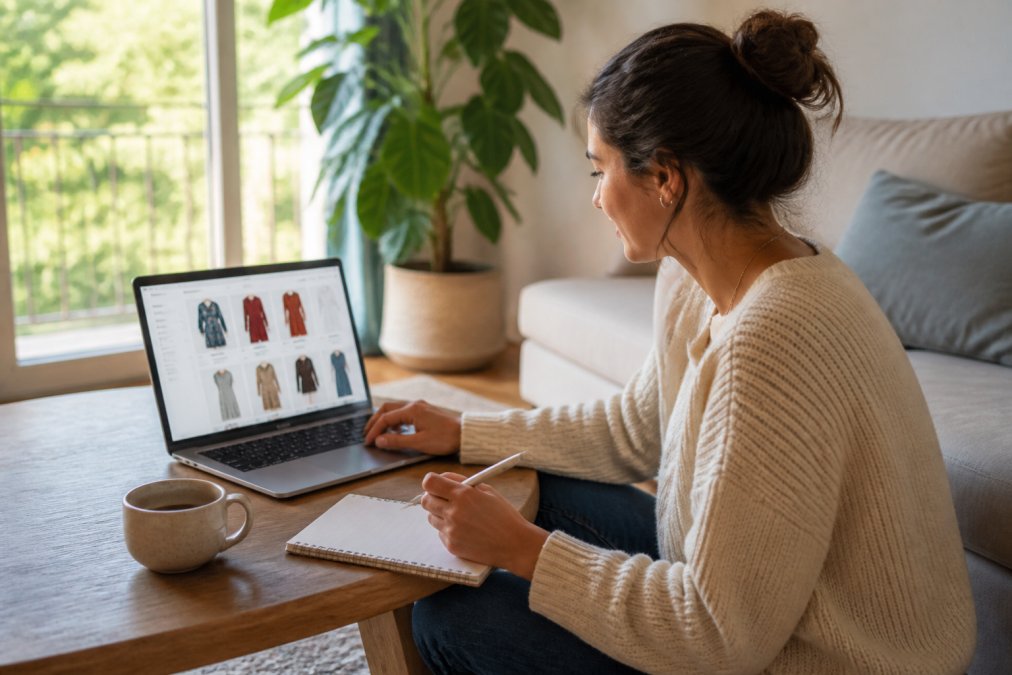
Return policies vary dramatically across online retailers, and those differences directly impact your total cost. The best return policies share three characteristics: a reasonable return window, free or low-cost return shipping, and clear eligibility rules.
Free Returns vs. Restocking Fees
Free returns are the gold standard. Some retailers charge restocking fees ranging from $3 to $10 per item, deducted directly from your refund. ASOS offers free returns within 28 days for a full refund. Old Navy provides 30-day returns with free return shipping. H&M charges $3.99 to $5.99 for mail-in returns, though in-store returns are free. Lulus charges a $6.95 return shipping fee deducted from your refund. SHEIN offers one free return per order, then charges $7.99 for additional returns.
Retailers handling high volume of affordable items often charge return fees to manage costs. Boutique-style retailers tend to offer free returns because they're betting on customer loyalty and repeat purchases.
Return Windows That Give You Time
A 30-day return window is standard but tight. Target's one-year return policy for Target-owned brand clothing is the outlier in the market. Nordstrom Rack gives you 40 days for online purchases. Most retailers cluster around 30 days: ASOS, Old Navy, H&M, Zara, and Lulus all use this window.
A 30-day window means you need to decide quickly. A 40-45 day window gives you breathing room. A one-year policy removes the decision pressure entirely.
| Retailer | Return Window | Restocking Fee | Free Return Shipping | Best For |
|---|---|---|---|---|
| Maison Amara Boutique | Not specified | None | Yes, on orders $50+ | Trendy everyday pieces with modern styling |
| ASOS | 28 days (full refund) | None | Yes | Wide selection and frequent discounts |
| Old Navy | 30 days | None | Yes | Casual, family-friendly clothing |
| H&M | 30 days | $3.99-$5.99 (mail-in) | No (in-store free) | Trendy, fast-fashion collections |
| Zara | 30 days | None | Yes (in-store) | Current fashion trends |
| Target | 1 year (owned brands) | None | Varies | Best return flexibility for owned brands |
| Nordstrom Rack | 40 days (online) | $9.95 (mail-in) | No | Designer pieces at discount |
| Lulus | 30 days | $6.95 | No | Dresses and occasion wear |
| SHEIN | 30 days | $7.99 (2nd+ returns) | First return free | Ultra-budget fast fashion |
Sizing Consistency Across Online Retailers
Sizing inconsistency is the hidden cost of online shopping for affordable everyday fashion. You order a medium from one brand and it fits like a small. That inconsistency drives returns, which defeats the purpose of affordable shopping.
SHEIN has a reputation for significant sizing variance even within the same product line. ASOS publishes detailed size guides for each brand they carry, showing measurements in inches and centimeters with fit notes from customer reviews. Zara is known for relatively consistent sizing across their collections. Old Navy sizes consistently because they're a single brand with standardized manufacturing.
The practical solution is to check size charts before ordering, read customer reviews specifically mentioning fit, and order from retailers where you've had success before.
Cost-Per-Wear Analysis for Budget-Conscious Shoppers
Cost-per-wear is the metric that separates smart budget shopping from false economy. A $15 fast-fashion dress you wear once costs $15 per wear. A $60 piece you wear 50 times costs $1.20 per wear. The second option is actually cheaper.
A white button-up shirt illustrates this: a $20 version might last 15 wears before seams fail. A $50 version might last 150 wears. The expensive shirt costs $0.33 per wear. The cheap shirt costs $1.33 per wear.
For affordable everyday fashion, spend more on basics you'll wear constantly, white tees, jeans, neutral blazers, and less on trendy pieces. A trendy dress you wear five times a year isn't a bargain at $25. A neutral everyday piece you wear three times a week is a bargain at $60.
Maison Amara Boutique's approach to modern, trendy fashion with everyday elegance aligns with this thinking. You're getting pieces designed for regular rotation in your wardrobe, not ultra-cheap fast fashion.
The math is simple: divide the price by the number of times you'll wear it. If the result is under $1 per wear, it's good value. If it's over $2, you're overpaying.
Tips for Shopping for Clothes Online Successfully
Online shopping for affordable everyday fashion requires a different strategy than in-store shopping. A few practices eliminate most friction.
First, check the size chart for every item before ordering. Manufacturers vary, and a "medium" in one product might not fit the same as a "medium" in another.
Second, read customer reviews specifically for fit comments. Look for "runs small," "true to size," or "fabric is thin." If 10 reviews say a dress runs small, size up.
Third, order during free-shipping thresholds when buying multiple items. Maison Amara Boutique's free shipping on orders over $50 is a natural spending point that makes sense for building a wardrobe.
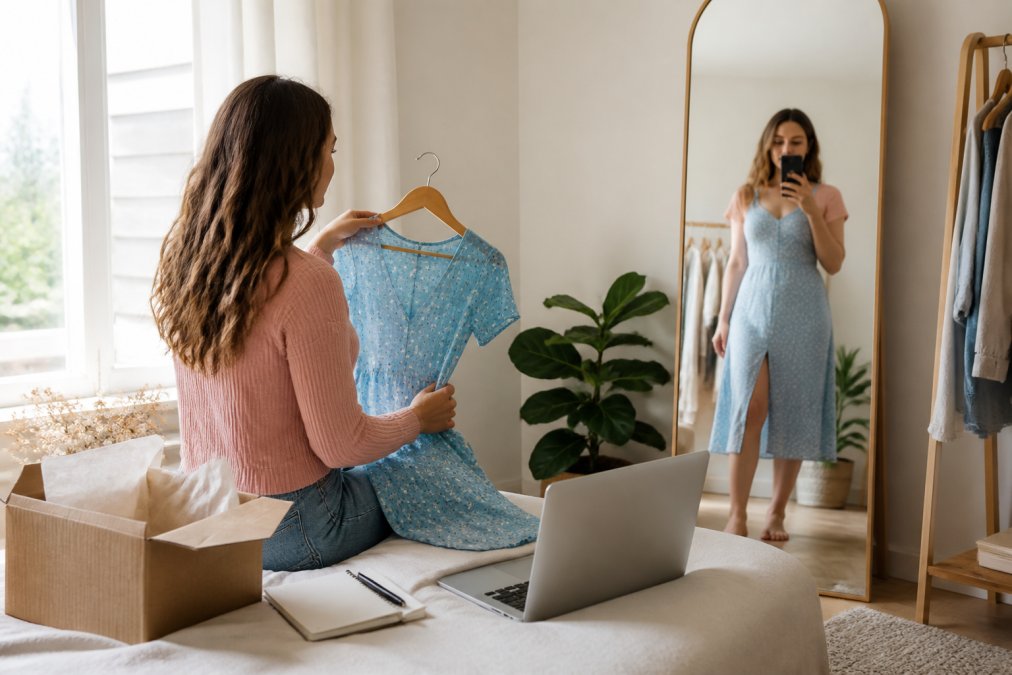
Fourth, photograph yourself in new pieces immediately after they arrive. Try them on with different outfits and accessories in natural and artificial light. That visual record helps you decide quickly.
Fifth, know your return deadline and set a phone reminder. A reminder at day 25 gives you five days to decide and process the return if needed.
Sixth, shop from retailers with straightforward return processes. ASOS and Old Navy both have simple return flows. Maison Amara Boutique's free returns on qualifying orders remove friction entirely.
How to Build a Capsule Wardrobe on a Budget
A capsule wardrobe is a collection of versatile, complementary pieces that work together to create multiple outfits. For budget-conscious shoppers, it's the most efficient way to build a functional wardrobe without overspending.
Start with a color foundation: typically neutrals like black, white, gray, navy, or beige. Choose two or three neutral colors and commit to them. Every basic piece you buy should be in one of these colors.
Add 5-7 versatile basics: white t-shirt, gray t-shirt, plain button-up, simple sweater, dark jeans, neutral pants, and one neutral dress. These form the foundation.
Next, add 5-7 layering pieces: cardigan, blazer, denim jacket, lightweight sweater, structured jacket. These transform basics.
Then add 5-7 accent pieces in colors that complement your neutrals. A burgundy sweater works with black pants and white pants. A navy blazer coordinates with gray and black.
Finally, add accessories that tie everything together: simple jewelry, scarves, belts.
For affordable everyday fashion, this approach saves money because you're buying fewer items that work harder. A 40-piece capsule wardrobe creates roughly 400+ outfit combinations. If you spend $1,000 building it, that's $2.50 per outfit. Compare that to buying 20 random pieces for $500 that create only 50 outfit combinations, that's $10 per outfit.
Maison Amara Boutique's focus on modern, trendy fashion that works for everyday elegance aligns perfectly with capsule wardrobe thinking. Their pieces are designed to work with basics and transition across contexts.
Sustainable and Ethical Fashion on an Affordable Budget
Sustainable fashion and affordable prices involve real trade-offs. Fast-fashion retailers like SHEIN offer ultra-cheap prices by minimizing labor costs, using low-quality materials, and relying on high volume. Workers are often underpaid, fabrics are often synthetic, and waste is enormous.
Mid-market retailers like H&M and ASOS are trying to balance affordability with sustainability. H&M has a garment-collecting program for recycling. They're not perfect, but they're acknowledging the problem.
Higher-end sustainable brands like Everlane and Patagonia are genuinely ethical but not affordable. A sustainably-made t-shirt costs $40-60 because labor is paid fairly and materials are quality.
The practical approach: buy fewer items of better quality from mid-market retailers rather than more items of poor quality from ultra-cheap retailers. One $40 shirt from ASOS that lasts a year is more sustainable than four $10 shirts from SHEIN that last three months each.
Look for retailers transparent about their supply chain. Maison Amara Boutique's focus on modern, curated pieces suggests quality over quantity, which naturally aligns with sustainability.
The math: a $50 piece you wear 50 times has a lower environmental impact per wear than a $10 piece you wear five times.
Building affordable everyday fashion with returns isn't about finding the cheapest price. It's about understanding return policies, sizing consistency, and cost-per-wear so you can shop confidently without wasting money on returns. Maison Amara Boutique's free returns on orders over $50 and focus on versatile, modern pieces designed for everyday elegance removes the guesswork from online shopping. Start with their curated collection and build from there, you'll spend less time managing returns and more time actually wearing what you buy.
Frequently Asked Questions
What makes a clothing return policy truly customer-friendly?
The best clothing return policies offer a reasonable return window (at least 30 days), free return shipping, and no restocking fees. Look for retailers that allow returns in original condition with tags attached. Some stores like Target offer extended windows for their own brands. Free returns at physical store locations are also valuable if you prefer not to ship items back. A transparent policy that clearly states what's returnable saves frustration and helps you shop with confidence.
How do I calculate cost-per-wear for affordable everyday fashion?
Divide the item's price by the number of times you expect to wear it. A $40 dress worn 50 times costs $0.80 per wear, while a $100 piece worn 10 times costs $10 per wear. Focus on versatile pieces that work across seasons and pair with multiple outfits in your wardrobe. Neutral colors, classic cuts, and quality fabrics extend wearability. This approach helps you invest in pieces that deliver real value rather than trendy items you'll wear once.
What's the best way to handle sizing inconsistencies when shopping online?
Check multiple customer reviews and look for photos of real people wearing items. Many retailers now include detailed size charts and fit descriptions. Order items in multiple sizes if the return policy allows free exchanges. Read comments about fit relative to your body type. Track which brands fit you consistently and prioritize them. Keep detailed notes on sizing for future purchases. Taking advantage of free returns or exchanges means you can order with confidence and adjust fit without penalty.
How can I build a capsule wardrobe on a budget without sacrificing style?
Start with neutral wardrobe staples: white tees, dark jeans, a blazer, and basic tanks in black and white. Add 3-4 on-trend pieces each season to keep your look current. Choose quality fabrics that last longer, reducing the need for frequent replacements. Shop end-of-season sales and look for free shipping thresholds to stretch your budget. Focus on pieces that work together and match your lifestyle, whether professional or casual. A smaller, cohesive wardrobe of versatile pieces beats a closet full of items that don't coordinate.
This article was written using GrandRanker